Texas’ Supreme Court has upheld the state’s classification of hemp-derived delta-8 THC as a Schedule I controlled substance. Hemp businesses and producers had claimed the scheduling undermined the intent of the legislature, but the Court disagreed.
The state had previously been enjoined from enforcing the classification by lower courts.
Background
In 2019, the Texas Legislature, in alignment with the federal 2018 Farm Bill, passed the Texas Farm Bill, which established the state’s legal definition of hemp. This law, now called the Texas Hemp Law, established that “It is the policy of [Texas] that hemp is a viable agricultural crop and an agricultural commodity in this state.”
Abbott signed the Texas Farm Bill into law in June 2019.
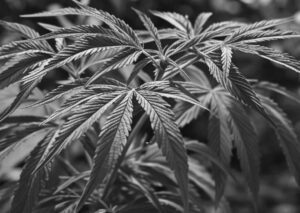
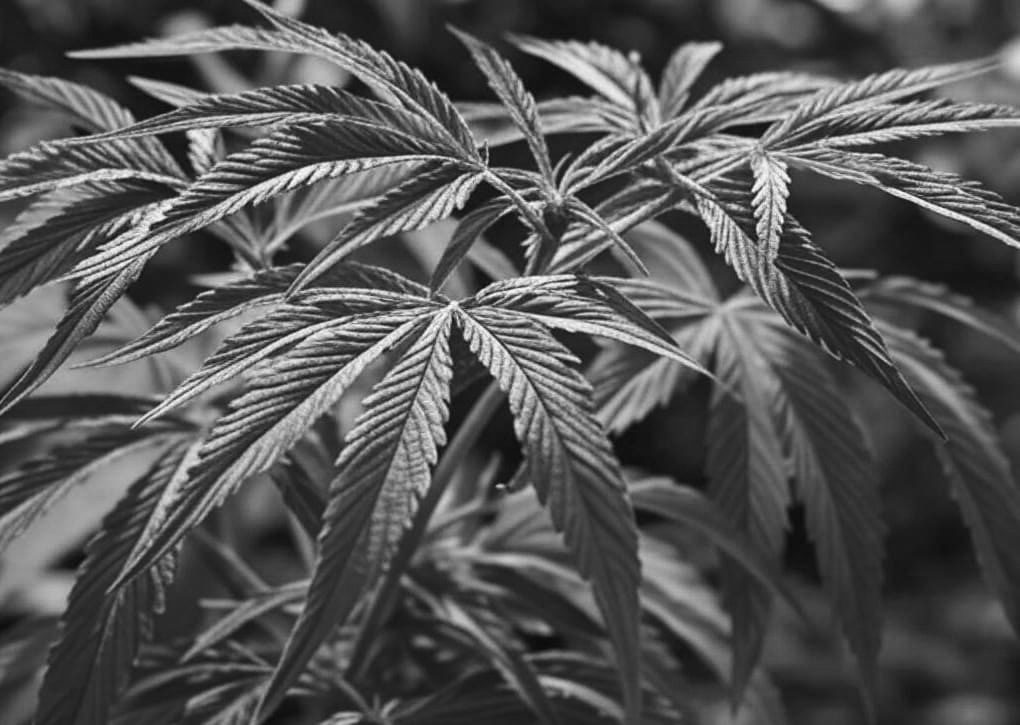
Delta-8 THC—which is not mentioned in the Texas Hemp Law—is a naturally occurring psychoactive compound produced by the cannabis plant in small quantities. It is reportedly unable to produce any real or measurable psychoactive effect if consumed in its natural form.
However, technological developments have made it possible to create artificial products containing a high concentration of manufactured delta-8 THC—more than enough to create the “high” experienced by smoking marijuana.
Businesses that sell these products claim the legislature opened the market for them with the Texas Hemp Law. With this understanding, many companies—including Sky Marketing Corp.—reportedly entered the Texas hemp market.
State Sen. Bob Hall (R–Edgewood), who was a sponsor of the Texas Hemp law, disagreed.
“The Legislature’s intent in 2019 was an agricultural bill to allow for the growing and production of hemp products. They never intended to allow a psychoactive drug to be on the market with no regulation or control,” Hall told Texas Scorecard.
Former Republican State Rep. Bill Zedler—an author of the Texas Hemp Law—told Texas Scorecard that “at the time we had the bill, we were not aware of the delta-eight derivatives.”
To clarify the state’s position, former Texas Department of State Health Services (DSHS) Commissioner John Hellerstedt updated the DSHS website in October 2021 to classify hemp-derived delta-8 THC as a Schedule I controlled substance.
A Schedule I controlled substance is considered by Texas law to have a high potential for abuse and no safe, accepted medical use in the United States. There are severe legal consequences for the possession and distribution of such drugs.
In response, Sky Marketing teamed up with other businesses and consumers to sue DSHS and its commissioner in October 2021. Plaintiffs argued that the decision effectively outlawed “Texas hemp production contrary to the Legislature’s intent.”
They asked the court to order DSHS to rewrite the schedules of controlled substances and to block the state from enforcement actions based upon the modified definitions.
The trial court granted a temporary injunction, prohibiting enforcement of the Delta‑8 rule changes. The court of appeals affirmed the injunction.
DSHS again appealed, this time to the Supreme Court of Texas. Oral arguments were heard in January.
The Ruling
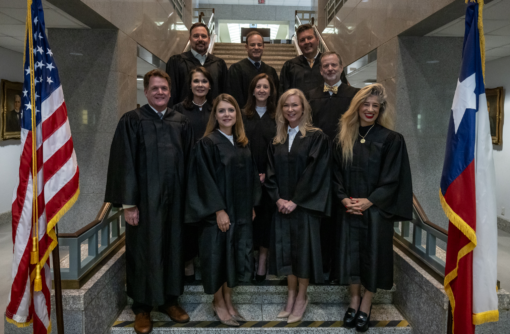
On Friday, the Supreme Court of Texas reversed the injunction, upholding Commissioner Hellerstedt’s actions. The opinion, written by Justice Evan A. Young, concluded that the lower courts had exceeded their authority.
“If the legislature desires to legalize powerful drugs, it has every tool it needs to do so—and to do so unmistakably, as we expect for such a major change to social policy,” wrote Justice Young. “The role of the courts is merely to assess the state of the law as it is.”
The Court noted that the Legislature has also handed scheduling powers over to the DSHS.
“The legislature has charged the commissioner of the Texas Department of State Health Services with primary responsibility for overseeing the civil schedules of controlled substances,” wrote Young. “The statutory framework consciously, purposefully, and expressly authorizes her—indeed requires her—to undertake this task with a substantial and unusual degree of discretion.”
“That legislative choice is at least in part explained by the need for the executive branch to be capable of responding rapidly and authoritatively to emerging threats to public safety from the development of illicit and harmful substances,” he continued.
Justice Young also slammed the trial court for extending injunctive relief beyond the parties involved in the lawsuit, prohibiting enforcement of the modifications against anyone in the state.
“We have held that orders issued pursuant to Texas Rule of Appellate Procedure 29.3 cannot grant relief to any and all nonparties who may find themselves in circumstances similar to the plaintiffs’ in a suit,” reads the opinion. “[W]e caution Texas courts to ensure that any injunction they issue is no broader than necessary to protect the rights of the parties before them.”
What Happens Next
The Court’s ruling means that hemp-derived delta-8 THC will remain a Schedule I controlled substance in the state of Texas.
Lawmakers are expected to again take up legislation on THC in the upcoming legislative session in 2027.
If you or anyone you know has information regarding court cases, please contact our tip line: scorecardtips@protonmail.com.