Details continue to emerge about a controversial “journalism” organization as more than 140 university employees from across the Lone Star State participate in their annual conference.
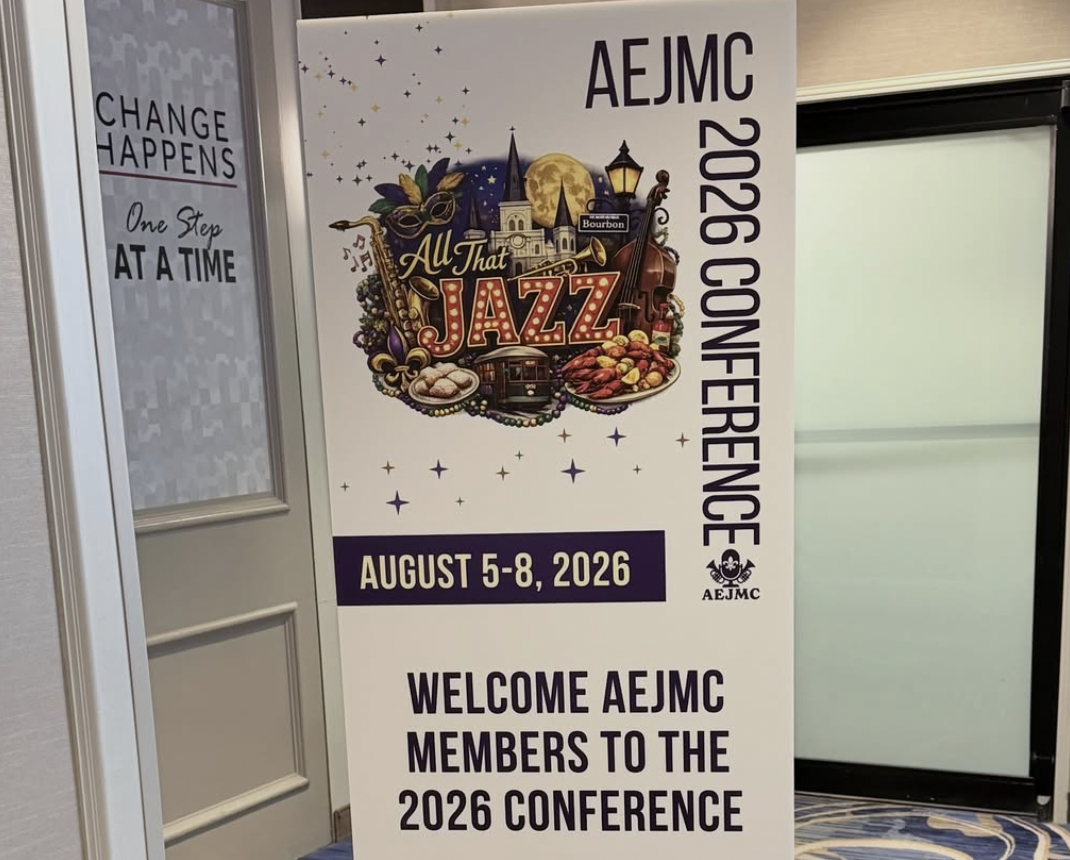
At issue is the Association of Education in Journalism and Mass Communication (AEJMC), a trade association for left-wing journalism professors. The group’s conference in New Orleans began Wednesday and runs through Saturday.
The University of North Texas’ own integrity and compliance office has already determined that reimbursements for the event violate multiple provisions of the Texas Education Code’s ban on diversity, equity, and inclusion in day‑to‑day university governance.
Texas Scorecard reported yesterday on the potential scale of subsidies for this event from Texas taxpayers, based on an open records request for emails about AEJMC sent and received by University of North Texas journalism Professor Tracy Everbach. Everbach brought this organization to public attention through a series of selective leaks to legacy media outlets in North Texas.
Those emails not only confirm the DEI concerns raised by UNT’s compliance office but also reveal that DEI is an operational priority woven throughout AEJMC’s committee structures, reviewer assignments, panel programming, and responses to political pressure.
In routine committee work—coordinating teaching competitions, reviewing submissions, and organizing conference sessions—DEI appears as a standing consideration. Even when DEI is not the explicit topic, it shapes how AEJMC selects reviewers, frames teaching priorities, and supports faculty navigating restrictive state laws.
The AEJMC Presidential Task Force on DEI
The clearest indicator that DEI governance is structurally embedded is the appearance of the AEJMC Presidential Task Force on Diversity, Equity & Inclusion and the AEJMC Teaching Standing Committee in an email signature from journalism professor Gabriel Tait (p.15 of the email release).
Tait, a professor at Ball State, simultaneously served on both committees while distributing reviewer instructions for a “Best Practices in Teaching” competition to Everbach.
DEI in Commissions, Competitions, and Reviewer Selection
A second major example appears in Everbach’s organization of a “Teaching Amid DEI Restrictions” panel for the 2025 AEJMC conference. The panel is designed to address the impact of anti‑DEI laws in Republican-led states.
The emails show that two panelists withdrew “because they fear retribution and political pressure.” Everbach recruited Texas Tech gender studies Professor Miglena Sternadori to replace them, emphasizing the need for “a full professor” protected by tenure.
The panel description explicitly references the Chronicle of Higher Education’s “Dismantling DEI” tracker as a governance resource.
A third recent example appears in the AEJMC Listening Session on Teaching, where Everbach is encouraged to participate because “you’ve been in the thick of it for a while in Texas.” The session host notes that faculty need “practical tips for navigating this new normal,” referring to DEI‑related legislative pressures.
Other emails show AEJMC’s DEI commitments running through commissions and teaching structures.
AEJMC’s Commission on the Status of Women co-hosted a reception on “Moving Women Faculty Forward” with the Kopenhaver Center at Florida International University on Tuesday.
That same commission sponsored a #MeToo panel last year.
Finally, reviewer recruitment emails emphasize matching expertise to submissions, including DEI‑related topics. AEJMC’s teaching competitions use criteria tied to ethics, inclusion, and ACEJMC values, embedding DEI expectations into its definition of teaching excellence.
Taken together, these examples show that DEI is not an isolated initiative but a multilayered governance priority that shapes AEJMC’s committees, competitions, conference programming, reviewer selection, and faculty support systems.
The organization’s day‑to‑day operations reflect a continuous effort to preserve DEI while navigating political environments detests it.
The emails illustrate an organization that treats DEI as both a mission‑driven commitment and a practical governance concern—one that requires constant coordination, communication, and adaptation.
Texas Scorecard has sent multiple rounds of questions to every institution subsidized by Texas taxpayers listed on the conference schedule, including a question regarding employee travel reimbursement. None has replied with the requested information.
If you are a student, parent, faculty member, or concerned citizen who would like to partner with us to promote transparency in taxpayer subsidized higher education, please email scorecardtips@protomail.com.