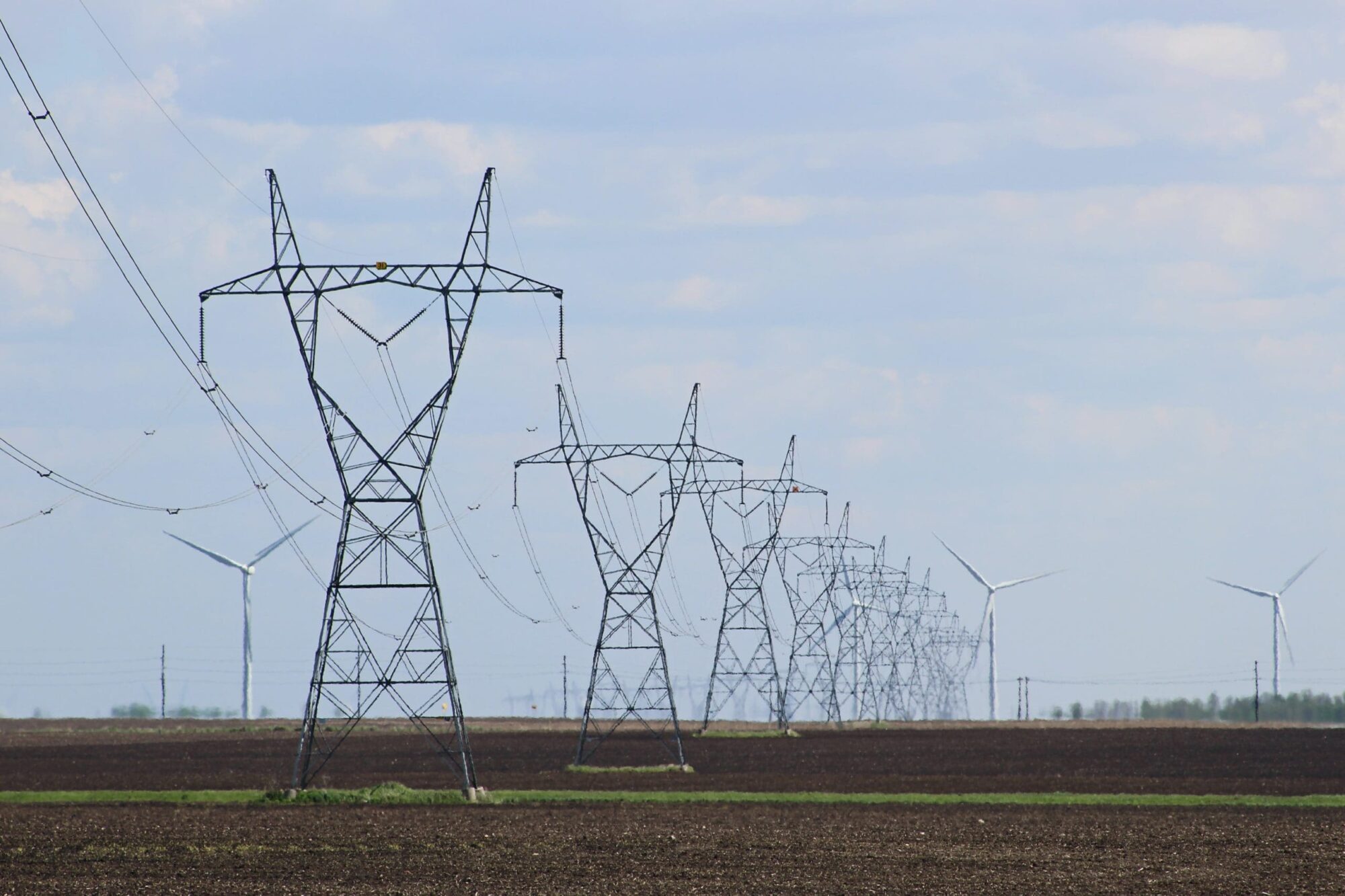
Oncor Electric Delivery Company and CenterPoint Energy’s Houston Electric reported profits as much as 65 percent higher than what was reported in a similar time period last year.
Oncor’s quarterly profit rose 65 percent, while Houston Electric’s rose 43 percent. Both companies have received approval from the Public Utility Commission of Texas (PUCT) for higher authorized returns on equity in the past two years. The approvals do not, by themselves, explain the full increases in reported profits.
A return on equity (ROE) generally measures net income against shareholders’ equity. This is how shareholders profit in relation to their investments in a company. In a rate case, an authorized ROE is the return regulators allow a utility to earn on the equity-financed portion of its regulated investments. It is used to set rates, but it does not guarantee that shareholders will receive that return.
For the first six months of 2026, Oncor Electric Delivery, which transmits energy to large swaths of North, Central, East, and West Texas, reported a profit of $640 million, up from $440 million during the same period in 2025, which is an increase of about 45 percent. Much of Oncor’s profit during that time came from the second quarter, which saw a 65 percent increase in profits compared to last year.
CenterPoint Energy, whose Texas subsidiary covers much of the Houston area with extensions into the wider Southeast region of the state, reported a profit of $298 million for the first half of 2026. That is a 32 percent increase over the $225 million in profits for the first half of 2025.
In 2025, Oncor filed a base rate case with PUCT requesting approval for an increased ROE and revenue requirement, which dictates how much revenue the utility company is authorized to collect from customers. Oncor also asked the State Office of Administrative Hearings to approve an interim rate increase to account for “regulatory lag.” Both were eventually approved.
CenterPoint Energy’s Houston Electric filed a similar 2024 base rate case, which eventually settled into an increase in the company’s ROE and a decrease in its revenue requirement. This initially lowered monthly customer bills, but that reduction was quickly cancelled out by an approval of increased rates to recover costs related to weather damage.
While Texans have a relatively wide-range of options when it comes to retail energy suppliers, the options for transmission and distribution utilities (TDU), the companies that provide the infrastructure to move power around the state, are significantly fewer and are assigned based on geographic location. While Oncor and CenterPoint are the two dominant TDUs in Texas, four other providers fill in the gaps throughout the state.
This issue is not just confined to Texas.
According to a 2025 study conducted by the Energy Institute at Haas, an estimated $7 billion in excess utility costs is being extracted from U.S. consumers every year. Additionally, an electric utility company in Maine was recently asked to divulge its internal documents after asking to increase its ROE by raising its distribution rates by an average of $18 per month for residential customers.
Mark Ellis of MarketClear, a North Carolina-based utility policy research team, attributes the rise in profits and rates in part to an imbalance between public utility commissions and utility companies’ returns on equity.
According to a white paper Ellis wrote in January 2025, investor-owned utilities (IOUs) like Oncor and CenterPoint are “government-sanctioned, private, for-profit monopolies” that are given the vast majority of electricity and natural gas deliveries in the U.S. These monopolies are justified on the basis that they will be significantly regulated by a state utility commission and that the service they provide is “most efficiently provided by a single entity.”
However, Ellis wrote that “over the last three years, IOU residential electricity rates have increased 49% more than inflation,” contrasting that increase with those of publicly owned utility companies that “have increased 44% less than inflation.” Ellis noted that “excessive utility rates of return allowed by utility commission in setting customer prices” is the root cause of this problem.
“IOUs too often have the upper hand in their interactions with regulators, to the detriment of their customers,” wrote Ellis.
In an Inside Climate News article on the topic, Ellis hypothesized that a regulator-approved 10 percent ROE for a utility company, which is around the national average, results in $1 billion in profit for the company per year. The profit would be more like $600 million if utilities and regulators were following basic regulatory principles, according to Ellis.
He wrote to Texas Scorecard that, while the jump in Oncor’s and CenterPoint’s profits can’t be solely attributed to the imbalance between utilities and commissions, the imbalance is a real contributing factor.
“I wouldn’t read too much into a single quarter; the real story is the longer-term trend,” wrote Ellis. “And the fix isn’t more regulation. It’s letting the market set the price of utility equity, the same way markets determine the price of everything else utilities buy, including their debt.”
“A company that earns exactly what investors require trades at about the value of the money shareholders have put in. Because utilities earn well above that, their stocks trade at roughly twice that value. That’s a powerful incentive to keep growing rate base, and profits grow with it,” added Ellis.
MarketClear’s proposed solution is to “let competitive auctions determine the return that equity investors actually require, rather than asking commissions to estimate it.”
“When the return on equity is set by the market rather than by regulatory proceeding, customers pay less, and the billions in excess returns that currently flow from ratepayers to utility shareholders begin to return to the households and businesses that paid them,” according to MarketClear.
The Texas Senate Committee on Business and Commerce is expected to take up transmission planning and ratemaking processes during Wednesday’s hearing. The next legislative session is scheduled to begin on January 12.
PUCT, Oncor, and CenterPoint have not responded to a request for comment on the issue.