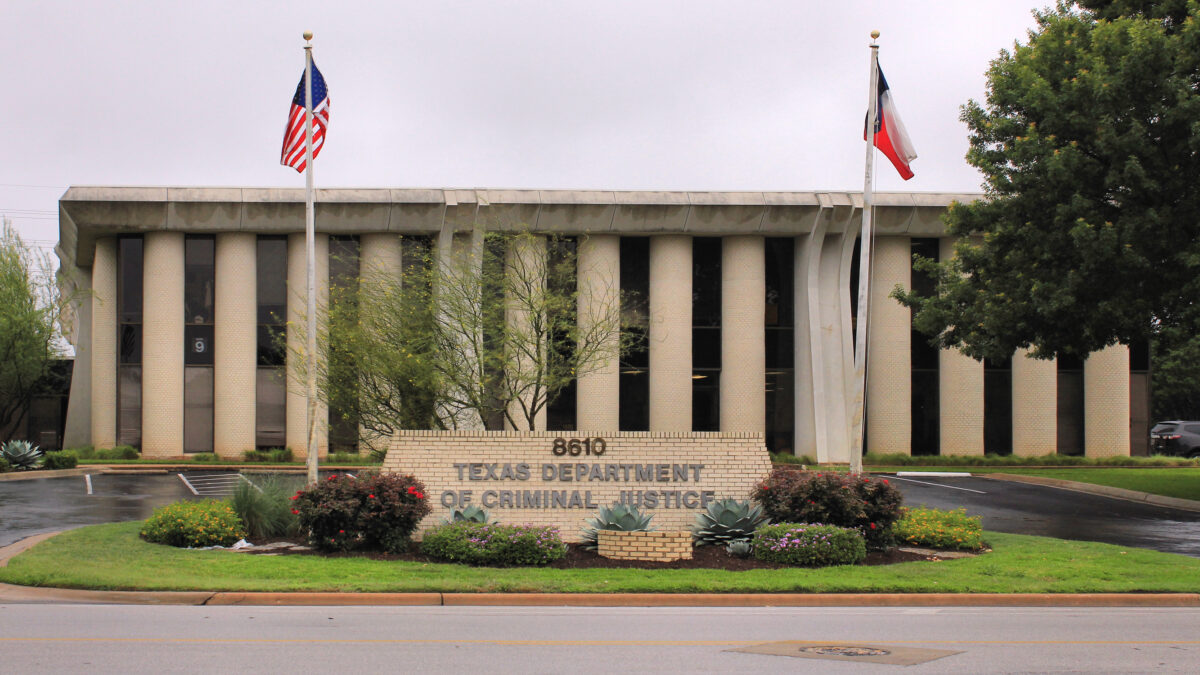
Texas lawyers have appealed a federal judge’s order requiring all Texas Department of Criminal Justice prisons to be climate controlled by the end of 2029.
While the appeal is pending, TDCJ Executive Director Bobby Lumpkin filed a request late last week to halt the order.
According to state attorneys, the stay is essential to avoid disrupting critical operations during the appeal.
The request explains that the projected $1.5 billion for air conditioning could eliminate or reduce funding for other key life and safety items, including health care services, contraband interdiction, treatment programs, and $3 billion in deferred maintenance needed for critical infrastructure.
Financial considerations are not a legitimate reason for failing to comply according to the ruling. However, the request notes that TDCJ’s operations depend on biennial legislative appropriations and the department often experiences funding shortages.
The filing also outlined efforts to install air conditioning and hurdles TDCJ has encountered.
Efforts included air conditioning installed on an expedited basis, cool bed construction, heat strike team visits, and implementation of the agency’s heat mitigation directive. Every TDCJ prison has air conditioning and respite areas, but not every prison is fully air conditioned.
According to court documents, TDCJ is also near capacity and cannot vacate the inmate population for air conditioning retrofits. Additionally, units built between the late 1800s and 1960s require a complex, time-consuming process for air conditioning installation.
The air conditioning legal battle began with a 2023 complaint filed by Bernhardt Tiede, who was convicted of first-degree felony murder in 1999.
Tiede, who reportedly experienced a heat-related medical issue, alleged that TDCJ violated his Eighth Amendment rights by forcing him to endure extreme heat in Texas prisons.
A court order by U.S. District Judge Robert Pitman would later state that Tiede was housed in air conditioning due to his age and declare Tiede’s claims moot.
However, advocacy groups had joined Tiede’s lawsuit. These groups, the Lioness Justice Impacted Women’s Alliance, Texas Prison Community Advocates, and Texas Citizens United for Rehabilitation of Errants, continued the lawsuit.
The groups expanded the original lawsuit to include all state prisons lacking full air conditioning.
Judge Pitman presided over the case. Pitman found that conditions in prisons without air conditioning violated inmates’ Eighth Amendment protections against cruel and unusual punishment and that TDCJ’s response to extreme heat was insufficient.
Pitman ordered TDCJ to complete air conditioning installation in all 104 TDCJ facilities by December 31, 2029, as requested by the plaintiffs.
However, the stay request by TDCJ noted, “Neither Plaintiffs, nor this Court, can claim that TDCJ is not working towards fully air conditioning its prisons—they simply take issue with the timeline, which is not the test for deliberate indifference.”
“Throwing chaos and confusion into TDCJ’s ongoing plans to install complete air-conditioning, before the Fifth Circuit has a chance to rule, needlessly wastes finite resources, and frustrates TDCJ’s efforts to acquire funding to address operational and life safety measures to protect its population while moving as expediently to install air conditioning,” according to TDCJ.
TDCJ made its legislative appropriations request prior to the ruling.
According to court documents, TDCJ’s budget request included a 3-percent cut. State leaders directed agencies to reduce their budget requests by 3 percent to help fund priorities including property tax relief.
As the appeal is ongoing, lawmakers will face uncertainty about whether the 2029 deadline for air conditioning will stand and the possible need for additional funding.