On Monday, November 9, nearly a week after Election Day, the Republican Party of Texas finally posted on X to congratulate the Republicans who had won reelection. It was a brief list.
By then, Democrats had already spent nearly a week claiming victory, and Republicans across Texas were trying to understand what had gone wrong. The timing of that post was not just a communications failure. It reflected a state party that spent the cycle reacting instead of preparing.
I spent Election Day inside two very different operations. Throughout this cycle I served as election integrity legal counsel for the Republican National Committee in Texas. The RNC began preparing nine months earlier. It treated Texas as a battleground and staffed it accordingly; weekly coordination calls, volunteer recruitment and training, large-scale deployments, and out-of-state volunteers brought in to support the effort.
On Election Day I was in the RNC War Room at the Westin in Dallas, taking calls from volunteers across the state. People were reporting problems, asking legal questions, and needing help with issues at polling locations. The operation filled three large meeting rooms. Attorneys, data people, and coordinators were working to get answers to the field in real time. It was a substantial operation built over months.
The contrast with the Republican Party of Texas was stark. The state party’s War Room consisted of roughly four or five people. Rather than running an independently functioning statewide command center with the staff and systems to identify, track, and respond to problems, the RPT appeared to rely heavily on information and resources from the RNC, the Abbott campaign, and outside election-integrity groups.
No one expects the state party to match the RNC’s budget or headcount. There is a difference, though, between having fewer resources and failing to build the organizational capacity required to do the job. The RNC was a partner, not a substitute. Partnerships work when both sides bring real capability.
The question is how the Republican Party of Texas reached November 2026 without that capacity.
Some will note that Chairman D’Rinda Randall had been chairman for only about six months. That argument ignores the preceding two years, during which she served as vice chairman under Abraham George. She was not a newcomer who inherited an unfamiliar organization weeks before the election. She had a front-row seat to the party’s condition and an opportunity to push for improvements. She also had the chance to watch the Trump campaign’s 2024 operation in Texas and see what coordinated volunteer recruitment, coalition-building, and election-integrity work actually looked like.
Where was the comparable effort from the state party? Where was the public alarm about the resources needed to compete? Where was the sustained response to polling that showed Republicans facing real challenges? Where was the work to maintain relationships with the new voters and coalitions that expanded the Republican map in 2024?
The fundraising numbers make those questions harder to dismiss. Federal records show the Republican Party of Texas raised approximately $12.8 million through its federal account in the 2023–2024 cycle. Through October 14 of the current cycle, it had reported roughly $6.6 million. The cycle was not finished, so the comparison is incomplete. Even so, the gap raises straightforward questions about whether the party was generating the resources needed to build staff, volunteer networks, voter contact, and election-integrity capacity. Fundraising is not an end in itself. It is how a party pays for the operations required to win.
These issues did not appear on November 3. They required attention months, and in some cases years, earlier. Responsibility does not rest with one person. The prior leadership had two years to strengthen the party’s infrastructure. The current leadership had the chance to address remaining deficiencies. Both periods warrant scrutiny. Randall’s earlier role as vice chairman simply makes it difficult to claim she was handed an entirely unknown set of problems six months before Election Day.
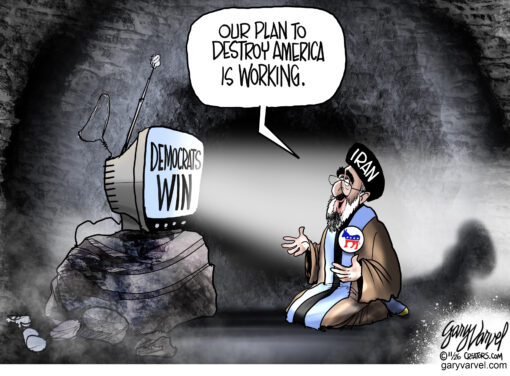
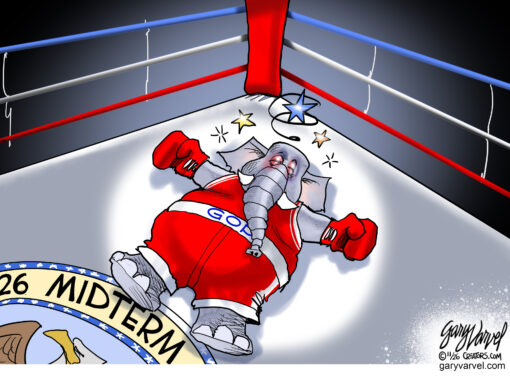
The results themselves make the organizational questions unavoidable. Democrats made significant gains in Texas, winning the U.S. Senate race and several other statewide contests according to unofficial returns. Republicans should not explain those results away with allegations of fraud that lack specific supporting evidence. We also should not treat the political environment or our own organizational shortcomings as forces beyond our control.
Candidate quality, messaging, national conditions, and individual campaign decisions all matter and deserve examination. A political party cannot point to those factors and declare itself free of responsibility for the work that precedes an election. A state party’s job is not limited to endorsing candidates, running conventions, and sending congratulations when Republicans win. It is supposed to identify emerging problems, raise the money to address them, maintain relationships with voters, recruit and train volunteers, coordinate with campaigns, and field an election-integrity operation that can actually respond when issues arise. That work has to happen before the election becomes a crisis.
The RNC treated Texas as a priority and invested accordingly. The volunteers who came from across the state and the country understood the assignment. The people in the War Room understood that election integrity requires preparation, people, and systems. They did not start building that operation on Election Day.
National organizations, individual campaigns, and outside groups can supplement a state party. They cannot permanently replace one. Texas Republicans do not need another organization that activates when campaigns begin and goes quiet when they end. They need a state party that raises the resources to compete, maintains relationships with the voters who built the coalition, and prepares for Election Day long before the first ballot is cast.
The next leadership should be held to clear expectations: transparent fundraising targets, a permanent grassroots and volunteer infrastructure, year-round coalition work, and an independently functioning election-integrity operation that answers to county chairs, donors, and Republican voters. Leadership means building the capacity to support candidates and local activists rather than relying on others to do the work.
The 2026 results should be a turning point. Republican voters, county chairs, donors, and grassroots activists deserve a clear accounting of what happened and a real opportunity to demand a different standard. The next election will not wait for the Republican Party of Texas to get organized. Neither should its members.
It is time for new leadership and a higher standard of accountability.