Texas public schools would generally have to accept eligible transfer students when seats are available under newly filed legislation expanding parents’ options within and across district lines.
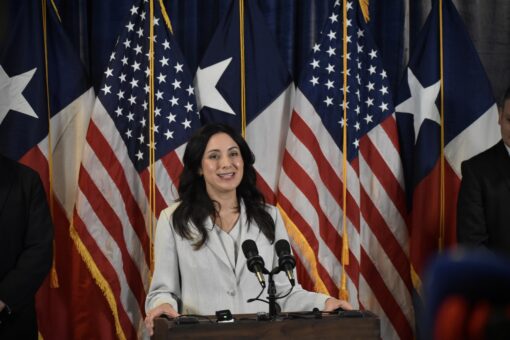
State Sen. Angela Paxton (R–McKinney) filed Senate Bill 403 Tuesday, which would establish statewide open-enrollment rules and prohibit districts from charging tuition to students transferring under the measure.
According to Garion Frankel with the Texas Public Policy Foundation, while the passage of school choice in 2025 was definitely a milestone to celebrate, it is “insufficient for true educational freedom in Texas.”
Frankel explained that open enrollment allows for an enhanced “educational choice for parents who desire some kind of public education.”
“Just because parents want public education doesn’t mean that parents want the specific public school their school district assigns them,” continued Frankel. “Although districts in Texas choose their enrollment policies, many prohibit non-resident students from entering the district, or even prevent students from transferring from one school within the district to another.”
“This is often for nefarious reasons, like race, social class, or even disability status,” added Frankel.
TPPF also highlighted that open enrollment creates benefits that “aren’t just for families,” but also benefit the schools.
“As early as 1776, economist Adam Smith argued that competition between publicly-financed schools could create a curriculum meant to both develop students’ abilities and improve society in general, offer teachers an additional incentive to approach their jobs with greater vigor, and give the population a candid account of what schools can and cannot accomplish,” Frankel wrote.
Although there is only a limited amount of data from research on open enrollment, studies from states practicing open enrollment do show a slight increase in academic performance, such as a study in Massachusetts from 2024 that showed students who participated in the program were 17 percent more likely to go to college.
Paxton’s proposed legislation would allow the parents or legal guardian to submit a transfer application for “any child, other than a high school graduate” to attend another school district or district campus than the one they are currently attending.
Rather than leaving transfer approval broadly to receiving districts, SB 403 would generally require them to accept eligible applicants until available seats are filled, subject to specified disciplinary and legal exceptions.
However, admission would not be guaranteed. Districts could deny transfers because of capacity limits, specified disciplinary circumstances, or conflicts with court-ordered desegregation plans, but would have to provide applicants with a written reason.
If a campus receives more “eligible transfer applications” than it has capacity for, the spaces will then be filled by lottery, beginning with prioritizing district residents. Districts would also have to maintain waitlists and offer applicants an available seat in the appropriate grade at another district campus if the requested campus lacks space.
The legislation also bars school districts from charging tuition for students who transfer from another district.
Paxton told Texas Scorecard that she had proposed similar legislation to SB 403 in 2025, “which passed the Senate with bipartisan support.”
“Many Texas school districts already offer open enrollment, and Senate Bill 403 builds on their work by making it easier for parents to understand the educational options available to their child and request a transfer within their district or to another district, while respecting the space available at each campus,” said Paxton.
If enacted, the measure would apply beginning with the 2027-28 school year.
Democrats will hold the majority in the Texas House during the upcoming legislative session, but Republicans will maintain a majority in the Senate.
The 90th Legislative Session begins January 12, 2027.