A report from the Texas Public Policy Foundation warns that Texans face “multiple days of outages and billions of dollars in increased cost” during extreme weather conditions unless the Electric Reliability Council of Texas reforms its electrical pricing mechanisms.
The report’s authors, Michael Reed and Dr. Brent Bennett, acknowledged that changes implemented since the February 2021 winter blackouts have resulted in better management of the ERCOT grid. However, over the longer term the grid’s stability becomes questionable in severe weather conditions, thanks in no small part to wind and solar power’s continued rise in Texas.
The report found that in Texas about $60 billion has been invested in 36 GW of solar, 22 GW of energy storage, and 10 GW of wind since 2021, while only 4 GW of new gas generation has been built. Before 2021, Reed and Bennett wrote that $100 billion had been invested in Texas wind and solar.
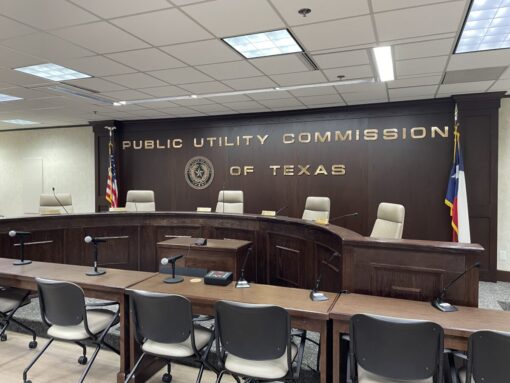
“If this investment trend continues through 2030, a 1-in-10-year winter storm would result in over 40 hours of outages,” they wrote. Reed and Bennett measured their results against the Public Utility Commission of Texas’ reliability standard for 2030.
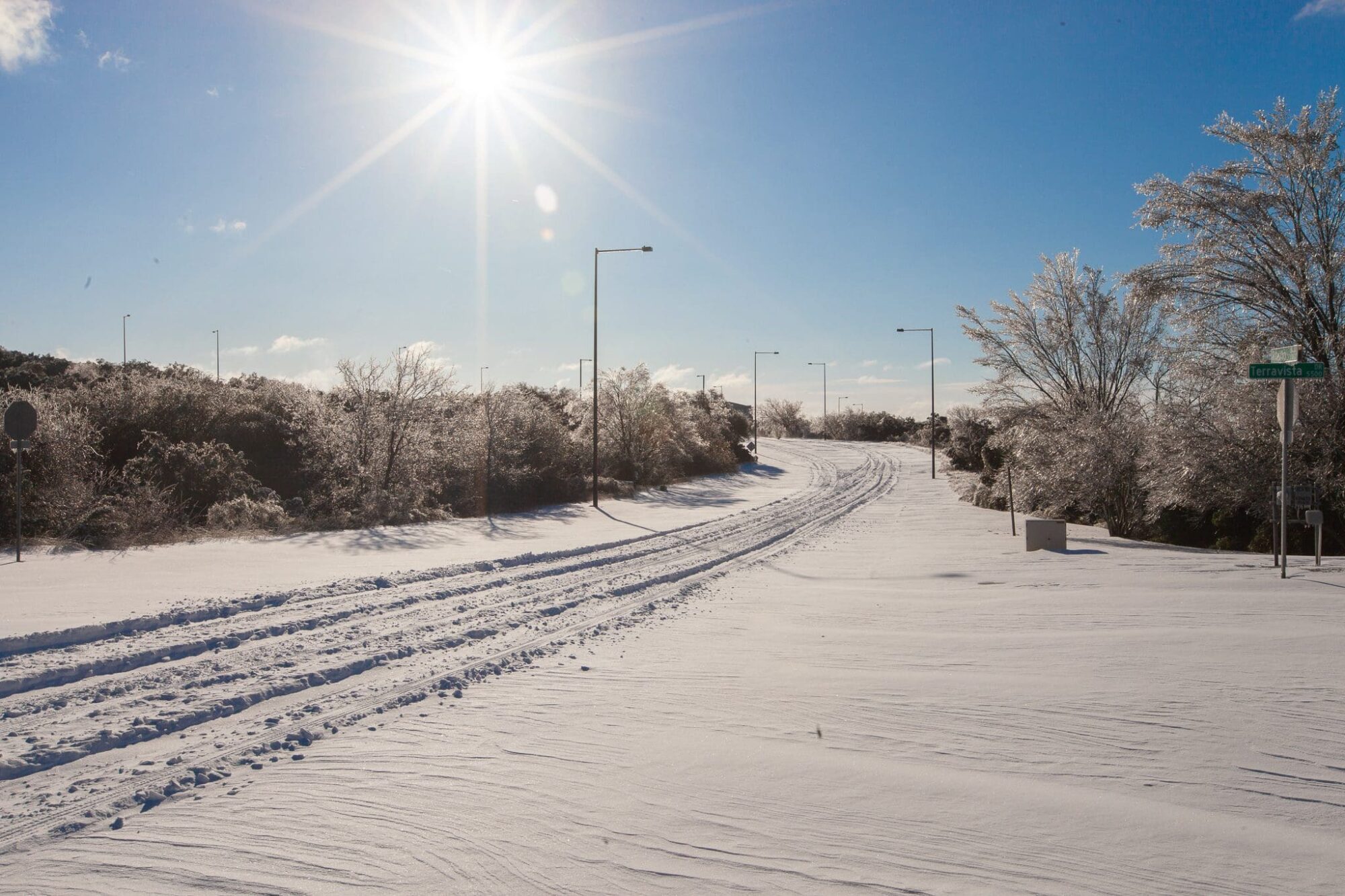
Reed and Bennett emphasized that “even significant additions of wind and solar capacity” do not alter the results, because those power sources “sometimes produce almost no electricity.” As an example, they pointed to wind and solar producing less than ten percent of their total combined capacity during 2026 Winter Storm Fern’s peak demand period.
They found that more energy storage would not help either. “[E]nergy storage is more effective when used as a marginal, short-duration resource instead of a long-duration resource,” they wrote. “All of the batteries in the 2030 model, over 38 GW of installed capacity, can only store about 75 [Gigawatt-hours] of energy, which is roughly equal to the output of a 1 GW gas plant for the 3-day duration of the winter storm.”
Conversely, Reed and Bennett tested what the results would be by “firming” the grid through removing 25.5 GW of wind and solar that would start in January 2027, and adding 12.5 GW of natural gas. They added back 25 percent of that wind and solar because the model still showed unserved load because of transmission constraints.
According to their modeling, for summer heat waves, there would be a “higher reserve margin … without increasing overall energy costs.”
For winter storms, this “reduces the magnitude and duration of outages by nearly 90%, cutting power costs by $5.6 billion and saving $6.3 billion more in direct economic losses from the outages.” But even under this “firming” model, Reed and Bennett’s report shows about 32 gigawatt-hours of unserved energy, with an outage of about 40 hours, with most hours showing a power shortage of less than 1 GW. This indicates that, compared with the non-firming model, outages would be limited to one or two ERCOT regions and most customers would still have power during that time.
This still goes beyond PUCT’s reliability standard parameters. Reed and Bennett tested what would happen if they added another 5.8 GW of natural gas, but this did not show much improvement. They wrote that this was due to the siting of generation relative to where demand is, and the transmission constraints between the two.
“The problem is that transmission constraints and suboptimal geographic placement of generation and transmission in the model are preventing all of the generation from being used,” they wrote. “In the real world, where market participants optimize the placement of new generation based on nodal prices, we expect these geographic issues would be less of a problem, and the benefits of firming would likely be better than what the model is able to show.”
Their model included “all of the 765-kV long-distance transmission lines in ERCOT’s latest regional transmission plan,” and still showed transmission constraints. The presence of the 765 kilovolt lines they wrote only “slightly improved” these constraints.
Texas is currently pursuing multiple 765-kV transmission line projects, despite landowners and lawmakers calling for the PUCT to wait until after the 2027 legislative session.
Reed and Bennett found that local upgrades of 345-kV and lower seem to be more critical for serving short-term demand. An energy mix with more thermal power, they wrote, would enable the 765-kV projects to be reduced or entirely eliminated.
They wrote that reducing energy demand by 5 GW on top of using their firming model would help meet PUCT’s standard, but this was at best a short-term solution.
Structural Issues
The problem that Reed and Bennett pointed to is ERCOT’s “single clearing-price market structure” that undervalues reliable thermal power generators, contributing to an underinvestment in those while funding for wind and solar soars. They wrote this is because the structure “does not properly value the difference between dispatchable and intermittent resources. Whatever resources are producing at any given time are paid the same market price.”
Under this system, “the lowest marginal cost resources are dispatched first,” which means that solar and wind generators can bid nearly all their power to market, depending on transmission constraints. Meanwhile, they found that coal and gas generators are shoved aside, leaving them unable to depend on consistent market revenue, forcing them “to endure costs from ramping up and down to balance wind and solar output.”
This system also fails to recognize the difference between duration resources that are short or long.
“A battery is paid the same price as a gas generator for the power it puts into the system even though the battery may not be able to discharge at that same rate during the next hour or at the same time the following day,” they wrote. “A gas generator, on the other hand, can reliably be counted on to produce the same power across all hours.”
Market Reforms
“To prevent escalating outage risks, the region must adopt market reforms that appropriately value reliable, dispatchable power generation and long-duration solutions like demand flexibility,” Reed and Bennett wrote.
ERCOT will be publishing its triennial reliability assessment, which is the process by which PUCT must consider market reforms if deficits are identified.
Reed and Bennett advocated that PUCT, which supervises ERCOT, should “set a strong enough penalty so that generators will be incentivized to buy new firm capacity,” and that state lawmakers should “apply this reliability requirement to existing wind and solar generators while providing better incentives for reliable generation.”
“What is needed is both urgent action from policymakers to mitigate this problem before it gets worse and then steady patience while the wholesale market adjusts and the system builds the reliable generation needed over the next decade to dig out of the reliability deficit that has been created over the prior decade,” they warned.
The 2027 legislative session will convene on January 12, 2027.