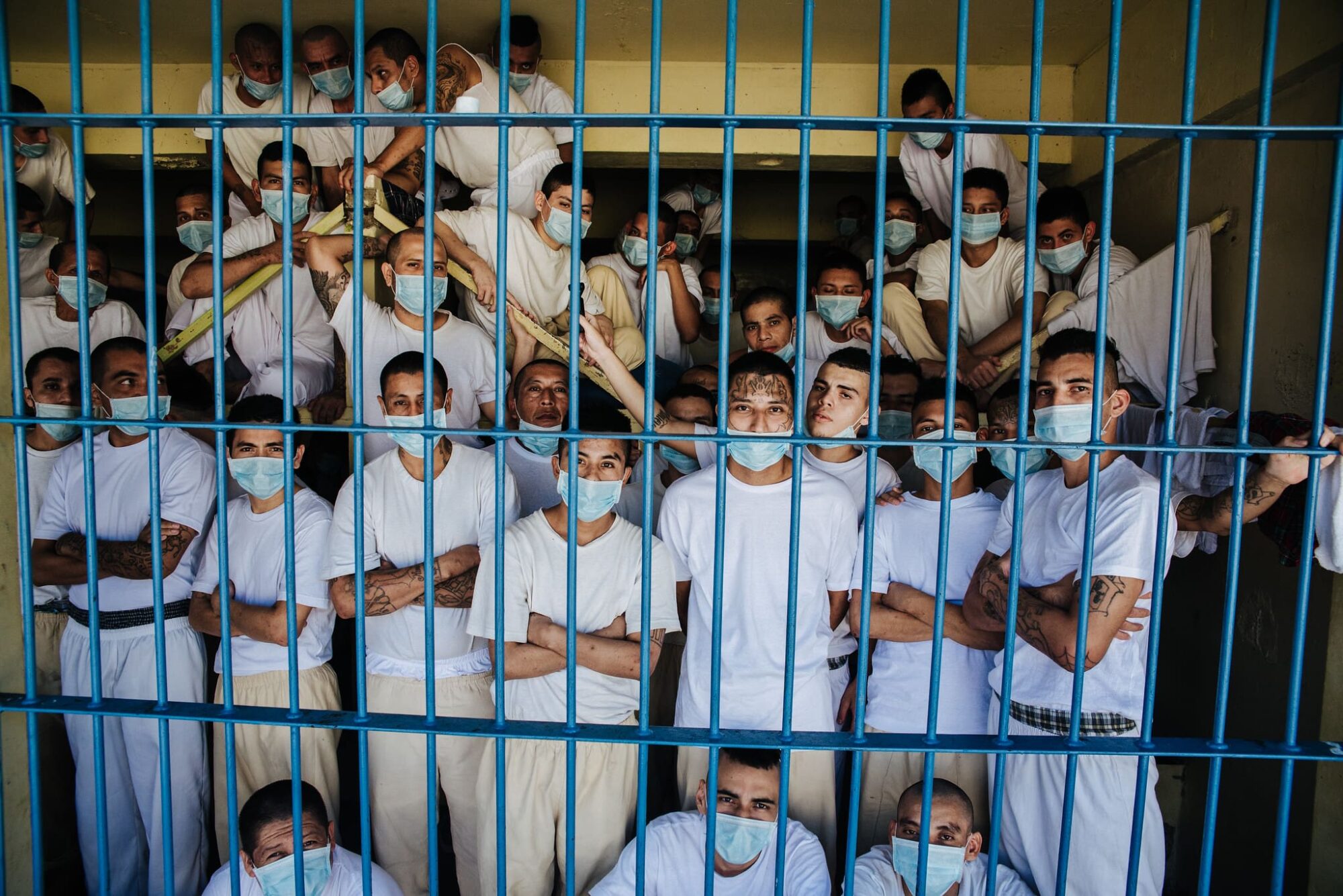
A federal appeals court has upheld the deportation of an illegal alien gang member from El Salvador after he claimed he would be tortured by Salvadoran officials.
The ruling confirms that aliens cannot rely on harsh prison conditions in their home country to block deportations.
Background
Jose Fuentes-Pineda, a Salvadoran national, was apprehended after entering the U.S. illegally in 2022. In El Salvador, he was a convicted murderer and a member of Barrio 18—a rival gang of MS-13.
During his immigration hearing, Pineda testified that he “was forced to join the 18th Street gang as a teenager. As part of his gang initiation, ‘eighteen’ was tattooed on his back and the number 18 was tattooed on his chest.” He claims he was later allowed to leave the gang because he became a Christian.
Pineda requested his deportation be deferred, arguing he would be tortured in Salvadoran prisons.
He cited the Convention Against Torture (CAT), which established the principle, “No State Party shall expel, return (‘refouler’) or extradite a person to another State where there are substantial grounds for believing that he would be in danger of being subjected to torture.”
The immigration judge (IJ) acknowledged that the Salvadoran government is aware of Pineda’s gang membership and has targeted him in the past. Although Salvadoran security forces tortured Pineda on two occasions, evidence of past torture was deemed “too speculative.”
The IJ found that “poor conditions in Salvadoran prisons are not specifically intended to inflict torture,” concluding there was not a clear probability of future torture by Salvadoran authorities.
The Board of Immigration Appeals adopted and affirmed the IJ’s opinion. Pineda then appealed to the U.S. Fifth Circuit Court of Appeals in New Orleans.
Fifth Circuit Ruling
On March 24, a three-judge panel released its decision.
The court reasoned that to obtain relief, Pineda must show he “more likely than not” would be tortured if removed to El Salvador—and that he must show the past torture involved “sufficient state action.”
The CAT’s definition of torture requires severe pain or suffering to be “intentionally inflicted.”
Pineda argued that “the IJ did not make a finding regarding whether El Salvador is intentionally using substandard prison conditions to inflict torture.”
The Fifth Circuit disagreed, noting that the IJ found the “evidence is not sufficient to suggest that the dismal and harmful conditions of detention [are] specifically intended to torture.” After reviewing the record, the panel reached the same conclusion.
Regarding “sufficient state action,” the IJ had considered an Amnesty International report on El Salvador’s prisons that stated torture was “a common practice,” based on interviews with former detainees.
The IJ reasoned that “common” does not necessarily indicate “more likely than not,” and observed that only 83 people were interviewed for the report. Additionally, the IJ considered statements by Salvadoran officials—including President Nayib Bukele—and concluded they did not establish a clear probability of intent to torture.
Rather, the statements can be seen as serving political purposes and garnering public support, as well as deterring individuals in the community from engaging in gang activity.
The Fifth Circuit agreed, writing, “[s]ubstantial evidence supports the conclusion that El Salvador’s harsh prison conditions aren’t intentionally designed to inflict torture. And nothing in Fuentes-Pineda’s background compels us to reject the IJ’s findings.”
As a result, Pineda’s petition for relief was denied, and his final removal order upheld.
The ruling establishes that—at least in the Fifth Circuit—illegal aliens cannot use their home country’s harsh prison conditions as a legal barrier to deportation. The Fifth Circuit covers Texas, Louisiana, and Mississippi.
If you or anyone you know has information regarding court cases, please contact our tip line: scorecardtips@protonmail.com.