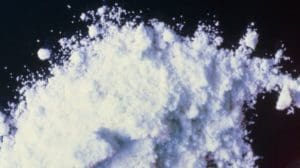
President Donald Trump has signed an executive order formally designating illicit fentanyl and its core precursor chemicals as “weapons of mass destruction,” dramatically escalating how the federal government treats the deadly synthetic opioid and the cartels that traffic it.
In the order, Trump declares that illicit fentanyl is “closer to a chemical weapon than a narcotic,” noting that as little as two milligrams—about 10 to 15 grains of table salt—can be a lethal dose and that hundreds of thousands of Americans have already died from fentanyl overdoses.
He ties fentanyl production and distribution to organized criminal networks, foreign terrorist organizations, and cartels whose operations include assassinations, terrorist acts, and insurgencies that erode U.S. security at home and along the southern border.
The order states that two cartels are predominantly responsible for fentanyl distribution into the United States and warns that fentanyl could be weaponized for “concentrated, large-scale terror attacks” by organized adversaries, making it not just a drug crisis but a national security and homeland defense issue.
Trump’s directive orders Attorney General Pam Bondi to “immediately pursue investigations and prosecutions into fentanyl trafficking,” including using criminal charges, sentencing enhancements, and variances to ratchet up penalties against smugglers and distributors.
It also instructs Secretary of State Marco Rubio and Secretary of the Treasury Scott Bessent to go after assets and financial institutions tied to fentanyl and its precursor chemicals, potentially expanding sanctions and financial warfare against cartels, foreign enablers, and banks that facilitate the trade.
The order repeatedly references the “homeland,” directing Secretary of War Pete Hegseth and Attorney General Bondi to determine whether the threat justifies providing Defense Department resources to the Justice Department for enforcing federal criminal law.
It further requires the Secretary of War, in consultation with the Secretary of Homeland Security Kristi Noem, to update all directives governing the Armed Forces’ response to chemical incidents inside the United States so that fentanyl is treated alongside other chemical threats.
The Secretary of Homeland Security is instructed to use WMD and nonproliferation-related threat intelligence to map and target fentanyl smuggling networks, supporting “the full spectrum of counter-fentanyl operations” across agencies. That language opens the door for more intelligence sharing, joint task forces, and fusion-center style activity focused specifically on fentanyl trafficking routes, including those running through Mexico into Texas.
The order defines “illicit fentanyl” as fentanyl manufactured, distributed, or dispensed—or possessed with intent to do so—in violation of key provisions of the federal Controlled Substances Act. It also defines “core precursor chemicals” as the main substances used to create fentanyl and its analogues, including Piperidone and related compounds that have become central in the global supply chain coming largely from China to Mexico.
By explicitly sweeping these precursor chemicals into the WMD designation, the order tries to push enforcement and sanctions further upstream in the supply chain, before fentanyl is pressed into pills or mixed into other drugs that end up on Texas streets.
Trump’s move comes as Texas continues to confront fentanyl overdoses, cartel activity, and cross-border smuggling—problems that state leaders have repeatedly tied to weak federal border enforcement under the Biden administration and Chinese-sourced chemicals feeding Mexican labs.
Classifying fentanyl as a weapon of mass destruction could give federal authorities broader justification for intelligence-driven operations against cartels operating across from Texas, as well as new leverage against foreign governments and banks that tolerate or facilitate precursor exports.
According to data from the Texas Department of State Health Services, there have been 606 fentanyl poisoning deaths in 2025 thus far.