A new U.S. Supreme Court ruling could effectively dismantle the remaining legal challenge to Texas’ congressional map, dramatically narrowing how the Voting Rights Act can be used in redistricting lawsuits.
In a 6-3 decision issued Wednesday morning in Louisiana v. Callais, the Court ruled that Louisiana’s creation of a second majority-black congressional district constituted an unconstitutional racial gerrymander—while also rewriting how Section 2 of the Voting Rights Act must be interpreted going forward.
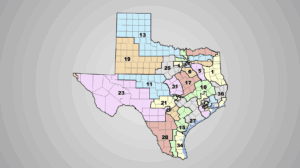
The ruling comes just days after the Court upheld Texas’ newly drawn congressional map against claims of racial gerrymandering, leaving only Voting Rights Act “vote dilution” claims pending in lower court.
But those claims now face a much steeper climb.
For decades, Section 2 of the Voting Rights Act has been used to challenge maps based on their effects—arguing that minority voters had “less opportunity” to elect candidates of their choice, even without proof of intentional discrimination.
The Supreme Court’s ruling sharply limits that approach.
Writing for the majority, Justice Samuel Alito concluded that Section 2 must be interpreted in line with the Constitution, meaning it can only impose liability when there is a “strong inference that intentional discrimination occurred.”
The Court also emphasized that states are free to draw districts based on political considerations—such as protecting incumbents or favoring a political party—and that plaintiffs must now “disentangle race from politics” to succeed.
That shift raises the bar significantly for challengers.
The decision lands squarely on top of ongoing litigation over Texas’ 2025 congressional map.
While the Supreme Court has already rejected claims that Texas lawmakers intentionally engaged in racial gerrymandering, plaintiffs have continued pursuing claims under the Voting Rights Act alleging “racial vote dilution.” Those claims relied on the now-weakened legal theory that states may be required to create additional majority-minority districts—even if race was not the primary factor in drawing the map.
The Court’s ruling in Callais directly undercuts that argument.
Under the new standard, it is no longer enough to show that a map could have included more minority-majority districts. Plaintiffs must now demonstrate that lawmakers intentionally drew district lines to disadvantage minority voters because of their race.
The Court further clarified that alternative maps used by plaintiffs cannot rely on race and must still meet all of a state’s political and traditional districting goals—an additional hurdle that could prove difficult to overcome.
The Louisiana case also highlights a tension that has long existed in redistricting law.
Louisiana lawmakers created a second majority-black district only after a federal court suggested it was required under the Voting Rights Act. That same map was then struck down as an unconstitutional racial gerrymander.
The Supreme Court sided with the challengers, ruling that the Voting Rights Act did not require the additional district—and therefore could not justify the state’s use of race.
In doing so, the Court acknowledged the broader conflict between prior interpretations of the Voting Rights Act and the Constitution’s prohibition on race-based government action.
The Texas case will now proceed under this new legal framework.
Given the Court’s ruling, legal experts expect the remaining Voting Rights Act claims against Texas’ map to face significant headwinds—and potentially be rendered moot altogether.
At the same time, the decision is likely to reshape redistricting battles nationwide, particularly in Southern states where lawsuits have frequently relied on Section 2 to preserve or expand minority-majority districts.