Gov. Greg Abbott pointed to Tarrant County as a model for his statewide property tax proposal Thursday, arguing local governments can cut taxes while continuing to fund essential services.
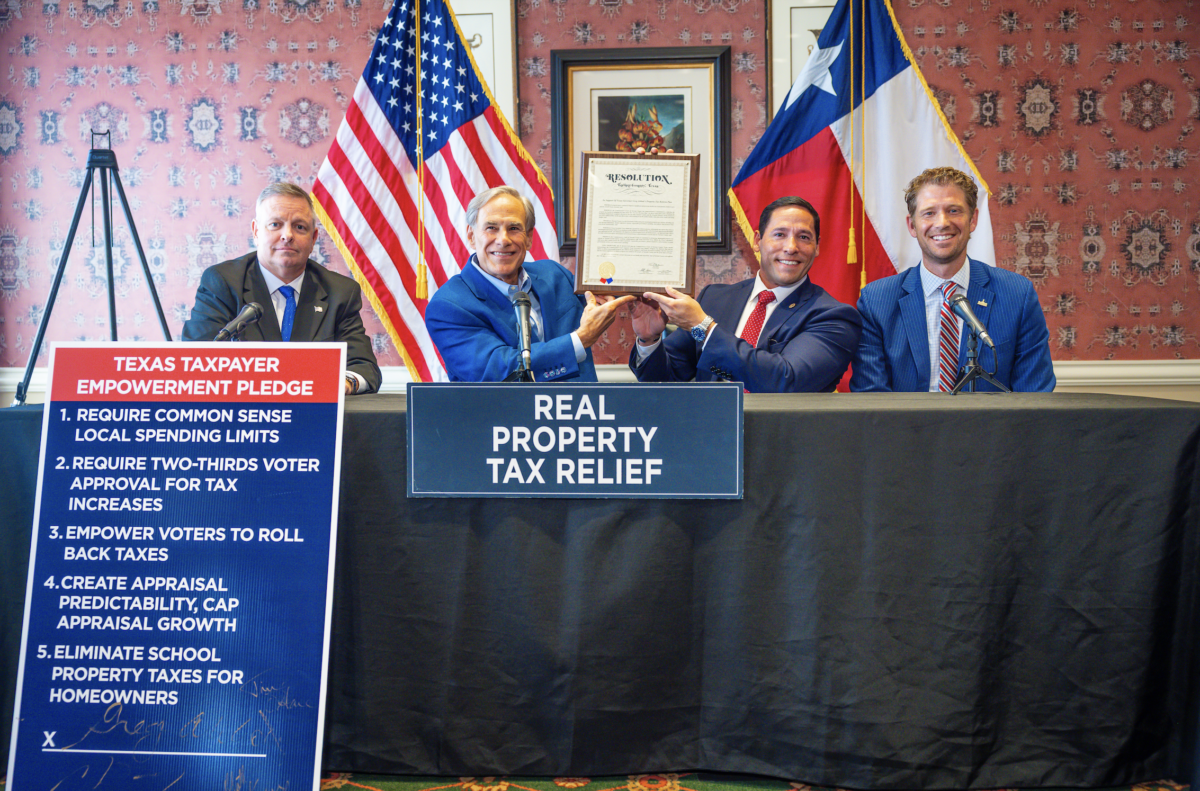
Abbott appeared in Fort Worth alongside Tarrant County Judge Tim O’Hare and Commissioners Manny Ramirez and Matt Krause, who have backed the governor’s proposal.
Tarrant County has lowered their tax rate for three years in a row.
“At the very same time, they’ve been able to increase pay for things like law enforcement, make their community a safer place,” said Abbott.
“So it is very achievable for jurisdictions across the entire state to do exactly what Tarrant County has done, and that is to cut property taxes while fully funding operations,” he added.
Tarrant County officials have proposed lowering the county property tax rate for the fourth consecutive year. The proposed Tarrant County and JPS Hospital District rates would also remain below their respective no-new-revenue rates.
Last week, O’Hare, Ramirez, and Krause backed a resolution supporting Abbott’s property tax plan. The three officials joined Abbott Thursday in signing a pledge supporting the proposal.
Abbott’s proposal includes several structural changes to the property tax system. Among them are limiting local government spending growth to the rate of population growth plus inflation or 3.5 percent—whichever is lower—requiring two-thirds voter approval for local property tax increases, and allowing taxpayers to trigger rollback elections with signatures from 15 percent of registered voters.
The plan would also move properties to five-year appraisal cycles and lower the homestead appraisal cap from 10 percent to 3 percent while extending the cap to all property types.
Abbott has also called for eliminating school district property taxes on homesteads, with the state assuming responsibility for that portion of public education funding, calling it the most consequential portion of the plan.
“That alone will cut your property tax bill in half, and that will be enduring, lasting forever, and make sure that people will be able to afford to stay in their own home forever,” said Abbott.
Abbott also addressed concerns about how cities and other local governments would adjust to tighter limits on property tax collections.
Asked about Fort Worth officials reporting a $90 million budget shortfall and concerns from other Tarrant County cities, Abbott said local governments would have to adjust their budgeting practices.
“When a taxing jurisdiction first confronts the legislation that I’m going to be signing after next session, it will come as a surprise to them in their budgeting processes, and what it will lead to is more responsible budget,” said Abbott.
He noted that state government already operates under spending limits and is regularly forced to prioritize spending.
“We have to make decisions every single session: Are we going to spend here? Are we going to subtract what we’re spending there?” Abbott said. “And I know through that decision-making process, it’s tough, but it has to be done constitutionally. The same thing can be done, whether it be at a county, city, or other level.”
Pressed on where local governments would make up lost revenue, Abbott said jurisdictions would need to make choices about which programs to fund.
“They have to balance their budget. They have to make the tough decisions, like the state makes every single session, to decide not to fund certain projects,” said Abbott.
He said law enforcement should remain a priority, again pointing to Tarrant County as an example of reducing taxes while increasing public safety spending.
State lawmakers are expected to consider property tax changes when the next legislative session begins in January.