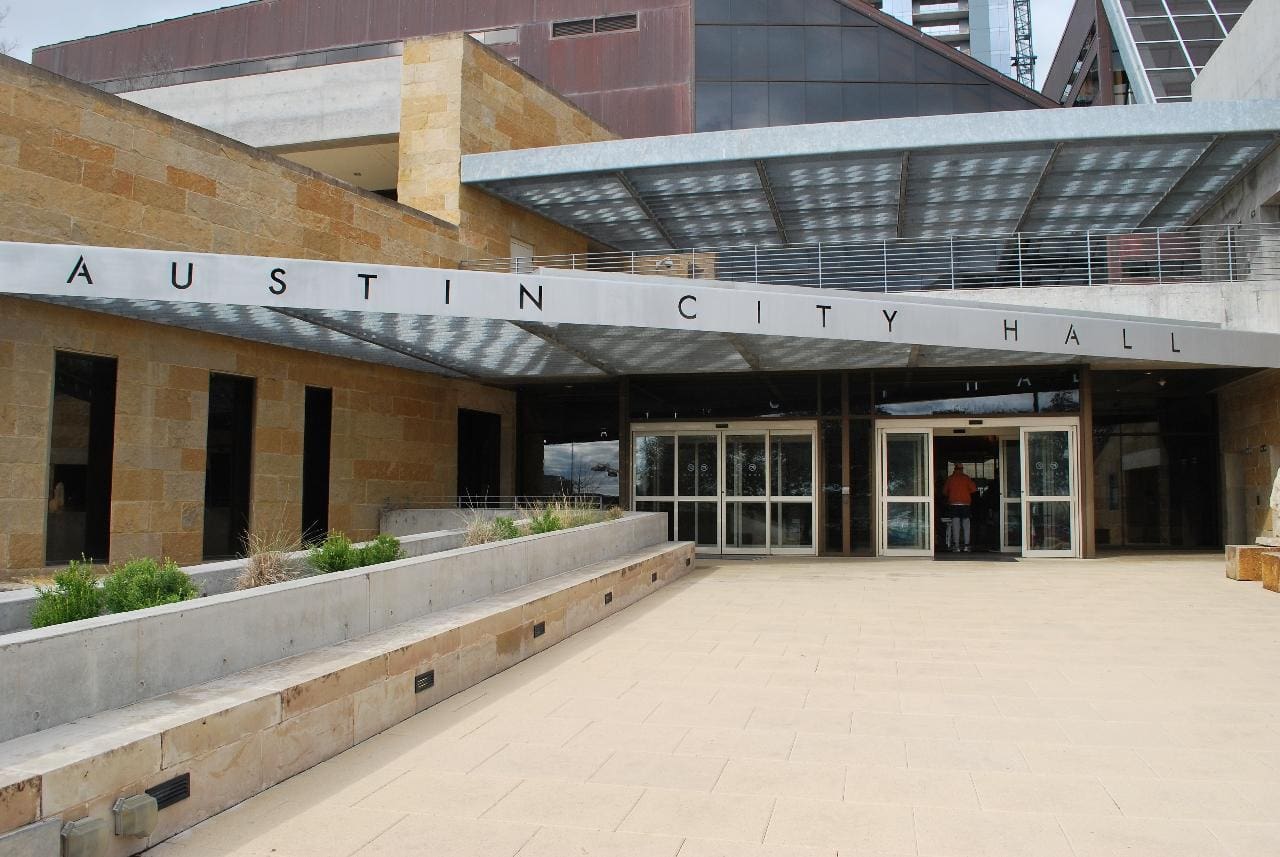
A coalition of citizens has launched a petition drive to call for a special election that could mandate an independent audit of Austin’s municipal government. If successful, the election would be held in May 2026.
The petition calls for an amendment to the city charter requiring independent audits of municipal finances at least every five years.
In addition, in the event the city council wants to pursue a future tax rate election, the proposed charter amendment would require the municipal government to complete such an audit before the election could be called.
The city of Austin currently conducts various internal audits. The proposed charter amendment would supplement this process with regular external reviews.
The petition drive follows the landslide defeat in November of Proposition Q, a ballot measure that could have enshrined hundreds of millions of dollars in potential municipal spending.
Proposition Q’s failure is the culmination of a series of record-setting municipal budgets. The city council approved its most recent record-setting $6.3 billion budget this past August.
This represented a nearly seven percent increase from 2024’s previous record of $5.9 billion, and a nearly 15 percent increase from 2023’s record of $5.5 billion. For perspective, Austin’s budget was $4.5 billion in 2021 and $3.3 billion in 2013.
Austin’s municipal spending has long been a subject of criticism. This criticism has grown following an explosion of spending on vagrancy services in recent years.
The petition drive was launched by Save Austin Now, a watchdog group which spearheaded a 2021 effort to restore a prohibition on camping in public locations by vagrants. The council had previously repealed this prohibition in 2019, which begat a rash of consequences in terms of fire hazards, health, and public safety.
Mayor Kirk Watson has responded to the petition drive by calling for a one-time independent audit by ordinance instead of a charter amendment. Watson argues that passage of an ordinance would take less time than a charter amendment election.
A similar effort to require a municipal audit fell short in 2018. At the time, Austin’s municipal budget was $4.1 billion.
“Austin’s finances are a real mess. Its spending consistently outgrows population and inflation, its debt stands at more than $11 billion, and its property tax burden is unreasonable by every measure,” said James Quintero with the Texas Public Policy Foundation.
“One way to improve things is for the city to voluntarily submit to a third-party efficiency audit of the city’s entire operation, and then make those findings public. Such an objective investigation and full disclosure promises to boost public confidence and give the city ideas to run better.”
Save Austin Now is working with a series of local businesses to collect petition signatures.