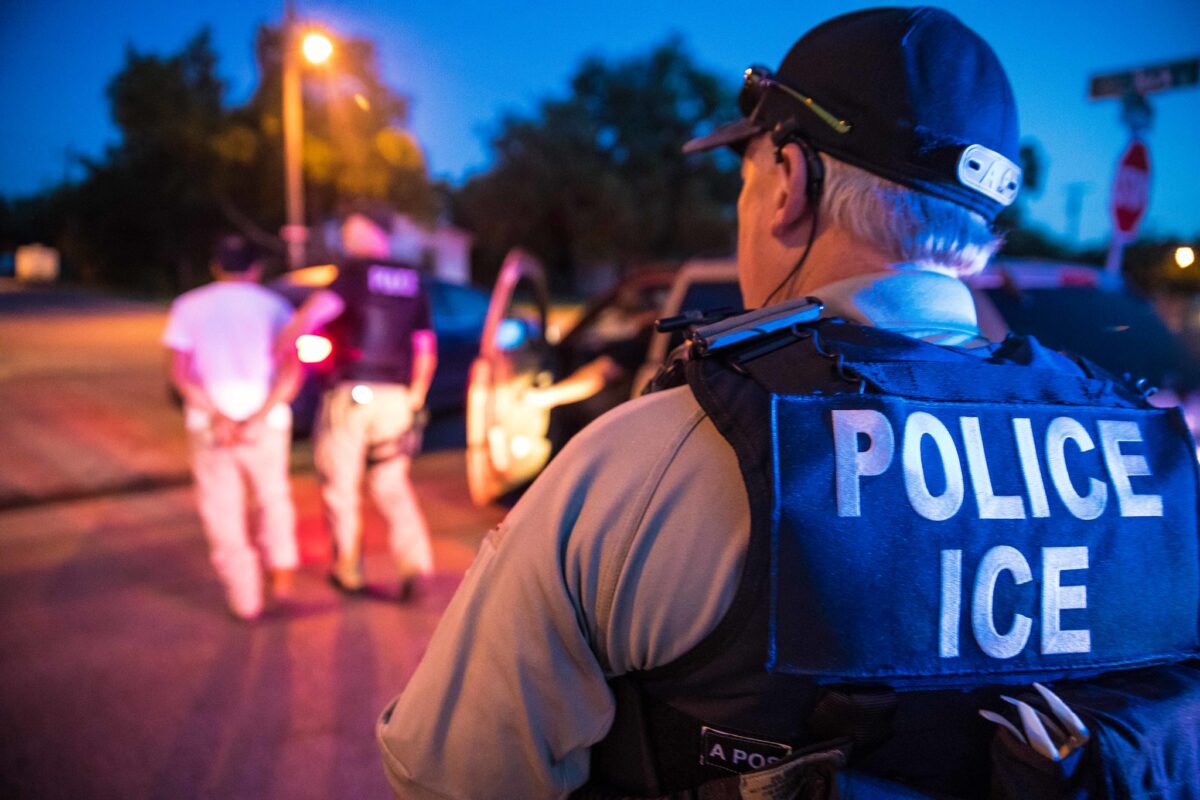
The Wise County Sheriff’s Office praised the results of its partnership with U.S. Immigration and Customs Enforcement under the federal 287(g) program, highlighting its efforts to verify immigration status and transfer illegal aliens into federal custody.
While the federal 287(g) program has existed since 1996, a new state law makes participation mandatory and requires sheriffs operating county jails to request agreements authorizing trained deputies to assist in enforcing federal immigration law.
“Our responsibility is to keep Wise County safe while following the law,” Wise County Sheriff Cary Mellema said. “The 287(g) agreement gives us a formal process for working with federal authorities when individuals in our custody are identified for immigration enforcement. This work is focused on people who have already been stopped for other criminal violations.”
According to the sheriff’s office, the cooperation agreement resulted in faster identification of wanted individuals and detention of illegal aliens from Guatemala, Honduras, Mexico, India, Brazil, Burma, Venezuela, Romania, and the Dominican Republic. The office emphasized that this work has not impacted other public safety services.
“I am extremely grateful for our Wise County Sheriff’s Office for all their hard work to ensure that Wise County does its part to reverse the damage of Biden’s open border policies and the invasion of Texas and America by millions of illegals under the supervision of criminal cartels,” wrote State Rep. Andy Hopper (R–Decatur), whose district includes Wise County.
Earlier this year, the Wise County Sheriff’s Office expanded its 287(g) agreement by adding the Task Force Model, allowing trained deputies to make certain immigration determinations during field encounters.
Not every Texas county has been receptive to entering into the agreements.
Dallas County Sheriff Marian Brown said last October her office would make “no additional efforts” toward a 287(g) agreement. Her failure to rescind her comments or enter into an agreement prompted Attorney General Ken Paxton to warn Brown her office could face legal action if it failed to comply.
“The decision of whether to seek such an agreement is not yours to make,” Paxton wrote.
The law gives sheriffs until December 1, 2026, to comply with the agreement requirement.