The Texas Hill Country is defined by its pristine landscapes, its resilience, and a deep-rooted sense of community. But right now, a quiet threat is knocking on our door, driven by short-sighted state rulemaking and market-altering federal subsidies tied to a false climate crisis narrative.
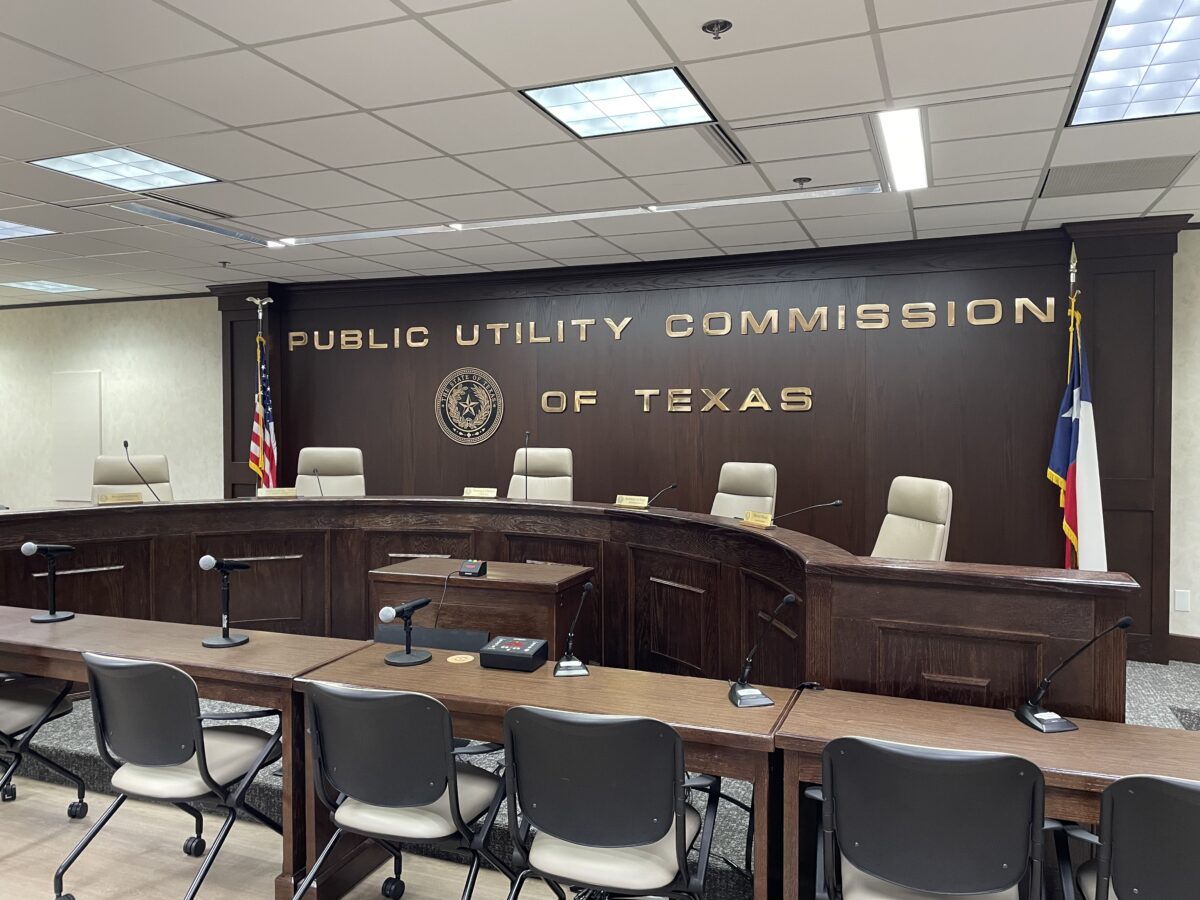
The Public Utility Commission of Texas (PUCT) is finalizing rules regarding Electric Energy Storage Facilities (EESFs aka BESS)—massive fields of unmanned lithium-ion battery containers—and the current trajectory puts the health, safety, and pocketbooks of every Texan at risk.
Let’s be clear about what these facilities are and, more importantly, what they are not.
BESS facilities do not generate a single megawatt of new electricity. They are net consumers of power. At best, they offer limited short duration grid stabilization with their discharge capability limited to a mere two to three hours, rendering them useless during an extended grid failure like Winter Storm Uri.
Yet, under the PUCT’s proposed framework, generation (they define battery storage as “generation”) developers are given free rein to place these hazardous facilities wherever they please. Unsurprisingly, developers target the unincorporated areas of remote, small counties that lack regulatory authority.
When our 391 Sub-Regional Planning Commission raised these alarms, the PUCT essentially shrugged, claiming that because the ERCOT region is largely deregulated, the state cannot affect the location or type of power connected to the grid.
This is a dangerous abdication of public responsibility. While the PUCT must fully exercise every authority it already possesses—including the “location of need” provisions within its existing rules—the Texas Legislature should also examine whether current law gives the PUCT sufficient authority to strategically plan the location and type of new generation needed to serve a rapidly growing state.
By leaving the location and type of power generation entirely to an unregulated market, the PUCT is actively harming our local communities where these facilities are sited and burdening all Texas ratepayers with higher electricity costs.
Under the deregulated open market approach, developers are installing far away from end-users, completely ignoring the large transmission power losses and inefficiencies this creates.
The PUCT solution? Force Texas ratepayers to fund billions of dollars in new, high voltage (765-kV) transmission lines just to move unreliable wind and solar power around.
Our Texas grid is already overly reliant on unreliable wind and solar power, driven by federal subsidies made available as a result of the former administration’s false climate crisis.
Sadly, this trend is expected to get much worse. ERCOT’s latest 2025 State of the GRID publication shows that solar generation capacity is expected to increase 126% from 37.4 GW in 2025 to 84.6 GW in 2030, while wind generation is expected to increase 26% from 40.7 GW to 51.1 GW and storage is expected to increase 197% from 16.7 GW to 49.6 GW over the same 5-year period till 2030.
In comparison, reliable thermal (natural gas, coal, or nuclear driven) dispatchable generation is only expected to increase by 10% from 89.5 GW to 98.6 GW in the same 5-year period. It is time for PUCT to become actively involved in planning the location and type of generation connected to the GRID.
The physical risks to our communities are even more alarming.
Lithium-ion battery technology carries an inherent history of overheating and thermal runaway. When a battery bank catches fire, it cannot be extinguished with traditional water or foam; it must simply be left to burn out. These catastrophic failures release lethal toxins into our air and threaten to contaminate the fragile surface water and groundwater systems we depend upon.
The State Fire Marshal’s Office notes a 2% statistical probability of thermal runaway. While 2% sounds small, multiply that across the more than 1,000 BESS projects planned statewide, and a devastating local disaster becomes a mathematical certainty. Our rural volunteer fire departments simply do not have the resources to handle an industrial chemical fire of this scale.
A Common-Sense Path Forward
We do not have to accept this. If the PUCT cannot completely pause this rulemaking process to conduct an in-depth review—as they recently did for the controversial 765 kV transmission lines—then they must, at a minimum, integrate four critical protections into their final EESF (BESS) rule:
- Mandatory Risk-Adjusted Public Benefit Tests: The PUCT currently requires utilities to show cost savings compared to building traditional infrastructure. This is grossly inadequate. The cost-benefit analysis must strictly account for risk-adjusted costs, including the probability of a fire and environmental remediation, and the immediate depression of adjacent property values. It must also account for reliability during extended emergencies as well as the location of the BESS and factor in transmission losses to get the power where it is needed.
- Strict Cost Recovery Limits: Utilities should not be allowed to use interim mechanisms like the Distribution Cost Recovery Factor to quickly pass these expenses onto us. Ratepayers deserve a full prudence review in comprehensive base-rate cases before a single dime—including any guaranteed return on investment—shows up on our monthly bills. Why should Texans guarantee a profit margin on a facility that creates no long-term local jobs and generates no actual power?
- Uncompromising Cybersecurity & National Security Compliance: Many of these unmanned, remotely operated facilities utilize battery components and circuit boards manufactured in China by companies like CATL. Our own Department of Defense has recognized this glaring security vulnerability and banned these components from U.S. military bases. The PUCT must make compliance with the Lone Star Infrastructure Protection Act mandatory. We need strict certification that no equipment comes from prohibited foreign sources, backed by ongoing quarterly audits.
- Local Review and Notice Requirements: Currently, state rules only require notice be given to municipalities and select utility entities. Remote, unincorporated areas are left entirely in the dark. The PUCT must add county commissioners’ courts and Chapter 391 Regional Planning Commissions to the required notice list and grant local authorities the right to directly review these transmission and distribution utilities’ contracts with power generation companies. Local officials must be allowed to put eyes on these projects to protect their residents.
These recommendations can and should be implemented immediately by the PUCT under its existing authority.
However, this discussion also highlights a broader question for our Texas Legislature. As our population, economy, and electricity demand continue to grow, should Texas continue relying almost exclusively on market forces to determine where critical electric infrastructure is built, or should the Legislature provide the PUCT with clearer authority to strategically plan generation that better serves the long-term interests of all Texans?
An efficient, resilient grid requires active planning, not blind faith in an opportunistic market. Instead of wasting billions on short-sighted battery patches and redundant transmission lines, Texas should prioritize building new, reliable, dispatchable natural gas or nuclear generation located close to major demand centers like data hubs and urban areas.
Texas deliberately chose a competitive electric market because competition encourages efficiency and innovation. However, markets excel at determining price—not necessarily resilience, geographic proximity to demand, security, or overall grid efficiency and cost optimization. Those are matters of public policy.
If current statutes prevent the PUCT from planning where critical generation should be located, then it is the responsibility of the Texas Legislature to modernize those statutes. As Texas continues to grow, our laws must evolve to ensure competition is complemented by strategic planning rather than replaced by it.
Texas has never relied on chance to build highways, reservoirs, or water infrastructure. Our electric grid that powers our homes, businesses, hospitals, and future economy deserves the same strategic foresight. Any expansion of planning authority should also require meaningful coordination with Texas’ Chapter 391 Sub-Regional Planning Commissions, ensuring that counties, municipalities, emergency management officials, utilities, and regional stakeholders have a voice before major generation facilities are approved.
So I ask PUCT and our Texas Legislators, are we building the grid we need—or merely accepting the grid that self-serving market forces alone produce?
The answer will shape Texas for decades to come.