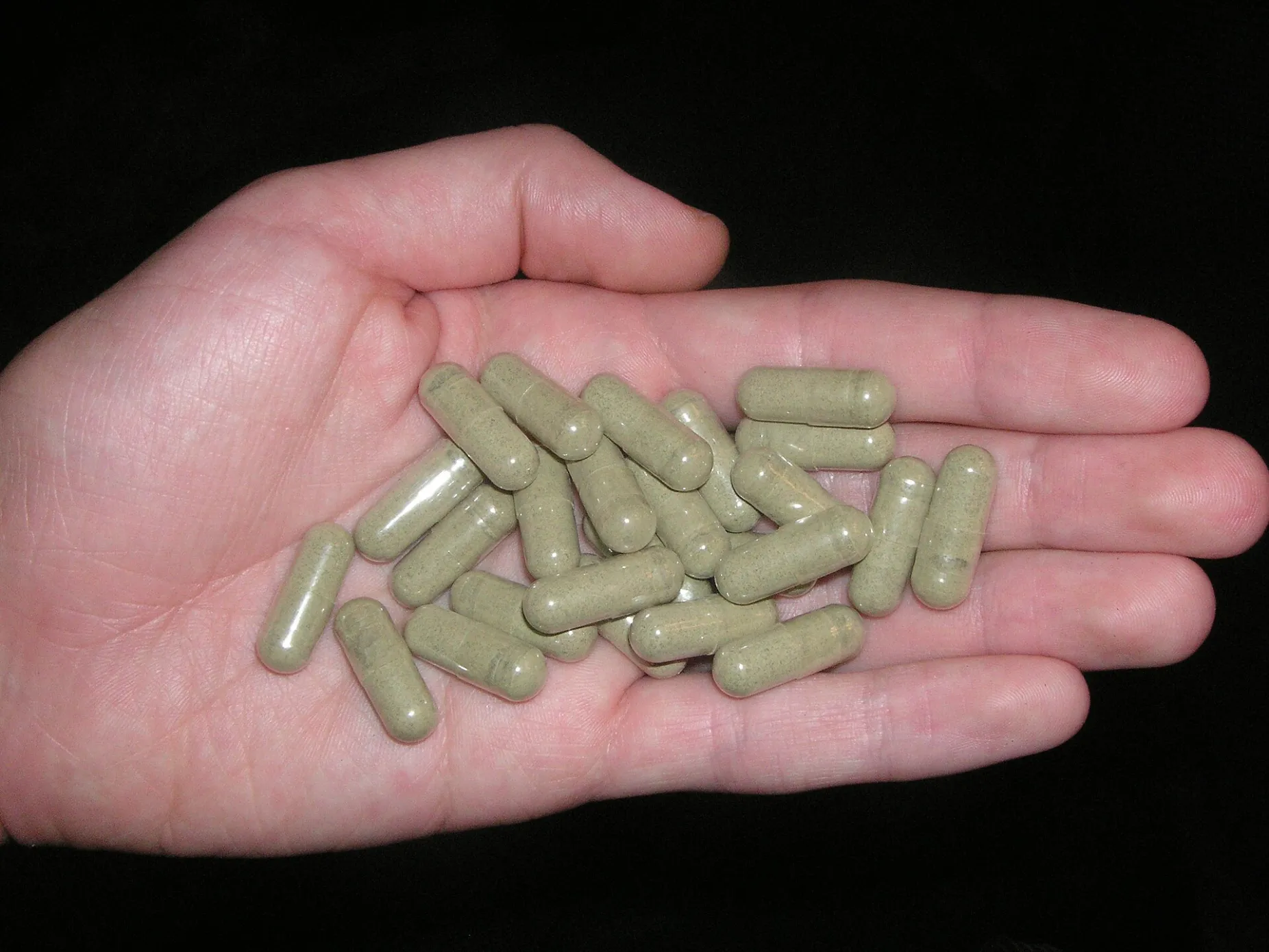
As part of an initiative to crack down on the illegal distribution of products containing a psychoactive substance called kratom, Attorney General Ken Paxton has sued a group of North Texas businesses for deceptively marketing items containing alkaloid levels greater than allowed by state law.
Kratom comes from the leaves of a tropical plant from Southeast Asia and contains alkaloids, specifically 7-hydroxymitragynine (7-OH), which has been associated with life-threatening symptoms and even death when consumed.
The lawsuit compares the properties of 7-OH to morphine and fentanyl. “It has a high potential for abuse due to its opioid pharmacology, and kratom use can rapidly result in opiate-like addiction.”
The substance is commonly used in the U.S. to assist in relieving chronic pain or as a harm reduction method with symptoms of opioid withdrawals.
However, kratom has not been approved by the U.S. Food and Drug Administration for any medical use.
The two defendants named in the suit—Kunkka Enterprise Co. and Rubick Inc.—are collectively known as Smokey’s Paradise.
Paxton’s suit alleges that Smokey’s Paradise in Midlothian not only violated the Texas Kratom Consumer Health and Safety Protection Act by selling products that contained up to 96 percent 7-OH, but also the Texas Deceptive Trade Practices Act by knowingly selling products containing illegal synthetic alkaloids.
“Kratom is addictive and deadly, and I’m suing these companies for knowingly endangering Texans by selling products with nearly 50 times the legal limit of this opioid,” said Paxton. “The Legislature enacted clear safeguards to protect consumers from deadly kratom products, and my office will aggressively enforce those laws against anyone who puts Texans’ health at risk with these drugs.”
In 2023, state lawmakers passed the Kratom Act, which requires clear labeling, testing, and potency limits of products containing kratom. It also disallows for kratom products to contain adulterated or contaminated products and forbids a product to contain greater than 2 percent of 7-OH in the overall alkaloid composition.
An injunction is being sought by Paxton against the companies that would immediately halt Smokey’s Paradise from selling and distributing the kratom products in question.
Harvard Health Publishing has reported that although kratom is currently not scheduled under the Texas Controlled Substances Act, the Drug Enforcement Administration has previously proposed classifying it as a Schedule 1 controlled substance, the same as heroin.