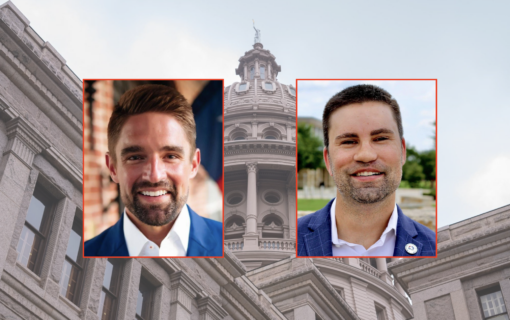
Democrat State Rep. Ana Hernandez is proposing legislation that would discipline mental health providers who counsel against same-sex attraction in children.
House Bill 1219 by Hernandez (D–Houston) says a mental health provider engages in “unprofessional conduct” if the provider attempts to eliminate or reduce the child’s “sexual or romantic attractions or feelings toward individuals of the same sex.”
HB 1219 also covers attempts to change a child’s sexual orientation by trying to change the child’s behavior or gender identity or expression. The bill defines a child as anyone younger than 18.
A provider who commits “unprofessional conduct” would be subject to disciplinary action by any state agency with the authority to discipline the provider.
The bill also allows for exceptions.
The “unprofessional conduct” designation would not apply to counseling that provides acceptance, support, and understanding, or that facilitates a child’s coping, social support, identity exploration, and development. That includes sexual orientation-neutral interventions to prevent or address unlawful conduct or unsafe sexual practices, provided the counseling does not seek to change sexual orientation or gender identity or expression.
The “unprofessional” designation would also not apply to counseling that supports children undergoing gender transition.
The bill covers a broad range of mental health providers, such as licensed professional counselors, nurses, physicians, psychologists, behavior analysts, social workers, and individuals licensed to provide professional therapy.
Vanessa Sivadge, president of Protecting Texas Children, said the bill raises concerns for providers whose religious convictions inform their care for children.
“Are these professionals expected to set aside their conscience, professional judgment, and religious convictions to comply with the state’s preferred approach to these deeply personal questions?” asked Sivadge in a statement to Texas Scorecard.
Sivadge also criticized HB 1219’s definition of gender, which she said relies on cultural expectations and social norms rather than biological reality. The bill defines the term as an individual’s having, or being perceived as having, a gender-related identity, appearance, expression, or behavior, whether or not it differs from that commonly associated with the individual’s assigned sex at birth.
“We should be extraordinarily cautious about embedding subjective, ever-changing cultural standards into Texas law,” said Sivadge. … “As a Christian, I believe every child possesses an inherent dignity and identity given by God, not one that is created or determined by cultural expectations.”
Sivadge cited Chiles v. Salazar, an 8-1 Supreme Court decision that ruled Colorado’s ban on conversion therapy, as applied to a counselor’s talk therapy, regulates speech based on viewpoint. The court said lower courts must apply more rigorous First Amendment scrutiny.
“We must be able to have honest conversations with children and families, including conversations that recognize biological reality and allow professionals to practice according to their conscience,” Sivadge added. “Protecting children should never require silencing professionals who hold a different viewpoint. Texas must take seriously the constitutional rights of its healthcare professionals, the role of parents, and the responsibility we all share to protect the next generation.”
If passed, the bill would take effect September 1, 2027.
The 90th Legislative Session begins January 12, 2027.