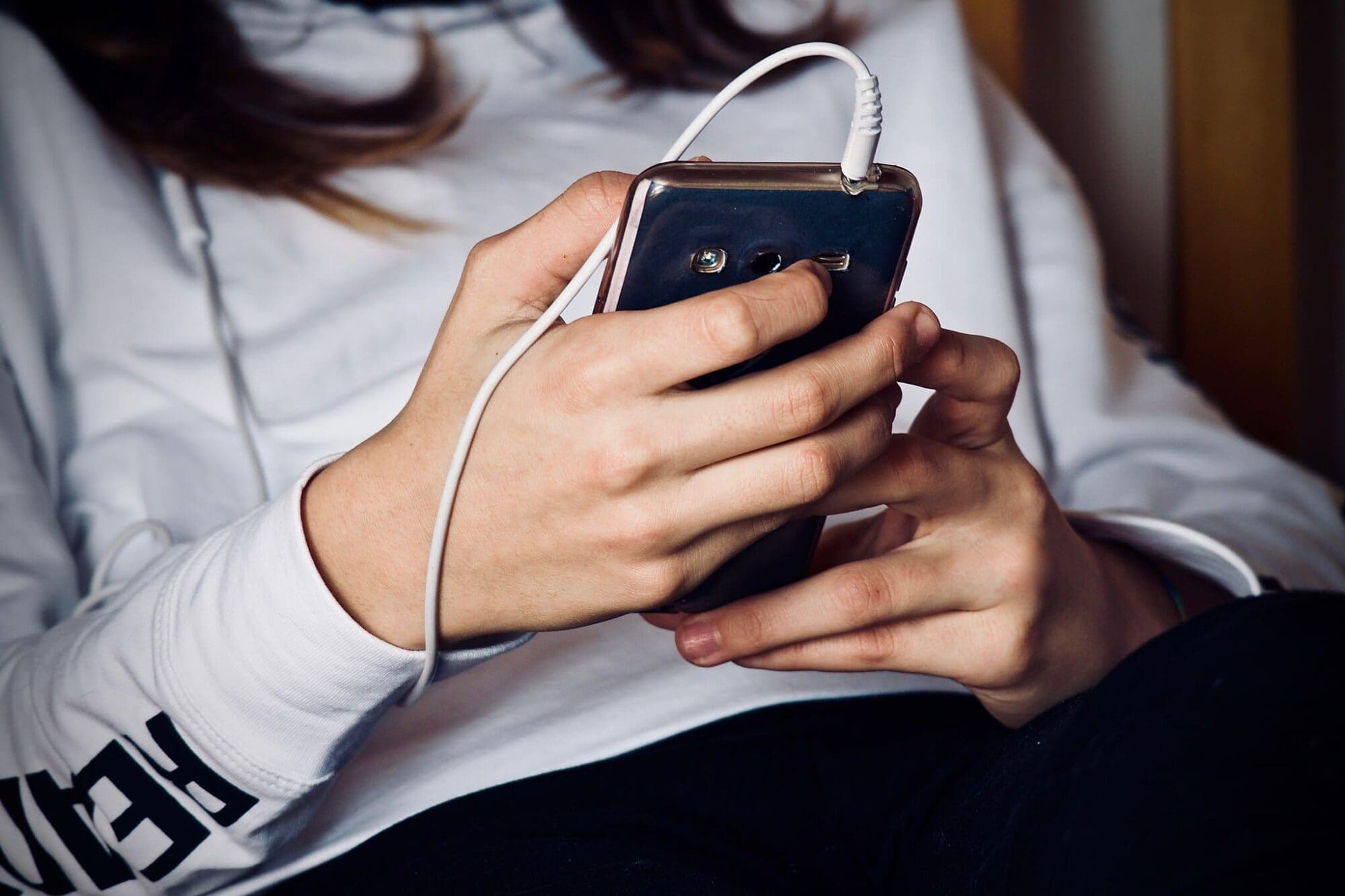
Texas’ new law restricting students from using personal electronic devices during school hours received positive reports during a Monday update to lawmakers on its implementation.
House Bill 1481, passed last year, gives discretion to each school district as to how they implement the policy.
Educators told members of the House Committee on Public Education that overall the legislation has been a success, citing many positive behavioral changes in students, including increased engagement.
Dr. Brigette Whaley, an associate professor at West Texas A&M University, told the committee that while studying the implementation of the law in a rural West Texas high school, she not only discovered that teachers were “overwhelmingly on board” with the new policy, but the lack of personal devices increased student engagement and lessened behavior problems and social media drama.
“The absence of smartphones reduced visible socioeconomic differences between students, which helped create a more equitable and unified learning environment,” said Whaley.
Whaley also informed the committee that a large part of participating teachers have acknowledged some challenges in the policy’s enforcement and provided examples in the form of written testimony to the committee.
Vivian Burleson, president of the Texas Classroom Teachers Association, said that the measure “was a positive step in restoring classrooms to be places of real learning, re-engaging our students and improving academics, discipline, and social interactions on our campuses, and it appears that most other educators feel the same.”
Burleson informed the committee that, according to an informal survey, 75 percent of responding teachers fully supported of the ban remaining in place.
The survey also asked teachers about changes in student academic performance. Only 7 percent of the responding teachers said they did not notice any improvement from the policy, but did note that overall the policy allowed for “fewer distractions, increased attention during instruction, improved classroom discussions, and greater participation in the area of student behavior.”
Patricia Alvarado-Barnes, director of Library Media Services for Dallas Independent School District, shared that during this past school year, the district saw a remarkable uptick in the number of books checked out by students, which she attributes to the passage of House Bill 1481.
“From the first day of school through March 31, Dallas ISD students checked out 1,084,837 books,” said Barnes. “That is more than 200,000 additional books compared to the same period last year, a 24 percent increase.”
“To put that number in perspective, we had set a goal of reaching 1 million book checkouts by the end of the school year. We passed that milestone in March with two months still to go.”
Although all panelists spoke in support of the measure, several offered additional suggestions for lawmakers to consider.
Deborah Caldwell, chief operations officer at Northeast Independent School District, informed lawmakers of parental requests made within her district, such as exemptions to set phone use rules for high school students.
Caldwell said the proposed exemption is due to increased responsibilities often experienced by high schoolers, from being responsible for the care of family members to college interviews.
“We agree that phones do not have a place during that instructional time, but we also recognize that community members have other reasons of why that student may need access to that phone,” said Caldwell. “Particularly a high school student versus an elementary where there would not be that same need.”