A federal appeals court has delivered another victory for Texas’ landmark 2021 election integrity law—the same legislation that prompted Democrat lawmakers to flee the state in an unsuccessful attempt to block its passage.
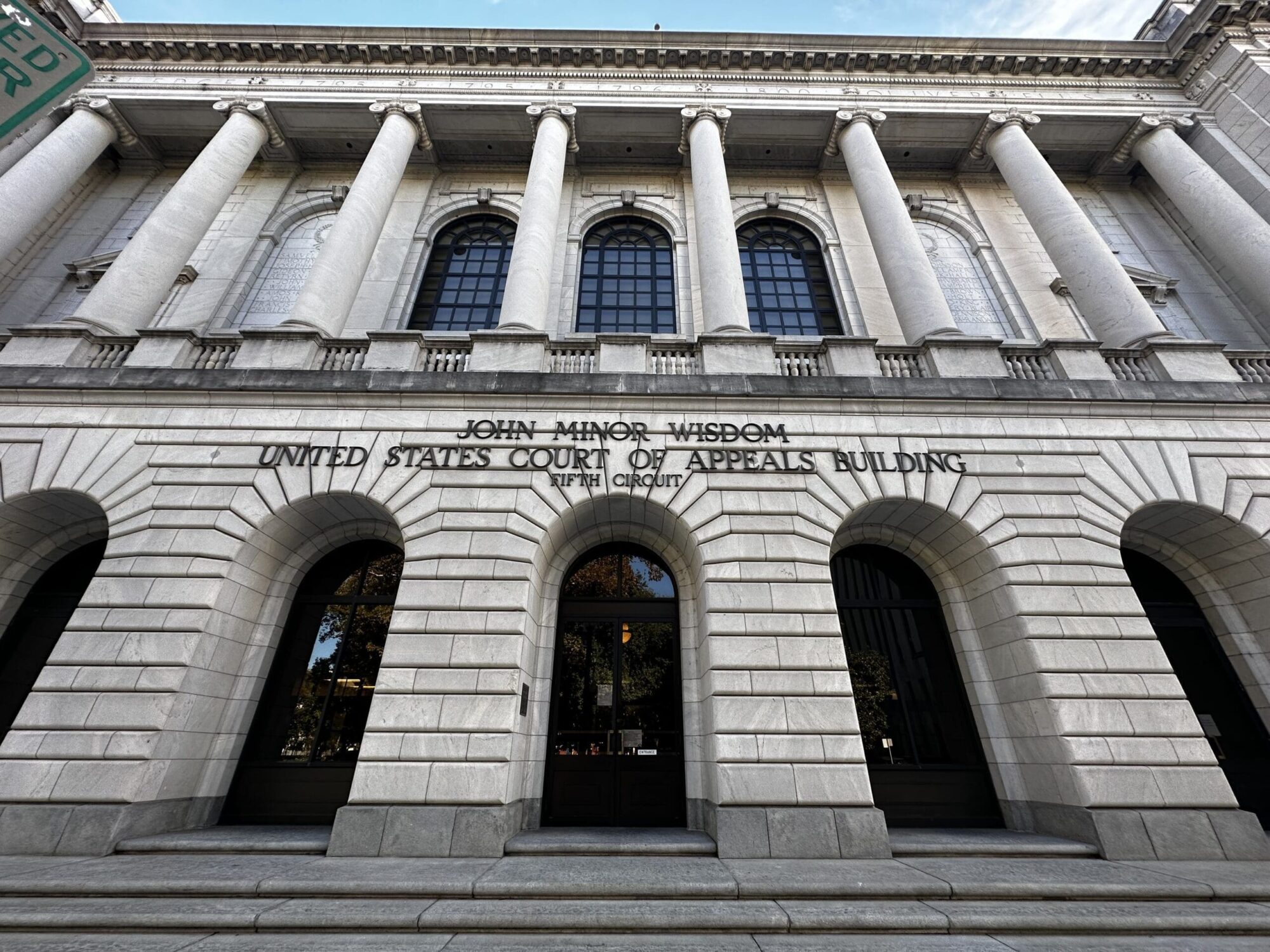
The U.S. Fifth Circuit Court of Appeals on Wednesday reversed a lower court ruling that blocked nine provisions of Senate Bill 1, including requirements related to voter identification for mail ballots and assistance provided to voters.
The three-judge panel sharply criticized the lower court’s handling of challenges to the law.
“In short, we have been playing an exhausting game of Whac-A-Mole to correct the district court’s mishandling of this case,” Judge Andrew Oldham wrote after recounting a series of previous Fifth Circuit decisions reversing or staying rulings against SB 1.
Oldham opened the opinion with an equally forceful defense of mail-in voting safeguards.
“It has long been established that mail-in ballots are prone to fraud,” wrote Oldham, adding that voting by mail “jeopardizes election integrity and democracy itself.”
Passed by the Legislature in 2021, SB 1 established new safeguards, including requiring voters casting ballots by mail to provide an identification number or Social Security number that matches state records.
The law also established procedures for voters to correct defective mail ballots and imposed requirements on individuals assisting voters, including an oath that they did not coerce or intimidate the voter and disclosure of their relationship to the voter.
The legislation became the centerpiece of a months-long political battle at the Texas Capitol.
Democrat lawmakers first broke quorum near the end of the 2021 regular legislative session to kill an earlier version of the election legislation. When Gov. Greg Abbott called lawmakers back into a special session, more than 50 House Democrats left Texas for Washington, D.C., again denying the chamber a quorum.
The effort ultimately failed, and lawmakers returned to Austin. SB 1 was subsequently approved by the Legislature and signed into law by Abbott.
The decision is the latest in a series of Fifth Circuit victories for the state over challenges to SB 1.
In 2025, the appeals court reversed separate permanent injunctions against provisions of the law challenged under the Civil Rights Act of 1964 and the Voting Rights Act. The U.S. Supreme Court declined to review the latter ruling in June.
Earlier this year, the Fifth Circuit also reversed another permanent injunction against SB 1 provisions challenged under the First and Fourteenth Amendments.
Referring to that string of decisions, Oldham wrote, “Today, we do it again.”
State Sen. Bryan Hughes (R–Mineola), who authored SB 1, pointed to that history following Wednesday’s ruling.
“I carried the Election Integrity bill (SB 1) that made Democratic legislators flee Texas to try to block the bill. When fleeing didn’t work, they resorted to lawsuits to block it. But today Texas won yet another case upholding the law,” Hughes wrote in a social media post.
“The ruling upheld common sense provisions like Voter ID for mail ballots, helping make sure our elections are secure. Another win for Texas voters.”
The latest case concerned challenges brought under the Americans with Disabilities Act and the Rehabilitation Act of 1973.
A federal district court had permanently enjoined Texas and local officials from enforcing nine provisions of SB 1. The Fifth Circuit reversed that ruling in its entirety.
Most of the plaintiffs’ claims failed because the Fifth Circuit determined they lacked standing to bring them.
In considering the mail-ballot identification requirements, the court noted that the rejection rate for mail-ballot applications or ballots because of missing or mismatched identification numbers dropped from 11 or 12 percent to 2.7 percent within eight months.
Election officials testified that the numbers were expected to continue declining as voters became more accustomed to the requirements and the state’s identification database became more robust.
The court also rejected challenges involving voter-assistance provisions on standing grounds. A remaining challenge to provisions restricting compensation for certain electioneering activities failed on the merits.
Attorney General Ken Paxton, whose office has defended SB 1 against the legal challenges, celebrated the decision.
“I just secured a major win upholding election integrity and preventing voter fraud,” said Paxton. “My office will continue to defend Texas’ critical laws safeguarding our elections.”
Joe Gruters, chairman of the Republican National Committee, which was also party to the appeal, similarly called the decision “a big win for Texas voters.”
“The RNC helped beat back yet another left-wing attempt to tear down commonsense election safeguards. Texans deserve elections free from coercion, intimidation, and Democrat ballot harvesting schemes, and this ruling keeps those protections firmly in place,” said Gruters. “The RNC will keep fighting in court to make sure every legal vote counts.”