While the outbreak of New World screwworm continues in South Texas, an infestation of pasture mealybugs is beginning to threaten Texas’s agricultural industry.
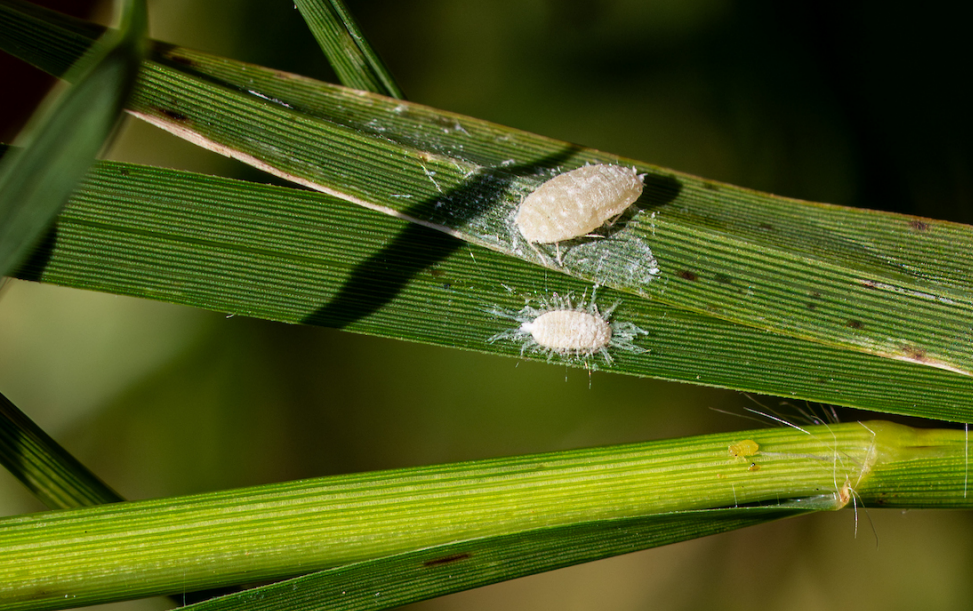
Pasture mealybugs primarily feed on important agricultural resources, such as hayfields and forage resources. Immature pasture mealybugs feed on plant sap and can inject toxins that poison plants, causing them to thin or die outright.
Texas A&M AgriLife Extension offices across the state have been monitoring the pest. So far, pasture mealybugs have been detected in 70 counties.
“It seems like we add new counties every week, sometimes every day,” said David Kerns, the AgriLife Extension statewide integrated pest management coordinator. “We have counties with confirmed cases, and there’s probably another 56 that we consider imminently threatened. I get up to a dozen calls every day from producers who think they have them in their pastures.”
Unlike NWS, mealybugs are particularly resistant to pesticides, and there are no effective pesticides available to treat fields or prevent infestations.
Kerns stated that Texas A&M AgriLife Research has been seeking a pesticide that will eliminate infestations while protecting valuable foraging resources. He added that an insecticide called Sefina has been shown to be effective against low quantities of mealybugs.
AgriLife is currently seeking an emergency insecticide authorization from the U.S. Environmental Protection Agency.
Recommended treatment options rely on early detection, reducing thick grass, and preventing the pest from moving between fields.
“Pasture mealy bugs love tall, dense grass canopy,” Kerns said. “So, if you think you have them and your pasture is close to a cutting, cut it and bale it. That will reduce the populations considerably, and the short grass is not going to be hospitable to those remaining.”
AgriLife experts attribute the insect’s rapid spread to prevailing winds that pick up pasture mealybugs in their early life stage and carry them across the state.
The economic impact of mealybugs on the Texas agricultural industry is staggering. Recent assessments estimate that 20.4 million acres of grazing land lie within infested counties, with another 15.3 million acres under imminent threat.
Current estimates from Texas A&M AgriLife suggest that damage from pasture mealybugs could range from $100 million to $1 billion. However, certain grazing species, such as Bermuda Grass, could require expensive replanting if current supplies are lost. If widespread replanting becomes necessary, the cost could increase by an additional $2 billion.
Reduced grazing capacity also means supplemental feed prices will skyrocket, adding significant pressure on the industry as a whole.
“Pasture mealybug and New World screwworm are a potential one-two punch that our producers hope to avoid,” David Anderson, an AgriLife economist, said. “To have one pest threatening the grass our animals need and another threatening the animals themselves poses some serious challenges, but ranchers are a resilient bunch.”