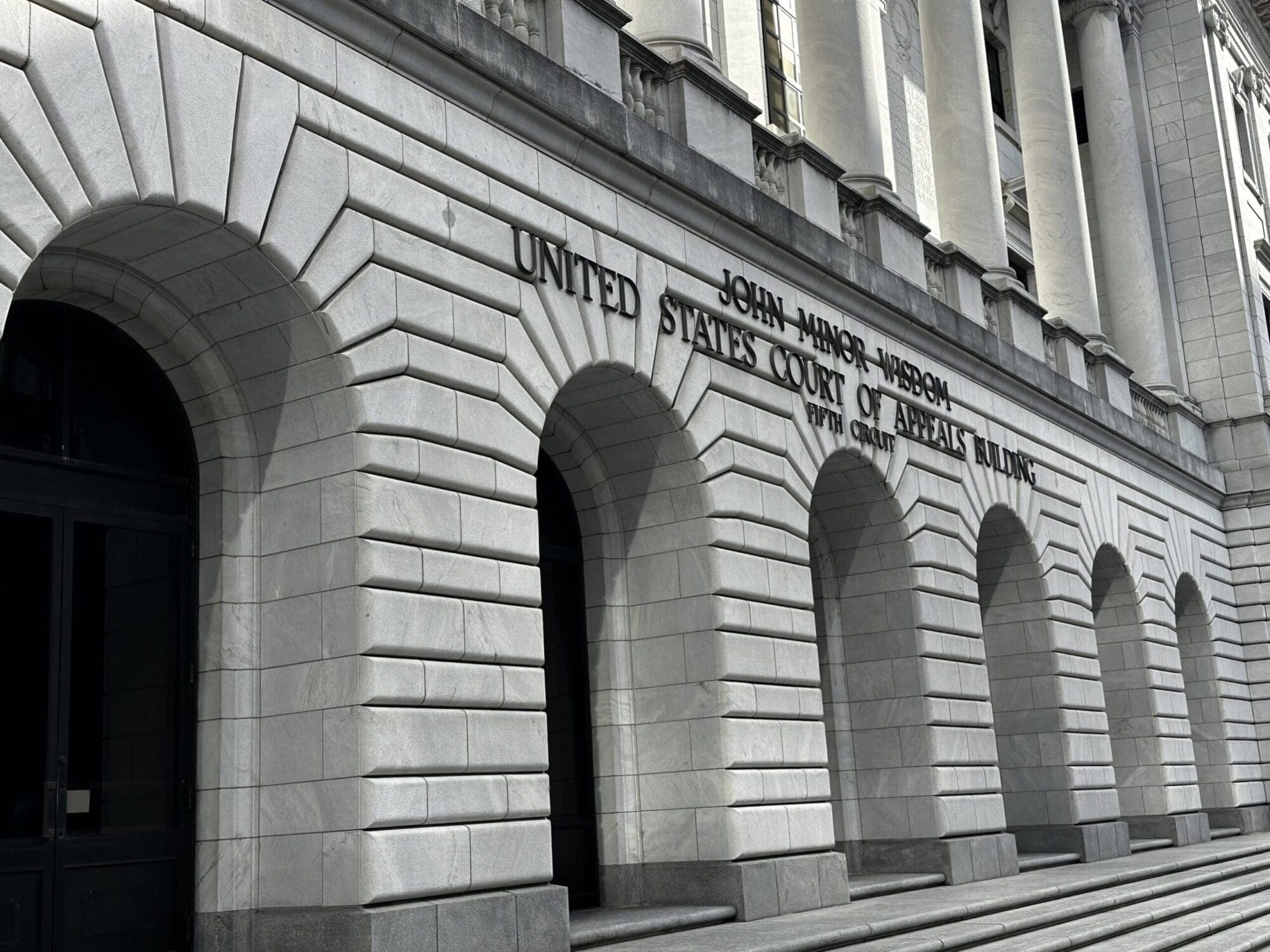
Absent members of Congress cannot be counted as present by proxy to establish a quorum, the U.S. Court of Appeals for the Fifth Circuit ruled, upholding Texas’ challenge to a COVID-era House procedure.
The November 20 decision affirmed a previous injunction blocking the federal government from enforcing the Pregnant Workers Fairness Act against the State of Texas as an employer. It did not invalidate the law for private employers in Texas or strike down the broader spending package containing it.
Attorney General Ken Paxton celebrated the Fifth Circuit’s decision Tuesday, stating, “The Biden-era Congress attempted to bypass one of our constitutional safeguards by allowing Congress to act without a quorum present during the COVID-19 pandemic. The Fifth Circuit’s ruling makes clear that no branch of government is above the Constitution.”
The House passed the Consolidated Appropriations Act of 2023 on December 23, 2022. Of the 427 members who recorded a vote, 226 participated by proxy, leaving fewer than a majority physically present. The legislation included the Pregnant Workers Fairness Act. The act later passed through the Senate and was subsequently signed into law by the president.
The law requires covered employers to provide reasonable accommodations for workers’ known limitations related to pregnancy, childbirth, or related medical conditions, unless doing so would impose an undue hardship on the employer.
Paxton argued the act was unconstitutional, having violated the Quorum Clause found in Article I, Section 5 of the U.S. Constitution. This clause states that “a Majority of each [House] shall constitute a Quorum to do Business” and that a minority in the House is “authorized to compel the Attendance of absent Members, in such Manner, and under such Penalties as each House may provide.”
“Members of Congress are elected by the American people to fulfill their constitutional duties and represent the people’s interests,” Paxton stated. “When lawmakers used proxy procedures to circumvent quorum requirements, they abandoned that responsibility.”
The federal government disagreed, claiming that the act was valid due to the enrolled-bill rule, which assumes proper procedure took place in the Legislature if a bill is signed into law. The Fifth Circuit answered this claim by stating in its decision that “the enrolled-bill rule does not bar our review because Texas’s constitutional challenge does not implicate a dispute of fact regarding the Act’s passage.”
“We further conclude that the Act’s passage was unconstitutional because the Quorum Clause does not allow proxies to be included when establishing a quorum,” wrote Judge Cory T. Wilson in the majority opinion.
“The [Quorum] Clause’s text, context, original understanding, and unbroken historical application all indicate that Members of Congress must be present for quorum purposes – as the Supreme Court expressly held over 125 years ago, and as Congress has done ever since the Founding. ‘Proxy presence’ does not count,” Wilson added.
The ruling did not decide whether proxy voting itself is constitutional. It addressed whether absent members could be counted as present by proxy to establish the quorum necessary to conduct business.
This injunction follows a rehearing of the case by the full court after a three-judge panel had reversed the district court’s injunction in 2025.
Eight judges dissented, criticizing Texas’ challenge after the state accepted funding appropriated through the same legislation.
“The State of Texas, having accepted the vast majority of the funds that Congress appropriated to it, now contends that the portion of the bill providing protections for pregnant women and workers violates the Quorum Clause,” the judges wrote.
The decision could pave the way for a re-evaluation of other COVID-era laws passed by proxy.
The Department of Justice has not responded to a request for comment on the decision.