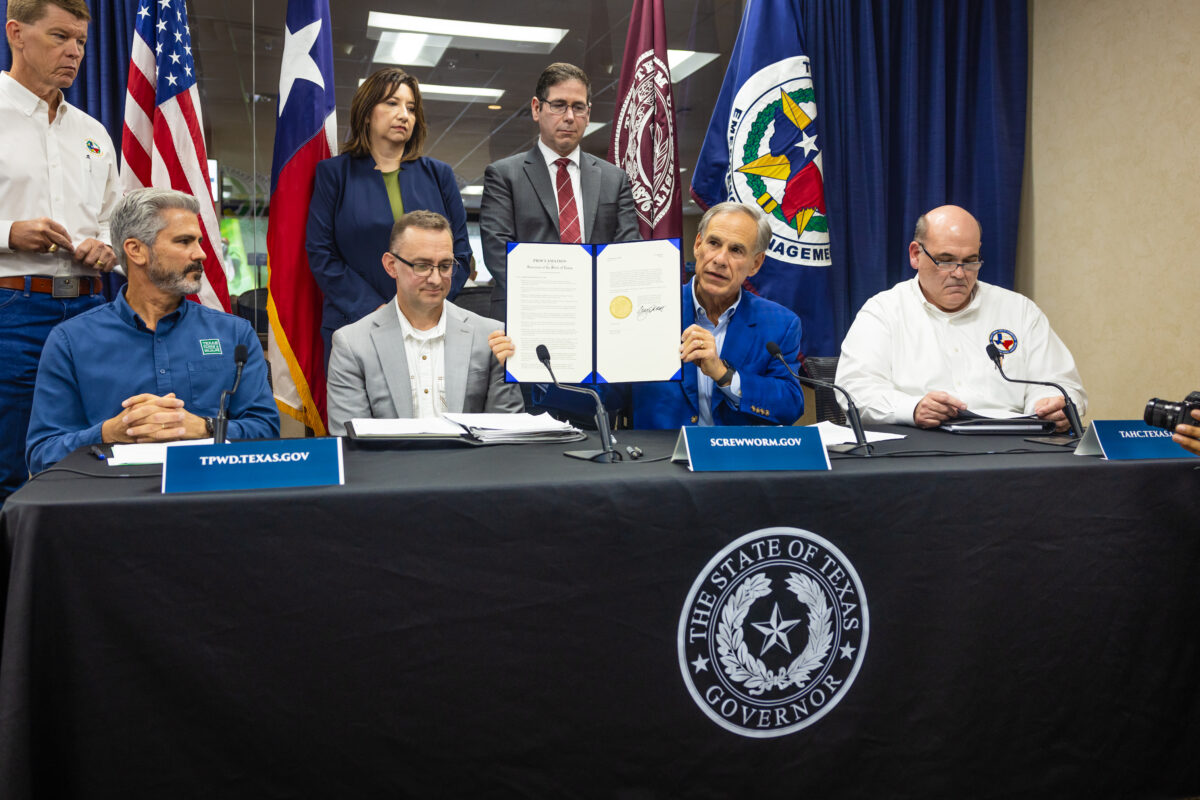
Gov. Greg Abbott signed an updated disaster declaration to combat the New World screwworm and announced the deployment of state resources to contain the pest during a Friday press conference.
With the updated declaration, Abbott authorized the use of all available resources of the state government and public university systems to respond to the disaster as well as reassign resources from across the state to combat the flesh-eating pest. The state is seeking to accelerate both the movement of sterile flies into Texas and the construction of the sterile fly production facility in Edinburg.
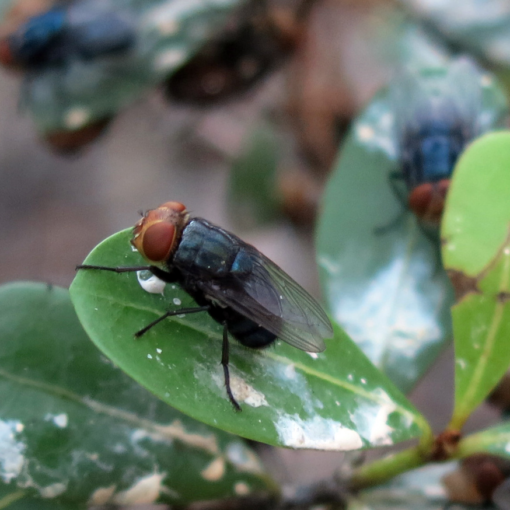
The facility works by producing millions of sterile male screwworm flies, which are released to mate with wild females, preventing reproduction and gradually eradicating the pest population. Abbott emphasized that this technique is the proven method to both prevent and combat the invasive pest.
The declaration also prioritizes resources for the area where the infestation has been discovered and the immediate surrounding area, specifically in Uvalde and Zavala counties.
“We will expand the prioritization list as needed, if needed, to any other counties where there is any identification of infestation,” said Abbott.
Texas State Veterinarian and Executive Director of the Texas Animal Health Commission Dr. Lewis Dinges said the infested calf is doing well and its wound is healing nicely. Although officials have detected no other cases of infestation in the herd where the calf was discovered, they have treated all of them.
“The owner and ranch foreman’s cooperation and their continued vigilance has been excellent to paint the picture of the response and how preparedness and coordination efforts have paid off so far,” said Dinges.
Admiral Michael Schmoyer, associate administrator for the U.S. Department of Agriculture’s Animal and Plant Health Inspection Service, emphasized that the screwworm remains a high priority of the USDA, highlighting the year-long partnership with Texas that allowed for aggressive steps to be taken in preparation for the screwworm’s arrival.
“We understand that when it was first detected in Mexico in November 2024 every single predictive model, every single one estimated that this was going to arrive in the United States last summer, it did not,” said Schmoyer. “The reason it did not is because we take a very aggressive approach.”
Schmoyer reported that there are currently 28 USDA veterinarians and animal health experts working to support and complement Texas’ existing efforts.
Abbott also stressed the importance of finishing the U.S. sterile fly production facility being built at Moore Air Force Base in South Texas as quickly as possible.
Officials currently project completion of the facility in Edinburg by November 2027.
The USDA has also provided funding for a sterile fly production facility in Metapa, Mexico, which the Mexican government has reported is on track to open at the end of the month.
“Texas is resilient, our producers, veterinarians, and state officials are among the very best in the United States,” said Abbott. “We have in the past prevented as well as eradicated this pest, and we can do it again.”