Texas senators discussed future legislation on financial transparency and audit standards at public colleges and universities during a Finance Committee meeting examining the issue ahead of the 2027 legislative session.
“Hundreds of millions of billions of dollars flow through our institutions of higher education,” State Sen. Lois Kolkhorst (R–Brenham) said at Tuesday’s hearing. “If you go to a community college, or you go to a general academic institution, or if you attend one of our HRIs, you are on scholarship from the people of Texas. The tuition is suppressed because the taxpayers put money into it.”
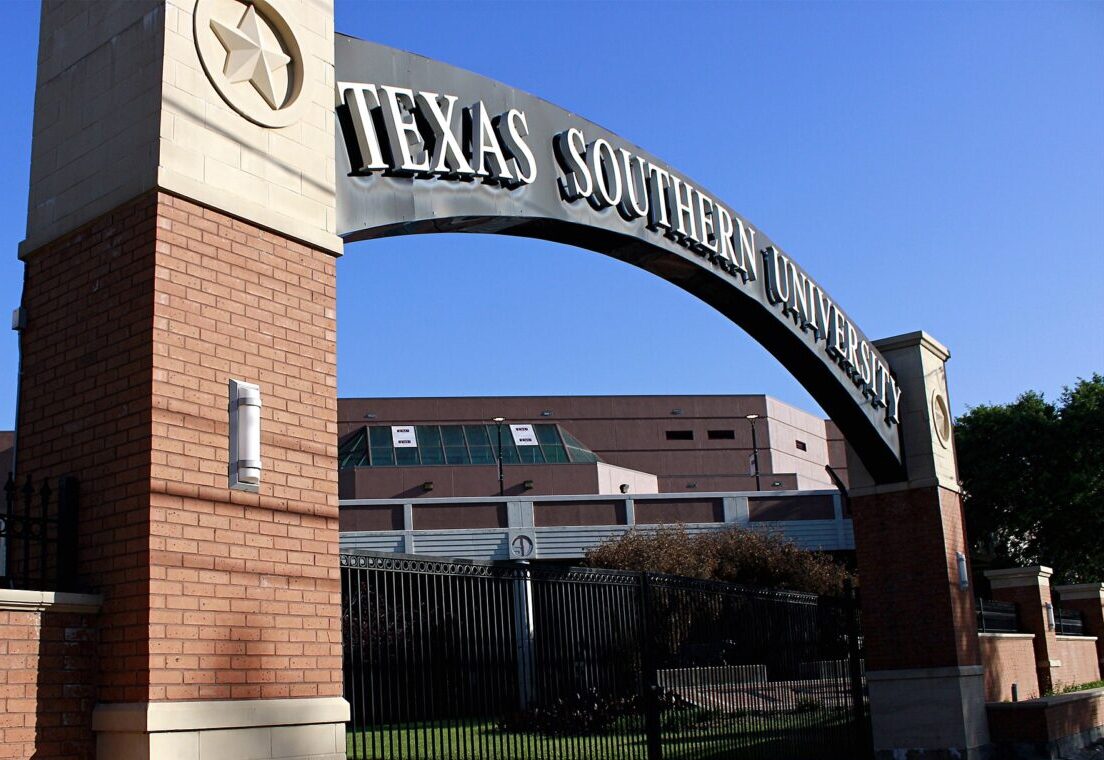
Colin Brock, a Legislative Budget Board analyst, testified that nearly every public university submitted compliance reports required under the Texas Internal Auditing Act. The lone exception was Texas Southern University which failed to submit reports in 2018, 2019, 2020, and again in 2025.
Lisa Collier, head of the State Auditor’s Office, said it did not audit TSU or escalate the situation until 2025, despite the years of noncompliance. The university was also subject to a 2006 embezzlement case involving its president and a 2020 cash-handling scandal.
When pressed why TSU went unaudited, Collier answered, “I do know that TSU has been on the radar for several years. Part of the reason we didn’t conduct an audit several years ago is because we knew there had been a lot of turnover.”
“That’s not a good answer,” Committee Chair Joan Huffman (R–Houston) responded. “There was turnover, so we didn’t do it because we didn’t know who to ask the questions of. So we just kept giving you money and let you spend it.”
State Sen. Royce West (D–Dallas) asked what duty a Board of Regents has to “receive, digest, and act upon audits,” and pressed Collier on whether an audit committee failing to do that amounts to a breach of duty.
West also noted that TSU’s board members are gubernatorial appointees confirmed by the Senate members themselves.
“There’s a lot of blame to go around here,” he said.
State Sen. Paul Bettencourt (R–Houston) said he plans to file legislation next session that could prevent such situations in the future.
The bill would require “an internal auditor in all higher education and all HRI or any related institutions.”
“Lots of bad things don’t happen when you have an internal auditor,” he said. “I think this speaks to the heart of what we’re seeing here.”
The proposal would mirror the University of Texas System, which maintains internal auditors at both the system office and each individual institution.
When asked by Bettencourt for her opinion, Collier noted that there is currently no requirement for internal audits but thought it was beneficial to “have an internal auditor on staff as an employee rather than a contractor. Again, it’s a deterrent.”
Bettencourt said an internal audit system would help prevent the kind of prolonged reporting lapse seen at TSU. “When we ask for the information, we don’t have a three-year gap,” he said.
West interjected during the description, “I look forward to co-authoring that with you.”
Kolkhorst later echoed that support, saying, “I look forward to being a joint author with you on your bill.”
State Sen. Pete Flores (R–Pleasanton) also weighed in, remarking on his experience with internal auditing and calling it “a good practice” and something that “works very well.”
Lawmakers also questioned whether governing board members receive sufficient training on their financial oversight responsibilities. Kolkhorst suggested lawmakers revisit statutory training requirements for regents, noting that the current one-time board training might not be enough.
State Sen. Juan Hinojosa (D–McAllen) also raised alarm at the lack of uniform audit standards for community colleges.
Daniel Falcon, the LBB’s community college analyst, testified that while every community college, excepting Collin County College, all responded to the LBB’s auditing request, community colleges are not subject to the Internal Auditing Act. Instead, they use a patchwork of internal and external audit models.
Unlike universities, community colleges receive advance notice of State Auditor’s Office reviews and may participate in planning them. Collier said that process limits her office’s independence.
Kolkhorst also highlighted what she described as a double standard in state law. Community colleges can lose funding if they fail to certify compliance with certain financial requirements, while public universities and health-related institutions face no comparable penalty.
“Every dollar we appropriate represents the hard work of Texas taxpayers,” Huffman said. “They deserve confidence that the state government is a good steward of those resources.”
The discussion comes as lawmakers continue examining higher education transparency ahead of the 2027 legislative session. The Senate Higher Education Committee, chaired by Bettencourt, convened just after noon to consider additional interim charges.