Texas House lawmakers are eyeing a broader crackdown on local governments, taxpayer-funded nonprofits, and outside influence on public officials, as a new oversight committee begins its work ahead of the next legislative session.
The panel’s wide-ranging agenda includes everything from regulatory policy to examining whether parts of neighboring New Mexico could join Texas.
State Rep. Cody Vasut (R–Angleton), who chairs the House Select Committee on Governmental Oversight, told Texas Scorecard the committee’s work will focus on identifying gaps in current law and determining whether existing statutes are being followed.
“Our main role is to study several very important issues to understand whether or not current law is being complied with, or whether there’s gaps in the law,” Vasut said. “That’s kind of the theme that goes across each item … and I hope that what we find is going to guide a lot of good bills next session, critical bills.”
Among the committee’s top priorities is a review of the Texas Regulatory Consistency Act—often referred to by critics as the “Death Star” law—which limits the ability of local governments to impose regulations beyond state law in key areas like labor and business practices.
Vasut signaled that lawmakers are already considering expanding the law’s reach and strengthening how it is enforced, saying the effort could amount to “Death Star 2.0.”
“The premise of the bill is a very good premise, which is that Texas businesses ought to be able to have predictability and an easy time doing business in Texas, regardless of whether they’re in the panhandle, the valley, or Southeast Texas,” he said.
But he noted the law currently only applies to certain sections of state code, leaving room for expansion.
“Now it only targeted certain codes that were, perhaps, at the time, thought of as the most significant for business,” Vasut said. “But there are other codes that we need to extend it to, for starters. So there’s a scope aspect of it we need to look at, and we also need to look at how it’s currently being enforced, and whether that is sufficient.”
The 2023 law has already prompted legal challenges, including a lawsuit in Dallas targeting local ordinances that may conflict with state law. Vasut said that case could help inform future changes.
“There were many communities that said if this bill were to pass, the sky was going to fall on them, and I’d like to see if the sky actually fell—and I’m pretty sure it didn’t.”
Beyond local regulations, the committee will also examine how taxpayer funds are being spent by cities and counties—particularly through contracts with third-party organizations and nonprofit groups.
“I’m sure I’ll even be surprised with what I learn,” Vasut said. “I’m not keeping close tabs on the city of Austin’s budget, for example. And I’m sure we’re going to learn some things about how much money they’re spending on NGOs, where they’re basically contracting these out.”
He specifically pointed to spending tied to homelessness programs and suggested the review could expand.
“One of the biggest ones, of course, is the homeless crisis that they sought to ‘address’ in Austin, the amount of money flowing to some of those nonprofits—I think it’s important to study that,” he said. “And the NGO piece of this extends to taxpayer-funded lobbying. So I anticipate there will be some element of taxpayer-funded lobbying that comes up in our discussions.”
The committee is also expected to review the role of outside organizations in local prosecutions, an issue that has drawn increasing attention from Republican lawmakers.
“I’m very concerned if we’ve got nonprofits coming in and essentially bankrolling or influencing people to ignore or subvert Texas law,” Vasut said. “At bare minimum, it’s to raise awareness to it. And beyond that, there might be some remedies that we can look at at the state level to address it.”
Another area of focus will be education foundations tied to public school districts, particularly in light of recent scrutiny involving Barbers Hill ISD.
Vasut said lawmakers need to examine whether these nonprofit entities are operating with less transparency than the districts themselves, especially when public funds are transferred.
“I have concerns about money moving from ISDs into the education foundations,” he said. “I’d like to know, what access does the public have to be able to see when their tax dollars are diverted into a nonprofit organization? Do they retain the same level of access to information as if that money was held by the ISD?”
He added that lawmakers will also evaluate whether those funds are being used as intended.
“The whole idea with these was you’re supposed to solicit donations and help the schools, help the teachers, help the students,” Vasut said. “And some of the reporting I’ve seen is concerning about the percentage that’s flowing back into the district versus into the coffers of the foundation.”
The committee will also examine the Texas Public Information Act, which governs how the public can access government records. While the law is designed to promote transparency, requestors often encounter delays, broad exemption claims, and costly fees that can limit access to information.
“I don’t know if I’d say it’s totally broken. I certainly think there’s room for improvement,” he said. “There’s some open questions about the scope of some exemptions … and whether that’s efficient and effective, or whether people are getting the runaround.”
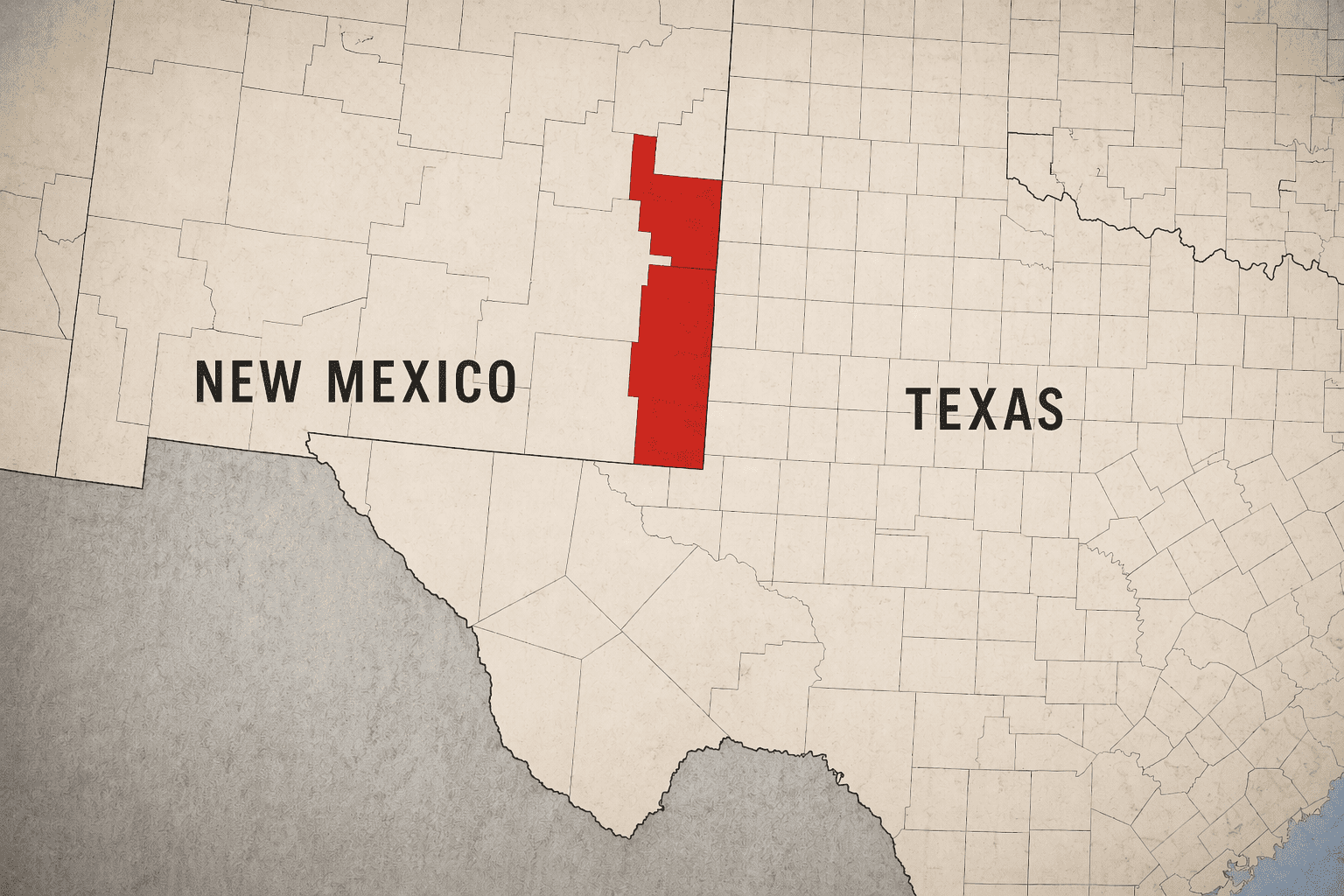
One of the more unusual charges assigned to the committee—examining the potential for parts of New Mexico to join Texas—has already drawn attention. But Vasut emphasized the issue is being taken seriously.
“It is serious. This is a real deal,” Vasut said.
He pointed to frustration among some counties in New Mexico that feel overlooked by their state government and said lawmakers want to explore whether a path exists for those areas to leave.
“They feel neglected by their state government. They feel left behind. They feel probably more naturally aligned with Texas, culturally and perhaps politically, perhaps economically,” Vasut said.
Vasut said the committee will examine what legal mechanisms—if any—would be required for such a move, including whether both states would need to approve a boundary change.
“Understanding what’s at stake here with this area that has such a vast mineral reserve, it raises questions in my mind whether New Mexico is properly developing it to the detriment of all the people of the United States, including its own citizens,” Vasut said.
Ultimately, he said any effort would depend on the will of the people in the affected areas.
“If the people of New Mexico want to do a vote to join Texas in these counties, we’d be happy to have them. But ultimately, that’s going to be a decision for the people, if we believe in self determination.”
The committee is expected to begin holding hearings in late May, with additional rounds planned throughout the summer as lawmakers work through the panel’s wide-ranging agenda.