Texas House members discussing the potential annexation of parts of New Mexico focused on a more immediate concern of oil and gas wastewater disposal arising from Permian Basin operations.
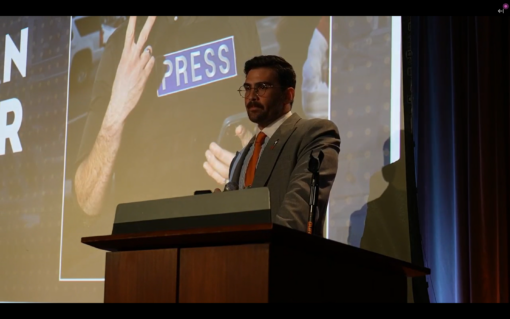
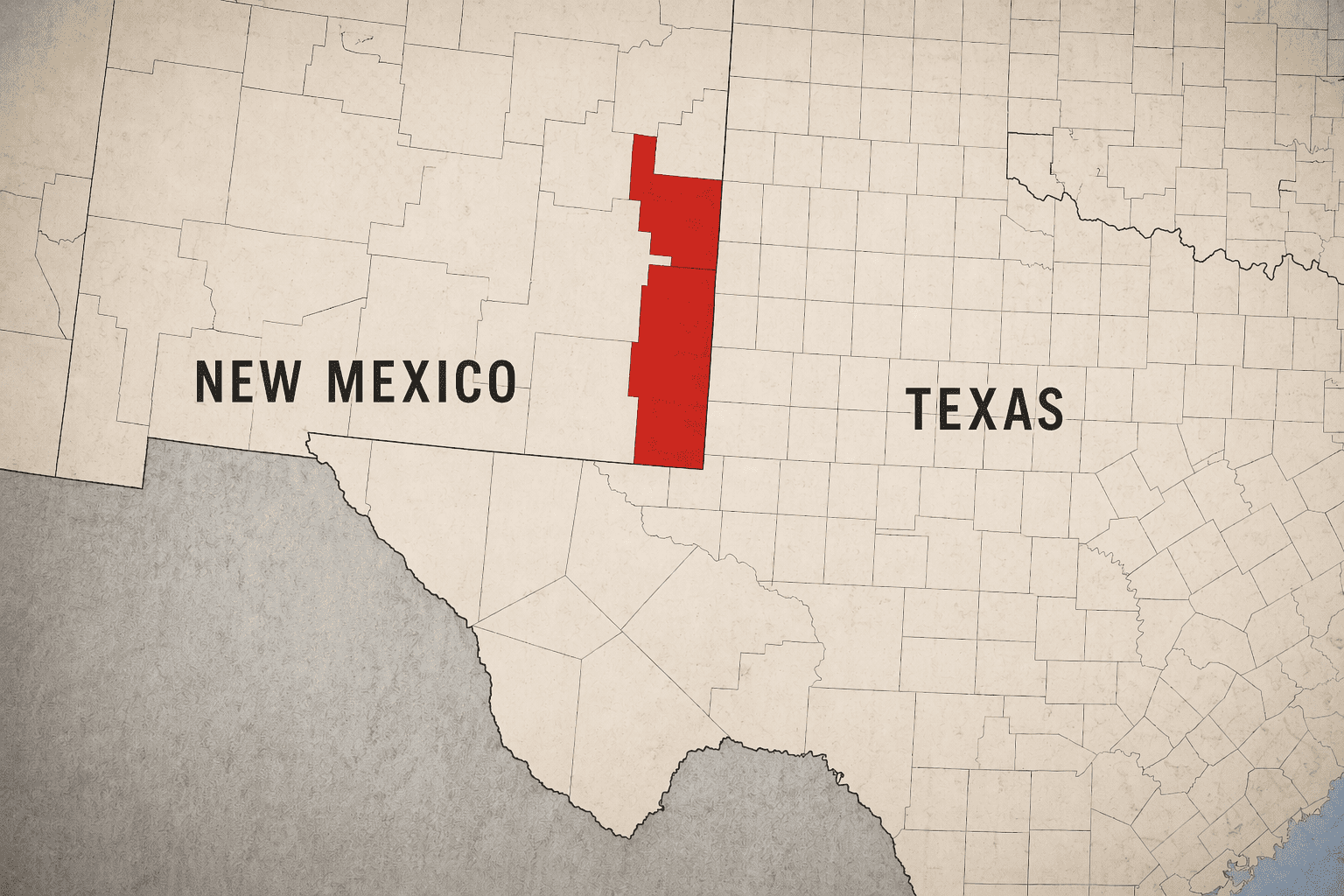
The Texas House Committee on Governmental Oversight tackled the question of annexing some southeast New Mexico counties across the Texas border during a Wednesday hearing.
According to State Rep. Brooks Landgraf (R–Odessa), the Permian Basin should be part of Texas’ interest in the annexation.
The Permian Basin spans both states and produces nearly 40 percent of all oil in the U.S. and nearly 15 percent of its natural gas.
According to Landgraf, Texas already has more produced water from the Permian Basin than it knows what to do with. Produced water is the naturally occurring water that comes to the surface as a byproduct during the extraction of oil, natural gas, or geothermal energy.
Texas injects the water into the subsurface, a process already creating pressure in underground formations.
However, New Mexico offloads its produced water differently.
“It’s being trucked in, piped in, and re-injected into the Texas side of the Permian Basin, which means that we’re upsetting that balance ever more,” said Landgraf.
“Santa Fe is arguably, or in a lot of ways, exploiting the situation in southeastern New Mexico, not really letting them benefit from it, but then they’re also adding a burden on the state of Texas to basically deal with its waste problem,” he continued.
Apart from annexation, Landgraf also proposed an “interstate compact where we do have more collaboration between the regulatory authorities in both states whether it’s the Railroad Commission here in Texas working with its counterpart in New Mexico or TCEQ working with its counterpart.”
“The Permian Basin drives so much of our economy, and if we don’t address this produced water situation, and it sounds like New Mexico is no help in this, we’re going to be in some big problems,” warned Landgraf.
Michael Cotton, chief of special litigation for the Office of the Attorney General, testified that a state boundary change is possible under the U.S. Constitution.
According to Cotton, ArtI.S10.C3 and Art.IV.S3.C1 allow states to change their boundaries if both state legislatures consent and Congress approves. Cotton also noted past cases of states agreeing to change their boundaries.
The committee also discussed New Mexicans’ reactions to the potential annexation.
“Do you think the New Mexicans will greet us as liberators?” questioned Rep. Mitch Little (R–Lewisville).
“By us being welcomed into this conversation I don’t think that we’re causing any risks that didn’t already exist within the state itself,” said Landgraf.
Chairman Cody Vasut (R–Angleton) noted, “There’s some dissatisfaction with how that part of New Mexico is treated by its capital as an oil producing region and generating as much tax revenue as it does for the state of New Mexico.”
Prior to the hearing, State Rep. Dr. Elaine Sena-Cortez of New Mexico stated, “Because we have felt overregulated and penalized, and we produced 52% of the state’s budget, people have felt disregarded here. Because of that, they’ve made comments about annexing to Texas.”
The committee may consider the annexation again before the legislative session begins in January.