The type of bulk lottery-ticket buying at the center of Texas’ infamous 2023 lottery scandal is no longer feasible under new state restrictions, lawmakers were told Monday.
But witnesses told the Senate State Affairs Committee that questions over accountability and illegal gambling remain unresolved.
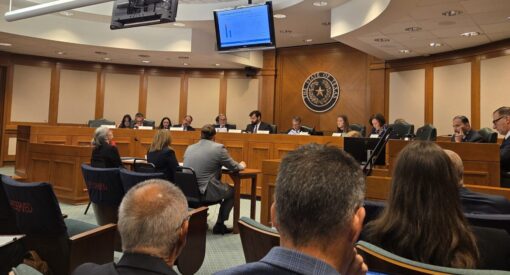
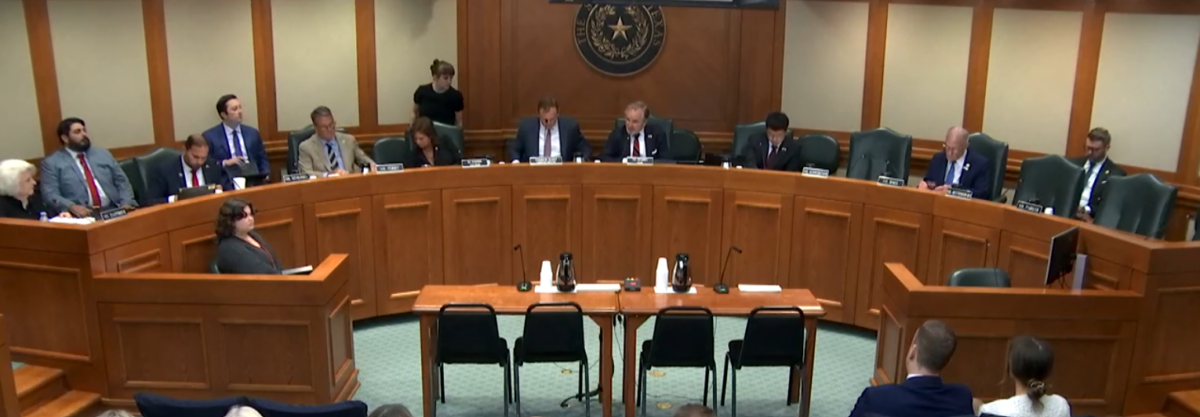
The committee reviewed the implementation of Senate Bill 3070, the 2025 law that transferred lottery oversight from the Texas Lottery Commission to the Texas Department of Licensing and Regulation and placed certain limits on lottery transactions.
State Sen. Bob Hall (R–Edgewood) contextualized the hearing by reexamining the 2023 lottery scandals.
“What we discovered was we had what certainly appeared to be a criminal organization embedded in the state government running the lottery, and in doing so they were tied to international crime organizations,” said Hall. “They had written rules that were absolutely diametrically opposed to what the law had to say.”
Hall was referring to an international gambling ring, aided by online lottery ticket resellers and the Texas Lottery Commission, that rigged a $95 million jackpot. Former Texas Lottery Commission Executive Director Gary Grief has been accused of enticing online resellers, including Lottery.com, to operate illegally in Texas.
Houston attorney Manfred Sternberg alleged that gaming vendor International Game Technology supplied lottery machines, paper, and technical assistance to locations it knew were not retail outlets. He compared the conduct to providing supplies to someone carrying out a bank robbery.
“[IGT] brought 60 machines within days of them being ordered to these different locations that they knew were not retail locations,” said Sternberg. “It’s almost like, ‘I know you guys are robbing a bank, but here’s more paper,’ and that’s what happened. And they didn’t say anything. They didn’t stop anything.”
State Sen. Charles Perry (R–Lubbock) then remarked, “Chairman [Hughes], I wouldn’t bring back the agency up here, but I would suggest that there’s probably other people that can do this job.”
TDLR Executive Director Courtney Arbour testified that new limits mean the type of bulk purchasing implicated in the 2023 scandal is “no longer even feasible.”
“Remote and courier-facilitated transactions are prohibited and were prior to the transfer. Sales are limited to 100 tickets per person in a single transaction. Self-service lottery vending machines require an electronic swipe age verification, and retailers are, of course, prohibited from selling tickets to anyone under the age of 18,” said Arbour.
She also pointed to progress in establishing a quorum for the Lottery Advisory Committee, with the purpose of “[providing] external expertise on the lottery,” per the bill analysis. The committee’s quorum is five of its nine members, and its first meeting was held July 15.
The state lottery will also undergo a “limited sunset review before the end of fiscal year 2029,” according to Arbour.
Rob Kohler of the Christian Life Commission praised Arbour’s efforts but also noted the extent of the remaining problems.
“The amount of unclaimed prizes that are calculated each year is astronomical. For this next [fiscal year] that just ended, I believe it’s going to be around $80 million of unclaimed prizes,” said Kohler. “This is Texans being tricked. The games, these scratch games, get so complicated that your average Texan doesn’t realize that after they’ve scratched it, that it’s clear that they’re a winner.”
Kohler recommended ending the allowance of anonymous lottery winners to “stop some of the nefarious stuff that we have faced.”
The hearing also broadened into the state’s wider gambling-enforcement problem.
Jason Nelson, representing the Kickapoo Traditional Tribe of Texas, expressed the tribe’s concern regarding eight-liner gambling devices.
“Penal Code Section 47.01(4)(B), as commonly known as the ‘Fuzzy Animal Rule,’ excludes certain bona fide amusement devices from the definition of prohibited gambling,” said Nelson. “Make no mistake, however, Texas courts have been consistent on this, and I’m going to quote that eight-liners are lotteries and they are unconstitutional in the state.”
Nelson noted the prevalence of these devices and the harm they bring to the communities in which they operate.
Nelson called for a “well-resourced, special law enforcement task force to coordinate investigations and pursue illegal gambling operations throughout the state of Texas,” among other solutions.
The hearing occurred as legal fallout from the 2023 lottery scandal continues.
Earlier this year, former Texas Lottery Commission Executive Director Gary Grief was indicted in connection to the rigged jackpot.