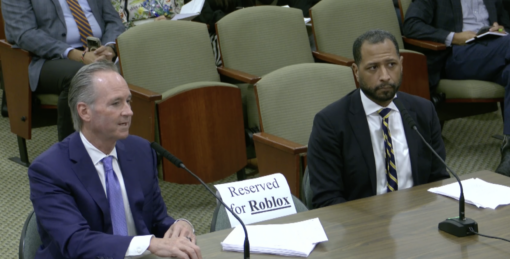
Texas lawmakers heard testimony about the risks children face when online gaming and using social platforms, including exposure to predators, sexually explicit material, and inappropriate content that may contribute to harmful behavior.
The hearing Tuesday followed a supplemental interim charge issued by House Speaker Dustin Burrows directing the State Affairs Committee to investigate online gaming platforms and the potential risks to minors.
The inquiry was prompted in part by a user-created game on Roblox that recreated the 2022 mass shooting at Robb Elementary School in Uvalde. Former Uvalde mayor and current State Rep. Don McLaughlin attended the hearing, condemning the platform’s oversight failures.
Witnesses testified to systemic gaps in digital safeguards and urged lawmakers to hold platforms directly accountable.
Christina Green, chief advancement and external relations officer for the Children’s Advocacy Centers of Texas, said adults have posed as minors online, built relationships with children, and recruited them into other networks to engage in violent or illicit activities.
“These are not hyperboles. They’re not news stories,” Green said. “They are coming into our children’s advocacy centers every single day across the state.”
Green also highlighted the difficulty of investigating crimes that occur across multiple platforms. A child may first encounter an adult through a gaming service before being directed to another platform, requiring investigators to obtain information from multiple companies and jurisdictions.
She said Texas’ more than 3,000 law enforcement jurisdictions do not all have the same access to technology, training, or resources needed to investigate these cases. In some instances, processing data from a single phone can take a month or longer.
Other testimony focused on how the design of online platforms can encourage prolonged engagement and create additional risks for children.
Dr. Daniel Flint, a licensed clinical psychologist at Texas Children’s Hospital and assistant professor of pediatrics at Baylor College of Medicine, discussed the effects digital environments can have on adolescent development and behavior.
Flint raised concerns about online gaming features designed to keep users engaged, including virtual currencies, rewards, and other mechanics that can encourage repeated interaction. He connected excessive digital engagement to concerns involving sleep, attention, mood, and academic performance.
He recounted a case involving a 12-year-old student who used a messaging feature on a sports score website accessed through a school-issued laptop. The student and a teammate allegedly used the feature to compare methods of self-harm.
The example illustrated the difficulty of protecting children solely by restricting access to particular apps or devices. Even websites not designed primarily as social platforms may include communication tools that allow harmful exchanges.
Representatives from Roblox declined to appear at the committee hearing, but provided written testimony claiming it had implemented “industry-leading safeguards and safety policies” to protect children.
The hearing comes as lawmakers consider how existing safeguards can address risks that extend beyond traditional social media and into gaming platforms, school-issued devices, and other online services used by children.