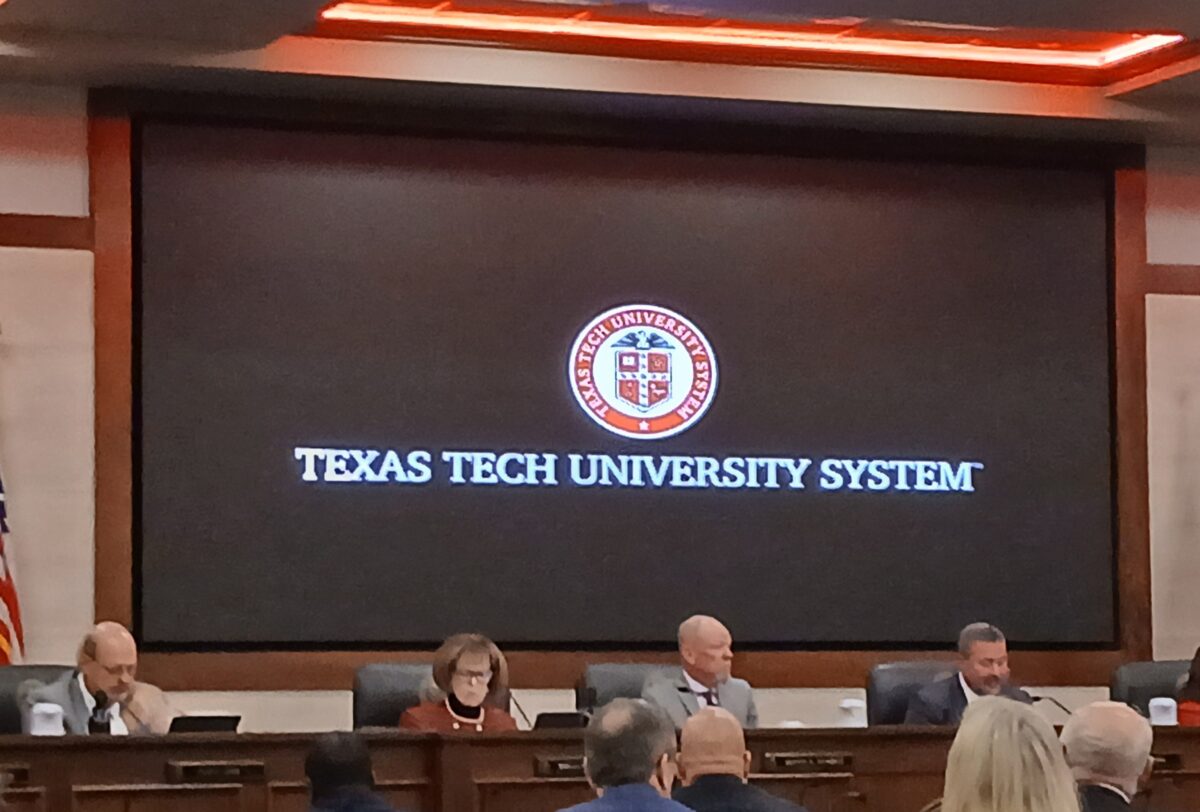
LUBBOCK—Regents of the Texas Tech University system approved a restructuring of core curricula at the system’s component campuses. This brings the Texas Tech system into compliance with a 2025 state law.
The new core curriculum, covering seven pages in the meeting agenda, consists of a series of headings such as communication; mathematics; life and physical sciences; language; philosophy and culture; American history; and government/political science. Depending on the heading, there are between two and several dozen courses under their respective jurisdictions.
The overhaul covers the system’s Lubbock campus, Angelo State, and Midwestern State.
During the meeting of the Academic, Clinical and Student Affairs Committee, Regent Shelley Sweatt told colleagues that the review began in May and that Chancellor Brandon Creighton’s office reviewed the courses over the summer.
The system ultimately removed 21 courses systemwide.
Sweatt also stressed that courses removed from the core remain in the course catalog. Students may continue to take these courses.
The new core curriculum will go into effect in fall 2027.
The review in question was required under Senate Bill 37, a 2025 state law that reformed several aspects of university governance. Then a state senator, Creighton wrote SB 37.
As part of those changes, the new law requires governing boards of taxpayer-subsidized university systems to conduct a review of all general education curricula every five years. General education requirements are a set of courses all students must complete, regardless of major.
Higher education authors Jason Brennan and Phil Magness have criticized these mandates as a subsidy for economically unsustainable programs that frequently protect woke curricula from accountability.
Elsewhere in the meeting, regents approved tenure designations for a handful of non-controversial nominees as part of the consent agenda. Chancellor Creighton introduced Dawson Gamble as the new government relations coordinator at the system’s Austin office.
Regents also held discussions on proposed new building projects.
Midwestern State President Stacia Haynie told the facilities committee of her intention to build a football stadium “closer to campus” as part of a campus master plan. Midwestern State football currently plays in a high school stadium.
The facilities committee also approved $1.75 million for “planning and design services” for an expansion of the Rawls College of Business building. The meeting agenda states that the system will incur “debt obligations” of a maximum of $106 million in principal to finance the project.
System materials did not list interest costs.
The finance and investments committee passed two expansions to the system’s commercial paper capacity. Commercial paper is a financial instrument that allows large institutions to cover short term liabilities.
System Chief Financial Officer James Mauldin told the committee that this would expand the system’s “liquidity” capacity.
Mauldin also informed the committee that “looking forward,” his staff was exploring an “internal bank” to facilitate system finance. Mauldin told the committee he intended to deliver a full presentation on the subject at the board’s February meeting.
The Texas Tech University System consists of three academic institutions and two health centers. The Texas Tech system is overseen by a Board of Regents that is appointed by the governor and confirmed by the Texas Senate. Cody Campbell of Fort Worth is the current board chair.