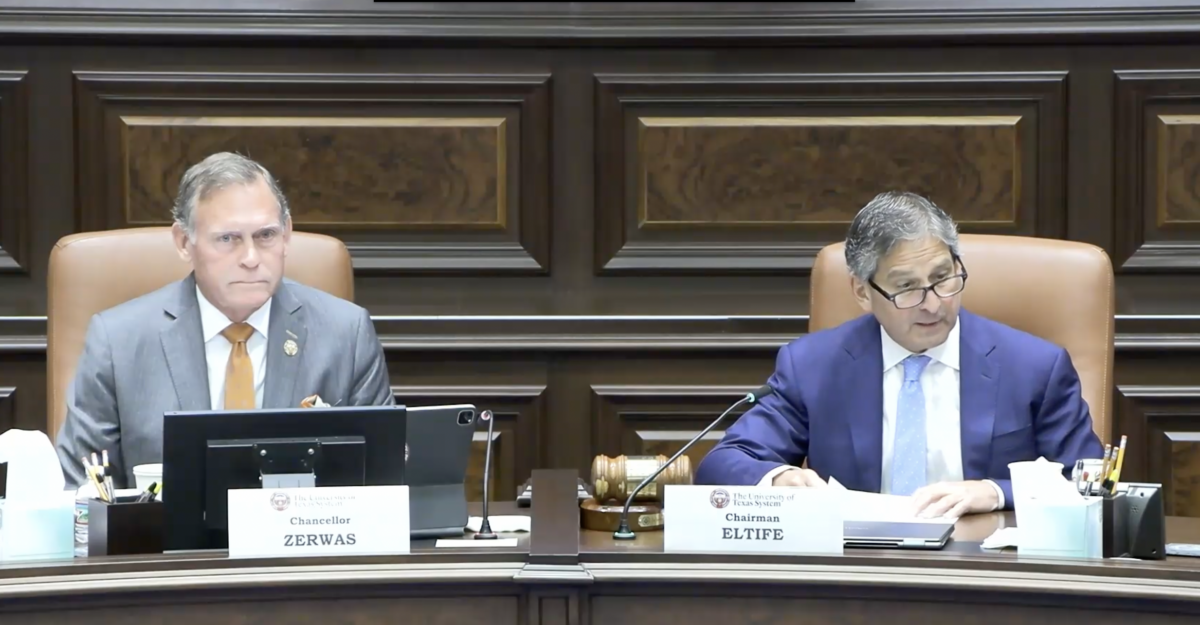
AUSTIN—Regents of the University of Texas System passed a series of rule changes to direct academic governance reforms at member institutions during their quarterly meeting Thursday.
The rule changes include measures designed to guide elimination of academic programs, faculty advisory bodies, and a series of other human resources issues.
Regents Rule 31003 is being revised to streamline the process for eliminating occupied academic positions or abandoning academic programs. The rule maintains a process that includes faculty notice, meaningful opportunity to submit input, and review by a panel made up of a majority of faculty members. It also explicitly says the process can be expedited in limited extraordinary circumstances, such as when required by regulation.
The rule makes clear that a president’s decision to abandon an academic program is not appealable.
This system rule change follows UT-Austin’s February announcement that it would consolidate several “grievance studies” departments into a new Department of Social and Cultural Analysis.
Personnel decisions related to this new department have yet to be announced.
The regents also revised Regents Rule 40101 so faculty input is organized through Faculty Advisory Bodies rather than a Faculty Advisory Council structure.
Under the new rule, each president may establish, modify, or dissolve one or more faculty advisory bodies at the institution, and those bodies serve only in an advisory capacity with no final decision-making authority. A systemwide faculty advisory body may also be convened by the Executive Vice Chancellor for Academic Affairs, with one faculty member selected from each institution’s advisory body.
This change is the latest in a series of reforms mandated by Senate Bill 37, a 2025 state law that overhauled many aspects of university governance, including faculty input.
The Board of Regents passed a series of other rule changes to centralize and clarify personnel governance, especially related to tenure, while giving campus presidents more discretion.
Regents also discussed cybersecurity during executive session Thursday but took no action.
On Wednesday, regents held a series of committee meetings.
During the Audit, Finance, and Risk Management committee meeting, UT System Chief Audit Executive Michael Peppers told regents that system institutions had recently completed the first round of compliance audits related to Senate Bill 17, a 2023 law that prohibited DEI in many aspects of university governance.
While undercover investigations by activist group Accuracy in Media have recently highlighted exemptions to this law, including material from UT-Arlington and UT-Austin, Peppers told the board that all system institutions were in full compliance with current law.
A recent report from the state auditor found that UT System institutions have not spent state funds on DEI during this period but did not address other sources of funding or activities that are exempt from current law.
The Academic Affairs Committee sent a series of items to the consent agenda without discussion.
Those consent agenda items include the appointment of Dr. Michael Drew, a neuroscientist, as Senior Vice Provost for Academic Affairs at UT-Austin. Drew currently serves on a committee that is overseeing a legislatively mandated overhaul of the university’s core curriculum. Board approval is required for this hire under a separate provision of SB 37.
During public comment on Wednesday, a series of speakers expressed opposition to the consolidation of several “grievance studies” programs at UT-Austin into a new department of Social and Cultural Analysis.
One speaker called South Texas’ iconic King Ranch an example of the so-called “displacement” of “indigenous peoples.”
Regent Chairman Kevin Eltife cited a series of record-breaking statistics related to student achievement and financial metrics and told speakers that he would “respectfully agree to disagree.”
Also on Wednesday, a handful of protestors staged a mock “funeral” for “academic freedom” outside the meeting.
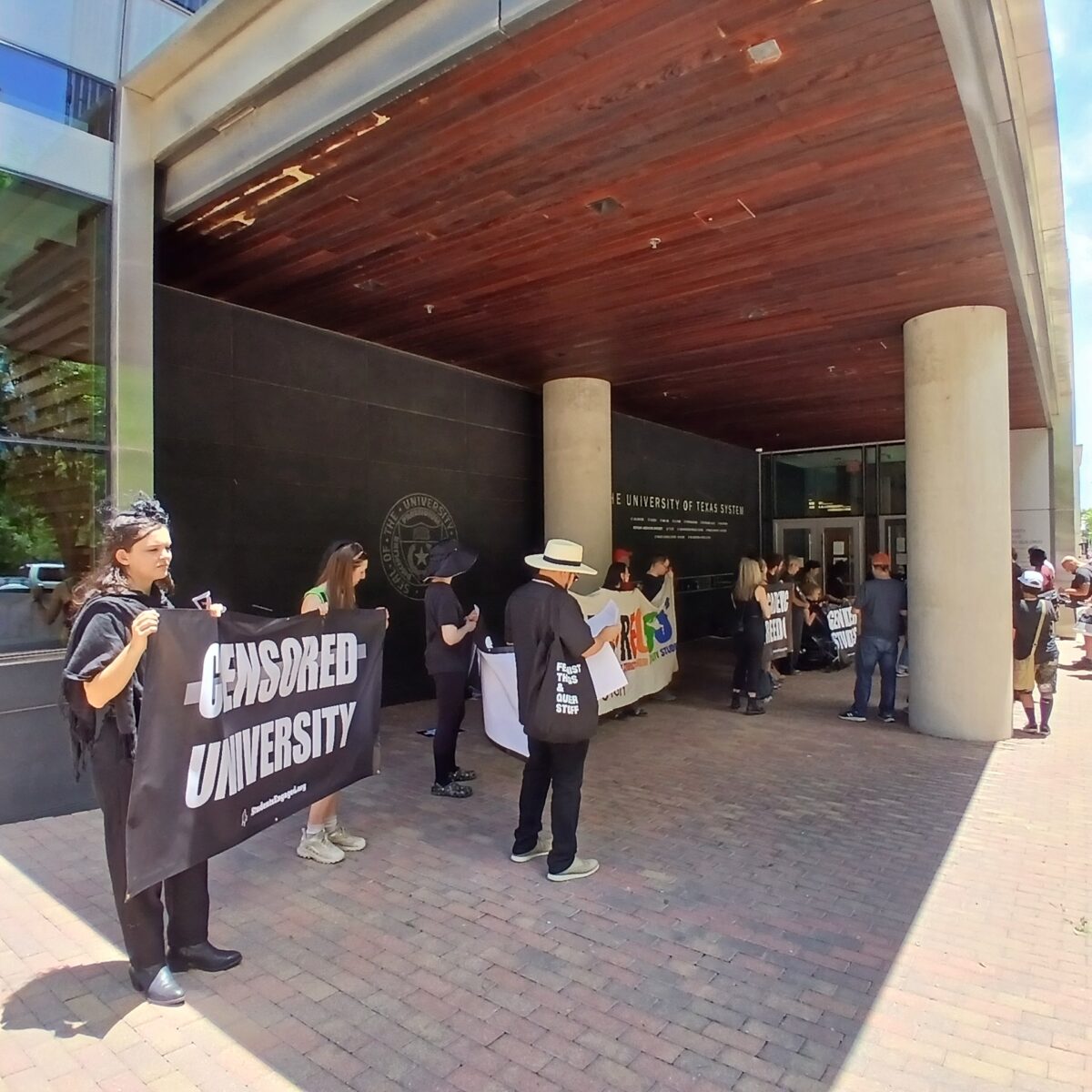
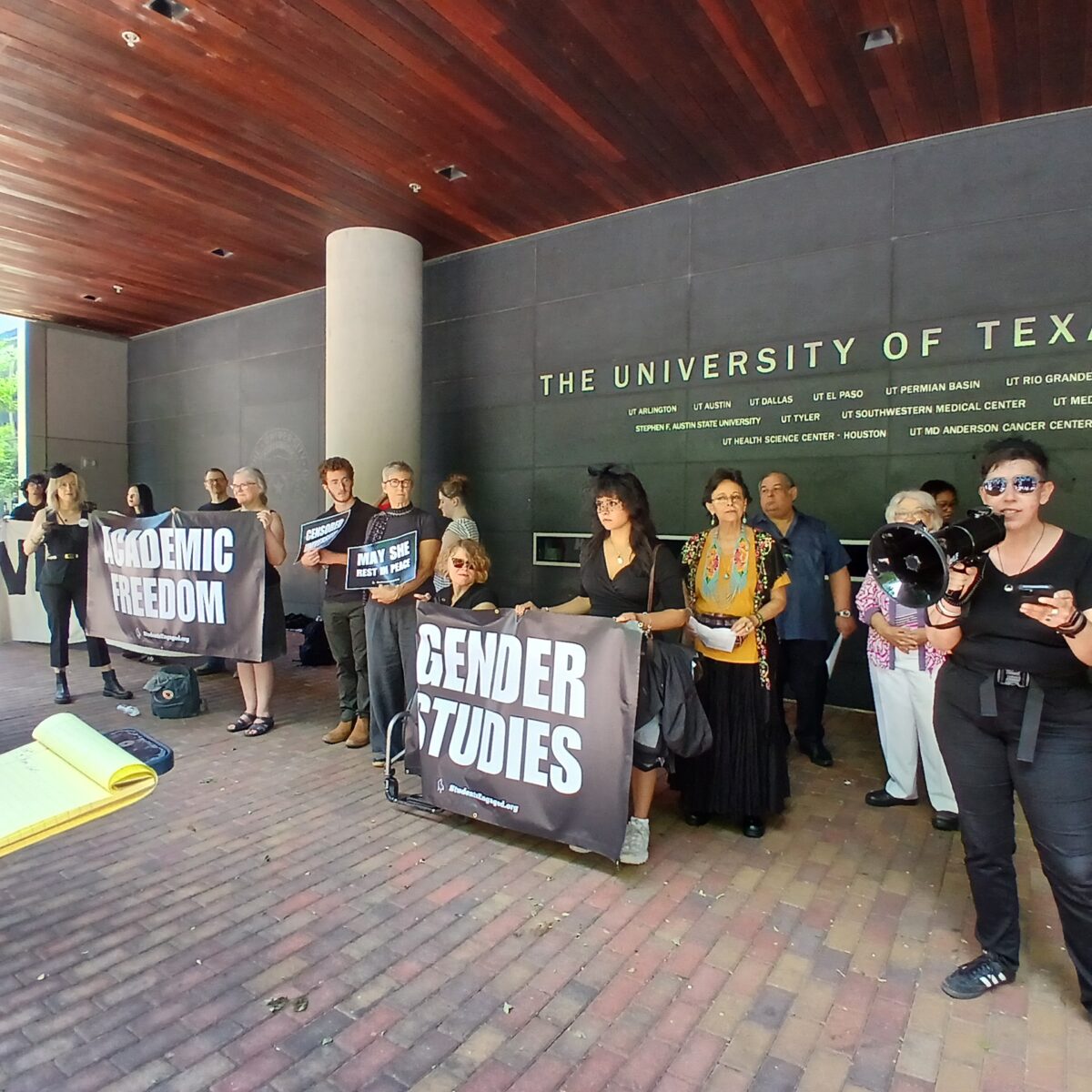
The same group held an identical event outside Texas Tech’s regents meeting two weeks ago.
The protest motif was an homage to a 1944 UT-Austin protest supporting controversial President Homer Rainey. In contrast to the 1944 event, which drew over 5,000 students in support of Rainey, Wednesday’s action drew approximately two dozen attendees.
The University of Texas System oversees nine academic institutions and four health institutions. It is overseen by a Board of Regents appointed by the governor and confirmed by the Texas Senate. Kevin Eltife of Tyler is the current board chair.