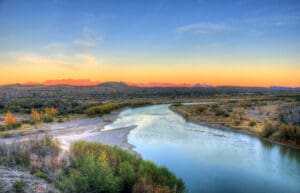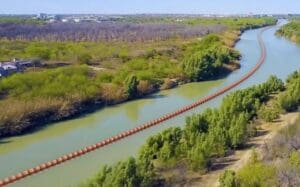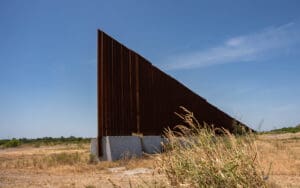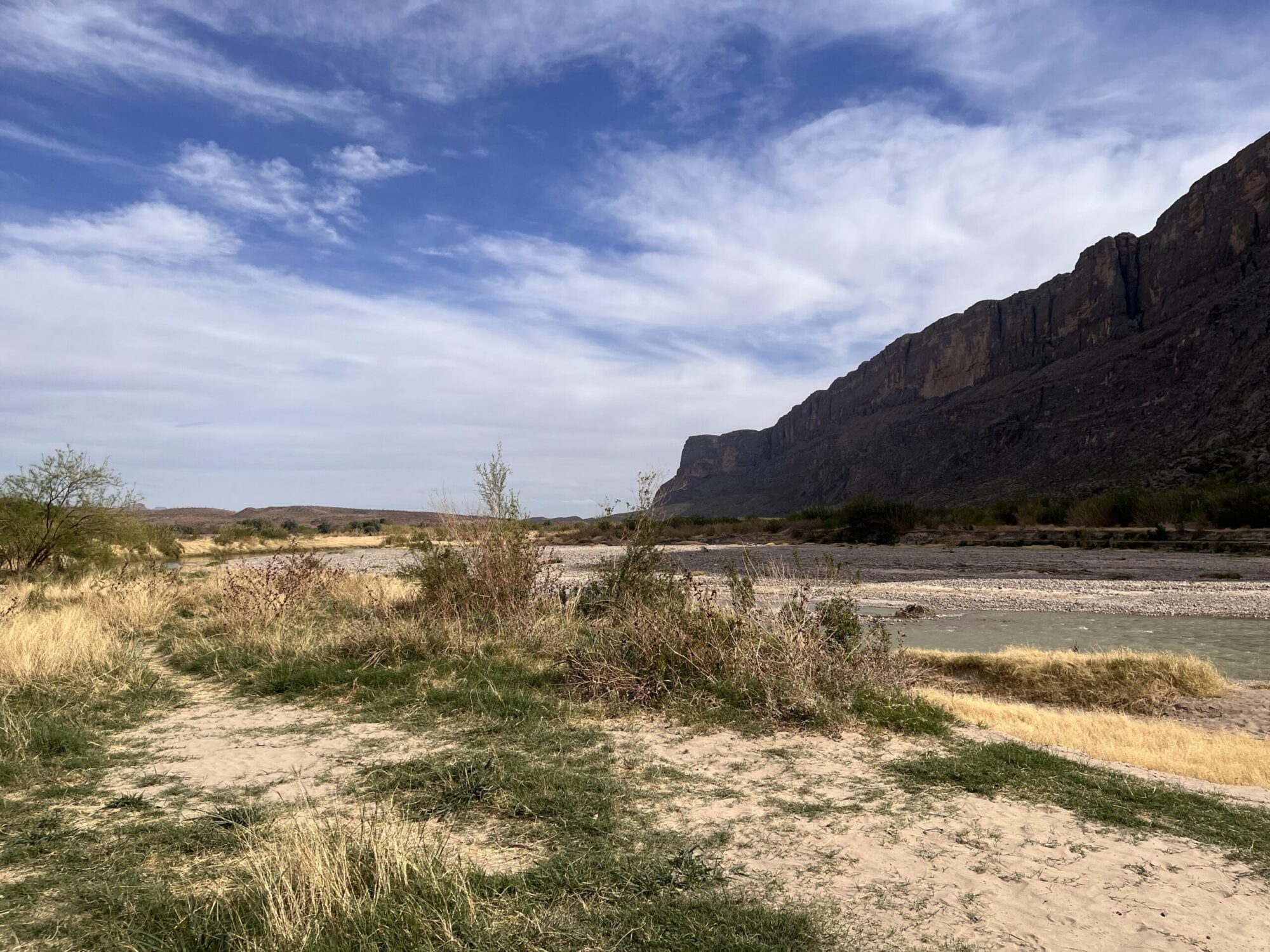
Amid growing concerns about the construction of a physical border wall in the Big Bend region, the Trump administration’s “Smart Wall” map now shows the use of modern protective detection technologies in the area.
Local officials, business owners, and citizens strongly have spoken out against the proposed border wall, saying it would result in “damage to public recreation, wildlife, rural economies, cultural resources, and the integrity of our natural heritage would be irreversible.”
A letter sent earlier this week by businesses and conservation groups to ranking members of both the U.S. House and Senate Committees on Appropriations requested that federal funds not be used to build a border wall within “the boundaries of Big Bend National Park or Big Bend Ranch State Park” and in areas “that would impair public access to the Rio Grande within these park units.”
State Rep. Wes Virdell (R–Brady), who has voiced concern on the proposed project, posted on X that although he completely supports a border wall, he believes that the construction of one in Big Bend is a bad idea.
“We do have a duty to protect this country from invaders, but we also have a duty to preserve our amazing landscapes,” said Virdell. “We have the technology and ability to enforce a secure border in Big Bend without putting a wall there. I hope level heads prevail instead of doing irreversible damage.”
Virdell’s district includes counties near the Big Bend area.
The U.S. Department of Homeland Security waived several federal environmental regulations last month to grant construction crews access to the Big Bend area.
In the waiver, DHS cited statistics showing that between fiscal years 2021 and 2025, the area saw nearly 90,000 attempted illegal border crossings, and authorities seized over 89,000 pounds of marijuana, cocaine, methamphetamine, heroin, and fentanyl.
“As the statistics cited above demonstrate, the Big Bend Sector is an area of high illegal entry where illegal aliens regularly attempt to enter the United States and smuggle illicit drugs, and given my mandate to achieve and maintain operational control of the border, I must use my authority under section 102 of IIRIRA [The Illegal Immigration Reform and Immigrant Responsibility Act] to install additional barriers and roads in the Big Bend Sector,” wrote outgoing DHS Secretary Kristi Noem. “Therefore, DHS will take immediate action to construct additional barriers and roads in a segment of the border in the Big Bend Sector.”
Last week, a possible change in CBP’s plans for the region was signaled after removing a large section of the area from the proposed building plan, as the areas surrounding the Presidio, Alpine, Sanderson, & Comstock AOR area are now marked to utilize “detection technologies.”
According to U.S. Customs and Border Patrol’s “Smart Wall” map, a proposed ‘detection technology’ segment runs along the Rio Grande through part of the Big Bend Ranch State Park and Big Bend National Park and continues eastward toward the Amistad Reservoir area.
The CBP Big Bend Sector has relied on and continues to expand the use of Autonomous Surveillance Towers, which are powered by solar energy and equipped with long-range sensors to monitor rugged and remote terrain.
As of last fall, more than 50 of these towers are in use by the sector and offer real-time surveillance to border agents.
According to the CBP Big Bend Sector, migrant encounters in fiscal year 2024 are down 58.4 percent compared with the previous year, partly attributed to the use of the towers to “disrupt criminal smuggling operations.”