Texas is siding with petitioners in a time-sensitive dispute over whether a Harris County commissioner vacated his seat when he accepted an appointment to a second public office.
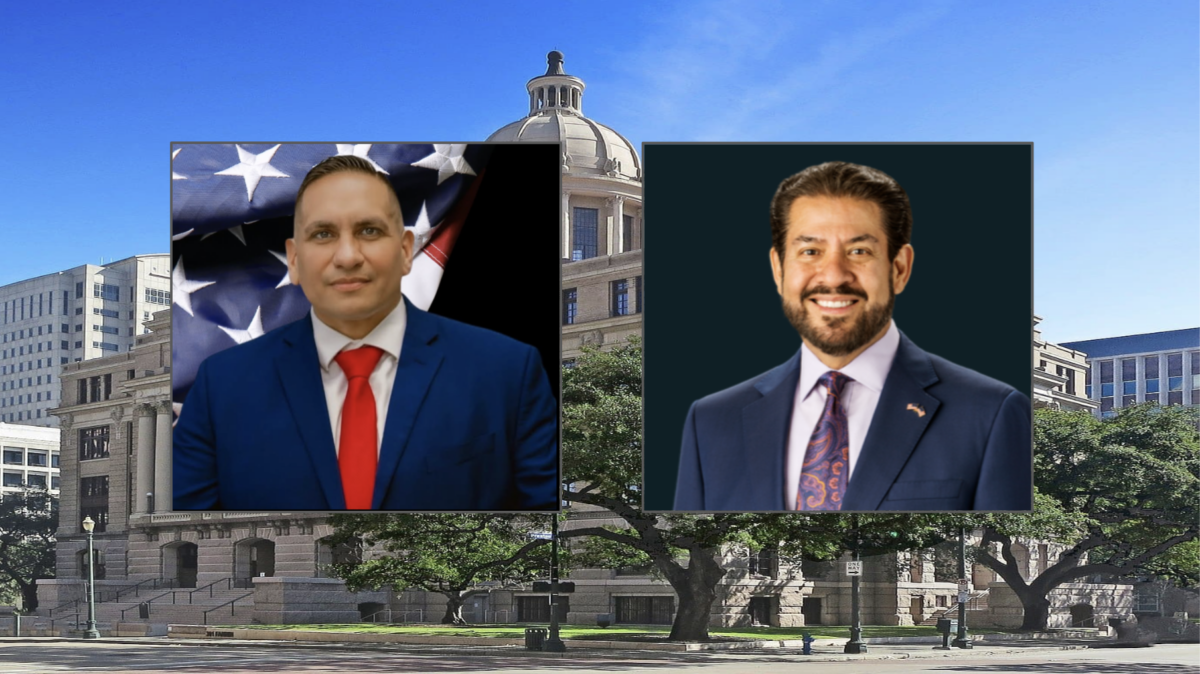
The state’s solicitor general filed an amicus brief with the Texas Supreme Court supporting Republican Richard Vega’s petition to declare Democrat Adrian Garcia’s seat vacant and call a special election to fill it.
The petition asked the Court for a ruling by July 6, which would allow time for an August special election to fill the vacancy before commissioners vote in September to adopt a budget and tax rate.
Vega—Garcia’s Republican challenger for the Precinct 2 seat in November—sued Harris County commissioners in 2024 for appointing Garcia to the Gulf Coast Protection District without forcing him to vacate his commissioner seat.
The lawsuit cited Texas’ longstanding prohibition on public officials occupying two offices with conflicting duties.
District and appellate courts denied Vega’s claims, agreeing with the county’s argument that Garcia’s appointment was invalid and thus he never vacated his commissioner seat—even though Garcia served on the GCPD board and cast votes for three years. Commissioners quietly removed Garcia from the GCPD shortly after they were sued.
In May, Vega petitioned the Texas Supreme Court to declare Garcia’s commissioner seat vacant and compel the county to call a special election to fill the position.
Texas Solicitor General William Peterson filed an amicus brief in the case on June 29, siding with Vega.
Peterson argued first that Texas recognizes the “obvious incompatibility” of individuals holding offices with competing loyalties and of being a member of a body appointing oneself to a second office.
“Both doctrines may be implicated when a self-appointment is made to an office that has conflicting duties,” wrote Peterson.
Peterson also argued that because acceptance of an incompatible second office automatically vacates the first office, the first office may be filled without judicial determination.
Garcia’s acceptance of the GCPD appointment “operated an abandonment” of his commissioners court position, according to case law cited by Peterson.
“To the extent that Garcia accepted an appointment to an office incompatible with the office of commissioner, the office of commissioner could immediately be filled as the law provides, without any prior judicial proceeding by quo warranto,” he wrote.
Finally, Peterson argued that it is irrelevant whether the appointment to the second office was invalid due to the self-appointment doctrine; it still triggered automatic vacatur of the first office.
“Enforcing this rule provides important clarity to the public,” he wrote, again citing case law: “The public has a right to know which [office] is held and which is surrendered. It should not be left to chance, or to the uncertain and fluctuating whim of the office-holder to determine.”
“The facts of this case—in which Garcia executed the oath of office as a board member of the Gulf Coast Protection District, participated in public meetings, and voted as a board member … illustrate the wisdom of the common law rule,” he added. “Treating acceptance of an incompatible office as a resignation of an incompatible existing office is ‘indispensable for the protection of the public,’” Peterson concluded.
Harris County commissioners never recognized a vacancy on the court or ordered an election to fill Garcia’s seat.
“Taxpayers are being asked to accept the idea that an elected official can take an oath, serve in an office, cast votes, exercise governmental authority for more than a year, and then claim none of it matters,” said Vega. “That is a question every voter should be paying attention to.”
Vega’s attorney, Jerad Najvar, noted that the special election required under state law to fill a vacancy “remains required, and the Court has authority to designate when it shall occur.”
“An election to fill an unexpired term pursuant to a judicial order does not have to be held on a uniform election date,” he added.
Najvar noted that if the election is held, a Republican victory would move commissioners court back to a 3-2 partisan split, enabling two Republican commissioners to thwart any tax increase in September.
“The County doesn’t dispute that Garcia accepted the appointment to the GCPD board, took the oath of office, and actually served for three years in the conflicting office,” said Najvar. “Even if the appointment was void, Garcia exercised the powers of two conflicting offices at the same time, dividing his loyalty owed to Precinct 2. The normal consequences should apply, meaning he resigned and voters should get to fill the seat.”