MIDLAND—U.S. Energy Secretary Chris Wright traveled to the heart of the Permian Basin Monday to celebrate the region’s booming oil and gas industry and promote the Trump administration’s push for American energy dominance.
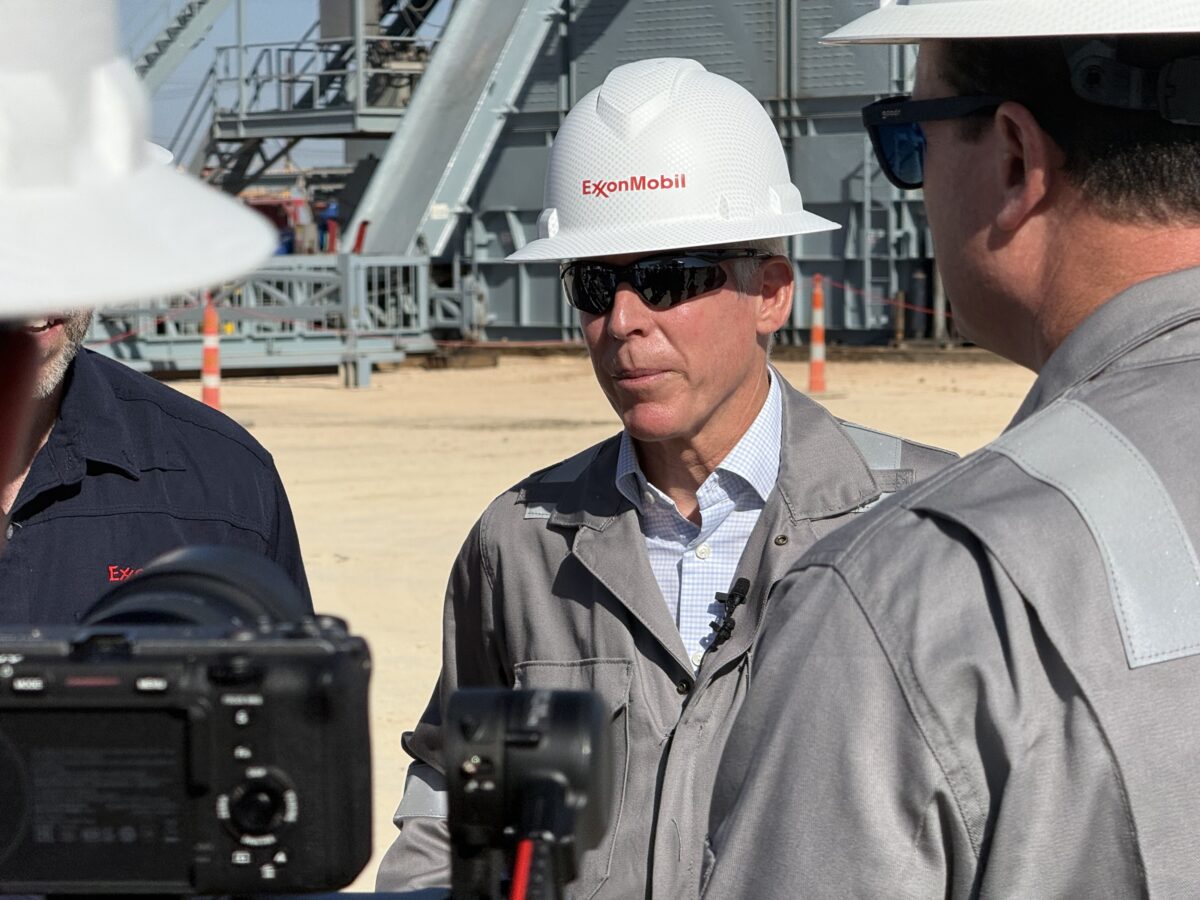
Wright’s visit was part of the Department of Energy’s “Great American Energy Comeback Tour” and began with a visit to an ExxonMobil oil rig alongside U.S. Rep. August Pfluger (R–TX).
“This is the core of the American oil and gas industry right here in the Permian Basin,” said Wright.
Wright pointed to the dramatic increase in production in the region over the past decade, crediting technological innovation, American workers, and policies encouraging domestic energy production.
“When President Trump was first elected 10 years ago, the Permian Basin, still America’s biggest oil field, produced a little less than 2 million barrels of oil a day,” said Wright. “Ten years later, it’s over six and a half million barrels of oil a day.”
Wright said increased American energy production has brought “freedom,” prosperity, higher-paying jobs, and lower prices.
Pfluger similarly touted the Permian Basin’s importance to both the United States and the world.
“America runs on the Permian Basin, and frankly, the world runs on the Permian Basin,” said Pfluger.
Pfluger noted that the region was producing roughly 900,000 barrels of oil per day in 2010, compared to more than 6.5 million today. He said the Permian now accounts for nearly half of all oil produced in the United States.
Natural gas production has also increased from roughly 4.5 billion cubic feet per day in 2010 to 28 billion cubic feet today, according to Pfluger.
“When Washington talks about America’s energy future, my number one goal, serving you in Congress, is to make sure that they remember one thing: the future starts right here,” he said. “It’s in Midland. It’s in Odessa. It’s in the Permian Basin.”
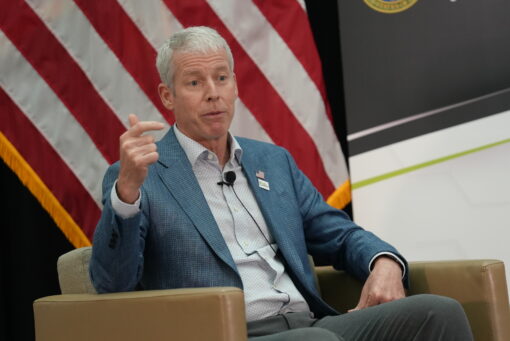
Wright later addressed energy workers and industry leaders at an event hosted by the Permian Strategic Partnership, a coalition of energy companies and universities.
He brought a simple message from President Donald Trump to the people working in the region: “Thank you, thank you, and thank you.”
Wright said American oil and gas production has strengthened the country’s energy security while allowing the United States to provide reliable energy to allies around the world.
“When I travel around the world, the most common question I get asked is, ‘Will you be there?’” said Wright, describing conversations with foreign leaders seeking American oil and natural gas.
“And the answer, because of you, because of the people in this room, I can always confidently say yes,” he added. “We will be there.”
Wright also rejected an “all of the above” approach to energy policy, instead saying the administration supports energy sources that can provide affordable, reliable, and secure power.
“I’m not in for ‘all of the above,’” said Wright. “I’m for everything that works, everything that betters American lives.”
He argued that oil and natural gas remain indispensable to the American economy, accounting for nearly three-quarters of U.S. energy consumption, and said increased energy production will be necessary for the Trump administration’s push to bring manufacturing back to the United States.
“You can’t do big modern things without massive amounts of energy,” said Wright.
Wright also weighed in on the growing debate over a major expansion of Texas’ electric transmission system.
Last week, Wright announced the Department of Energy would not move forward with three proposed National Interest Electric Transmission Corridors selected under the Biden administration, citing concerns about costs, reliability, and local communities.
Asked by Texas Scorecard what Texas regulators should consider before moving forward with proposed 765-kV transmission projects, Wright said additional transmission is needed but cautioned against building infrastructure without considering its costs and purpose.
“We need more transmission, but you need to be thoughtful about transmission, where it’s built, and how it’s funded,” said Wright.
Wright argued that transmission infrastructure needed to connect far-flung wind and solar generation has contributed to rising electricity costs, with those expenses ultimately passed along to ratepayers.
“If you look at the single biggest rise in electricity prices, it’s transmission and distribution,” he said. “So it’s very expensive to build transmission.”
Texas regulators are currently considering a massive 765-kV transmission expansion intended in part to meet rapidly increasing electricity demand in the Permian Basin. The proposals have drawn opposition from landowners and lawmakers concerned about costs, routing, and the effect on private property.
Wright did not take a position on the specific Texas projects but said new transmission infrastructure should ultimately benefit consumers.
“We need to build transmission, but you need to build transmission that ultimately is going to lead to lower prices to American consumers, not raise prices,” said Wright.
“We need transmission, but you need to be smart about why and where you’re building transmission—not just more transmission is good.”
Asked about the importance of keeping the Railroad Commission—the state agency responsible for regulating the oil and gas industry—in Republican hands, Wright initially declined to weigh in specifically on the Texas race but took aim at the Democrat party as a whole.
“Certainly on a national level, and from my home state of Colorado, we still have a Democratic Party that generally is against oil and gas production,” said Wright.
He said Republicans have instead supported “safe, environmentally sensitive, reasonable production of oil and gas.”
“It is amazing how far off base the Democratic Party has been on energy. They’ve done everything they can to make energy more expensive,” said Wright.