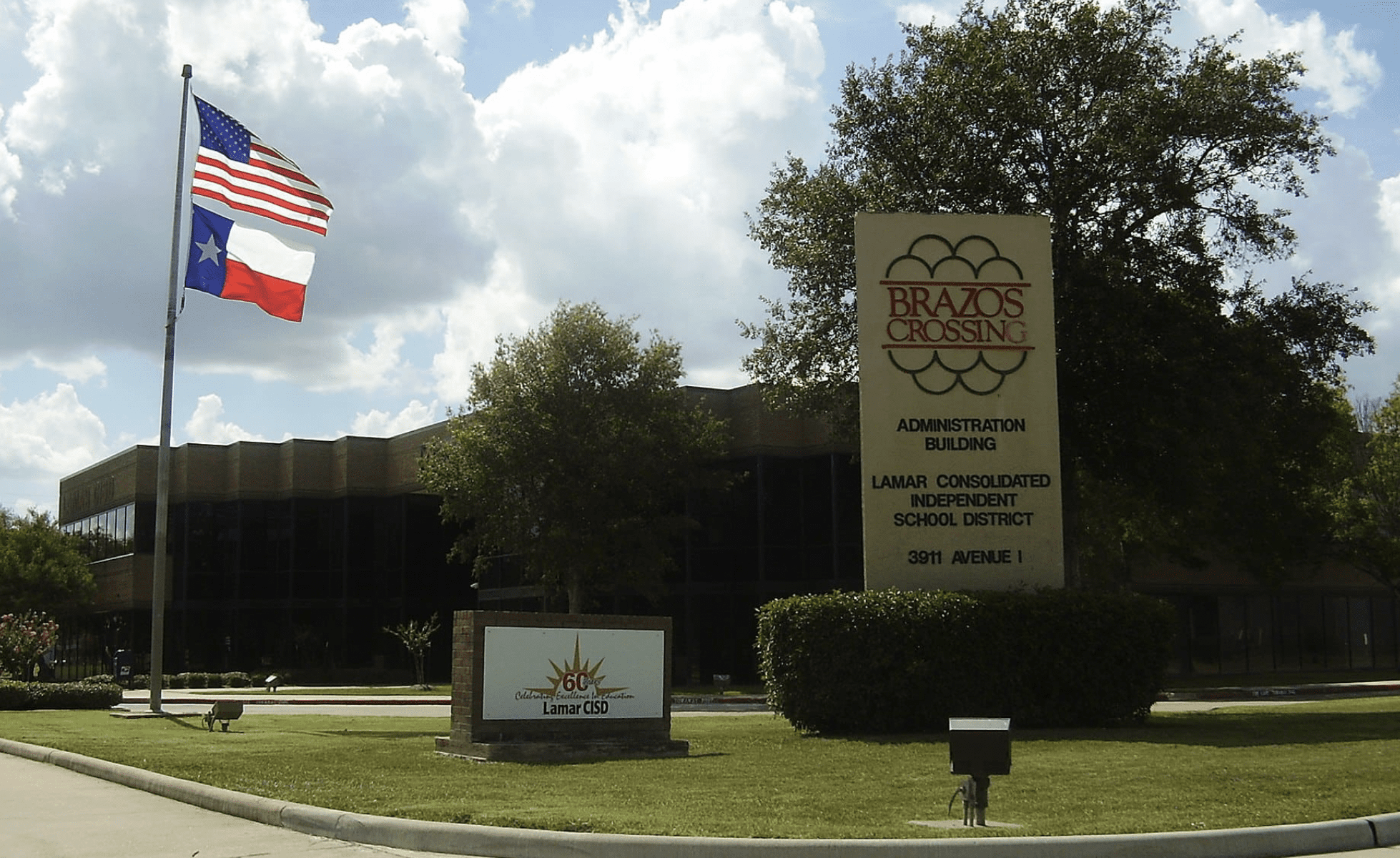
Lamar Consolidated ISD trustees voted 7-0 to approve the school district’s part of a state property tax incentive for Tesla’s proposed $10.1 billion solar manufacturing plant in Fort Bend County. After last week’s vote, the application, code-named Project Crystal Sun, was sent to Gov. Greg Abbott’s office for the next step in the state’s review.
The incentive falls under the Jobs, Energy, Technology and Innovation Act, known as JETI.
Under the proposed agreement, Tesla’s qualifying property would be taxed at 50 percent of its value for the part of the district’s tax rate that pays for daily operations. The Texas Comptroller’s office puts the savings for Tesla at $115.2 million over 20 years. The tax break would run from 2029 through 2038, with the taxable value at zero during construction.
Tesla’s application describes a plant that would make photovoltaic solar cells and assemble solar modules on a portion of a 3,057-acre site near Richmond, at FM 1994 and FM 762. The investment includes about $1.5 billion in real property and $8.6 billion in equipment and other personal property. Tesla projects 9,712 full-time workers by 2033, roughly $1.3 billion in annual payroll and about 1,147 construction jobs at its peak. Commercial operations would start in the first quarter of 2029 if the Fort Bend site is chosen.
Tesla has not made a final decision on where to build.
Site-selection adviser David Dennison told trustees the choice is down to two locations, one in Texas and one outside the state, and that the company hopes to decide before the end of the year. He did not name the other state, citing commercial confidentiality, though he described its offer as a “very compelling package.”
ABC13 reported in August that consulting firm Kroll wrote to the comptroller that Tesla would have to evaluate the investment outside Texas if no agreement is reached.
Lamar CISD officials said the district would not lose operating money.
Chief Financial Officer Greg Buchanan told trustees the state would make up the difference in funding. Tesla would still pay the full debt-service tax that funds voter-approved bonds. Buchanan put that revenue at $335.5 million through 2063, along with $180.3 million in added bond capacity.
Board members and local leaders spoke in favor of the decision. Trustee Jon Welch said he supported the incentive because Texas is competing with other locations for major manufacturing projects. Board President Jacci Hotzel called the vote a “beautiful beginning” with Tesla. Keri Schmidt, president and CEO of the Fort Bend Regional Partnership, told trustees the project could give young people more chances to build careers without leaving the county.
A few residents spoke against the application, citing environmental effects, strain on roads and tax concerns. Jennifer Rodriguez said the 10-year limit shifts long-term infrastructure costs onto local homeowners.
On the county side, commissioners approved a reinvestment zone for the site on Aug. 24.
The four commissioners voted unanimously, and interim County Judge Daniel Wong recused himself because of his company’s involvement with Tesla. After the school board vote, Wong said he wants the county to compete for the project and that doing so would require attention to workforce development and infrastructure. The four commissioners declined to discuss the proposal, saying they had signed nondisclosure agreements.
JETI replaced the earlier Chapter 313 program, which expired at the end of 2022. The Texas Comptroller’s office says applicants must show the incentive is a compelling factor in choosing a Texas site.
Texas for Fiscal Responsibility President Andrew McVeigh told Texas Scorecard previously that the program lets large corporations receive what amounts to a 50 percent school district property tax cut for a decade.
The governor’s office has 30 days from the comptroller’s favorable recommendation to decide. The comptroller recommended approval nearly two weeks before the board vote. After the governor signs off, Dennison told trustees, the agreement would move to execution. Even then, Tesla would still have to choose Fort Bend County over the competing location.