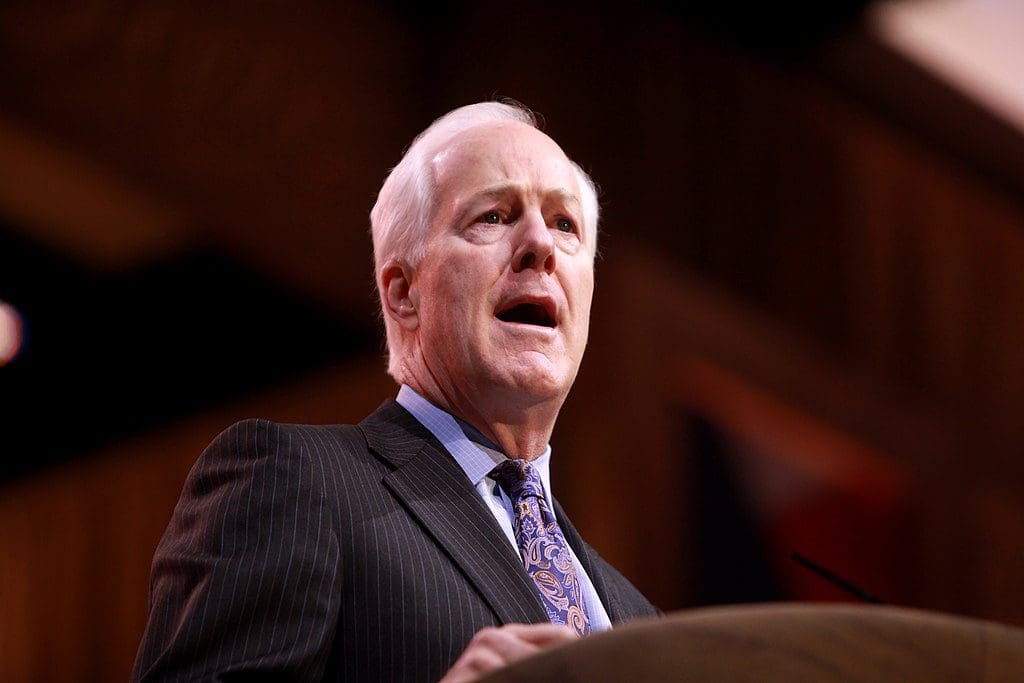
U.S. Sen. John Cornyn’s argument against closing Texas’ Republican primary hinges in part on a concept that doesn’t exist under current Texas law.
In an op-ed published in the Austin American-Statesman, Cornyn argued that proposals to require party registration before voting in a Republican primary would reduce voter participation and weaken the Republican Party.
The op-ed comes as the debate over closed Republican primaries has intensified in Texas. Gov. Greg Abbott, Lt. Gov. Dan Patrick, and House Speaker Dustin Burrows have all expressed support for legislation establishing a closed Republican primary, while the Republican Party of Texas continues pursuing litigation related to the state’s primary election system.
Cornyn’s intervention also comes less than two months after losing the Republican U.S. Senate runoff to Attorney General Ken Paxton by nearly 30 points.
But one sentence in particular stands out.
“Data does show that registered Democrats want to vote in their own primaries and are not willing to give that up in order to meddle in ours,” Cornyn wrote.
The problem? Texas has no registered Democrats—or registered Republicans.
Under current Texas law, voters register without a party affiliation. Instead, they choose which party primary to participate in each election cycle. That system is precisely what supporters of a closed Republican primary want to change.
Advocates of closing the GOP primary have argued Texas should adopt party registration, allowing only registered Republicans to vote in Republican primary elections. They contend the change would ensure Republican nominees are selected by Republican voters rather than by voters with no long-term commitment to the party.
Cornyn argues there is little evidence of widespread Democratic crossover voting and says closing the primary would unnecessarily restrict participation while shrinking the Republican coalition.
Yet his reference to “registered Democrats” unintentionally highlights one of the central arguments made by supporters of a closed primary.
If registered Democrats prefer to vote in Democrat primaries rather than cross over into Republican contests, that is largely consistent with the behavior proponents of party registration expect a closed-primary system to produce.
To be sure, Cornyn may simply have been using “registered Democrats” as shorthand for voters who identify as Democrats, rather than referring to Texas’ actual voter registration system. But in an op-ed focused specifically on whether Texas should adopt party registration, the distinction is significant.
The broader disagreement remains over whether Texas should continue allowing voters to choose either party’s primary each election cycle or instead require them to formally affiliate with a political party before participating in its nomination process.
Cornyn believes closing the primary would reduce participation and ultimately hurt Republicans.
Supporters of the proposal argue the opposite—that requiring party registration would strengthen the integrity of Republican primaries by ensuring Republican nominees are chosen by voters who have affirmatively affiliated with the party.
Ironically, Cornyn’s own reference to “registered Democrats” describes the very system supporters of a closed primary are seeking to create.