As we celebrate America’s 250th Independence Day in 2026, we also mark another profound milestone: the 200th anniversary of one of the most providential events in our country’s history.
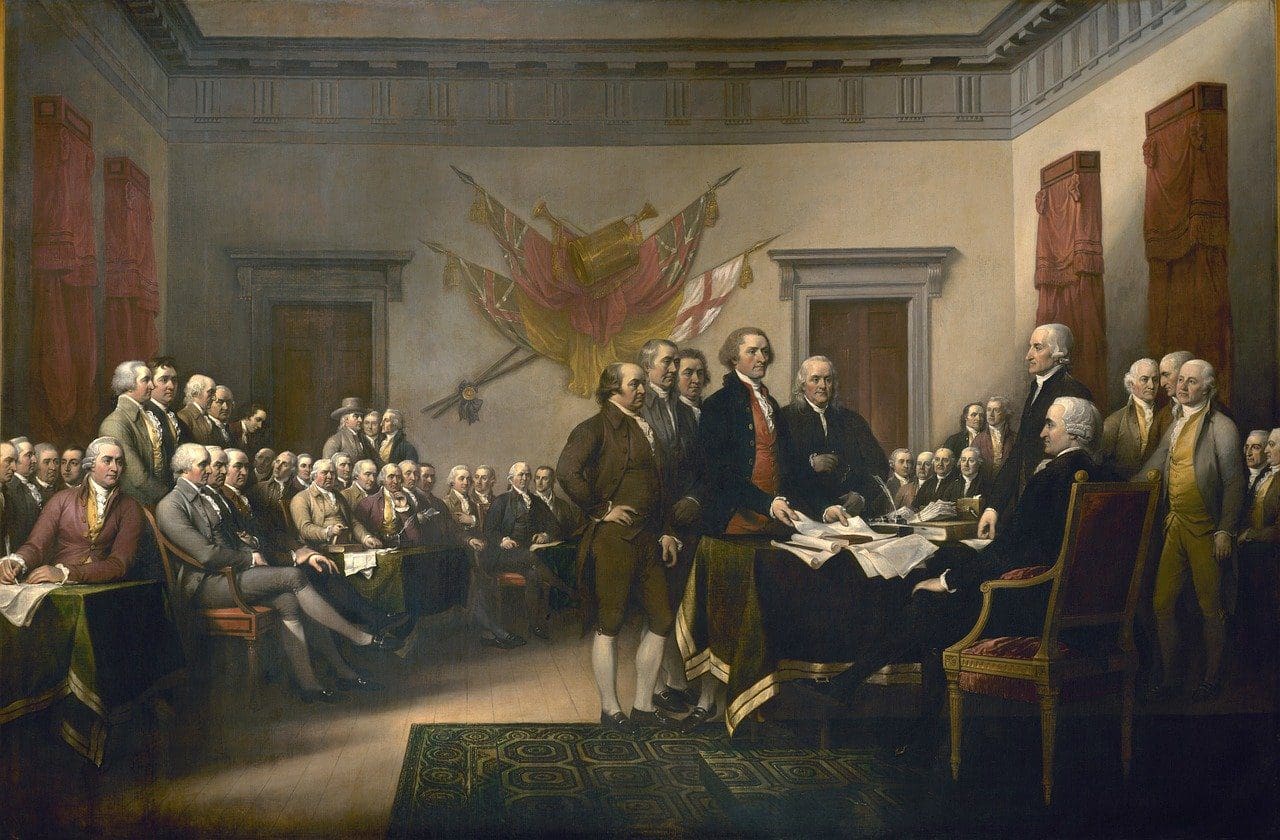
Exactly fifty years after the writing and signing of the Declaration of Independence on July 4, 1776, two of the men most responsible for that sacred document and the birth of our Republic died on the exact day the country celebrated its birth: July 4, 1826.
Eighty-three-year-old Thomas Jefferson died at Monticello in Virginia shortly after noon. For his final words, he asked, “Is it the Fourth?”
Hundreds of miles away in Quincy, Massachusetts, ninety-year-old John Adams held on until the early evening. As he drew his last breaths, Adams, unaware that his longtime friend and rival had already died, famously declared, “Thomas Jefferson survives.”
Both men, it seemed, had been holding on for one final Independence Day.
Their deaths were not merely coincidental; they were providential. Adams and Jefferson had been allies during the revolution, but then they became political rivals during the early Republic. After years of estrangement, they reconciled and corresponded regularly. From 1812 until they died in 1826, the two exchanged hundreds of letters, reflecting on liberty, self-government, religion, education, and the challenges of maintaining a republic. These historical letters are an essential source today for understanding the founding era and the minds that shaped it, an understanding for which we must strive in order to grasp the original intent of the founding documents they wrote.
News of their passing traveled the only way it could in 1826: by word of mouth. Reports of Jefferson’s death moved northward from Virginia, while word of Adams’s passing spread southward from Massachusetts. In the Middle States, particularly Pennsylvania and Delaware, the separate streams of news finally met. By mid-July, newspapers published accounts of both deaths side by side. Citizens who had first mourned one founder and then the other realized the astonishing truth: the two patriarchs had left the world together on the exact fiftieth anniversary of the country’s birth.
Across the young republic, citizens greeted the realization with awe and solemn celebration. Bells tolled in villages and cities. Flags flew at half-mast. Communities from New England to the South held special church services, prayer vigils, public memorials, and mourning processions. Orators such as Daniel Webster delivered powerful eulogies, framing the timing as clear evidence of divine providence—a heavenly benediction marking the Jubilee of Independence. Citizens spoke openly of it as a miracle, proof that God had united the founders’ spirits in death as they had once been united in the cause of liberty.
Two hundred years later, as we observe the 250th anniversary of our country’s independence, this story deserves renewed attention. It reminds us that our Founding was not the work of flawless men but of flawed, yet courageous, leaders who pledged their lives, their fortunes, and their honor for the principles of liberty, self-government, and rights bestowed by our Creator rather than by kings or distant governments.
Today, many of the same threats they confronted exist in a new form: an expansive federal government that too often exceeds its enumerated powers, erodes state sovereignty, burdens families with debt and regulation, and weakens the self-reliance and local control the Founders cherished.
This Independence Day, let us do more than celebrate with fireworks and cookouts. Let us read the Declaration of Independence aloud with our families and teach our children the true meaning of independence—not just freedom from tyranny, but also the ongoing responsibility to sustain a republic rooted in virtue, faith, and limited government.
Here in Texas, that work continues. We remain committed to preserving sovereignty, protecting our families, and defending life. The revolution, as John Adams understood so well, was first won in the hearts and minds of the people, something for which we must continue to fight. Americans must understand that if liberty is to be preserved, the mantle of responsibility falls squarely on the shoulders of this generation.
May God continue to bless the great State of Texas and the United States of America. And may we, like Adams and Jefferson, resolve to transmit the blessings of liberty to our posterity.