A federal appellate court has vacated the Maritime Administration’s approval of Texas GulfLink’s proposed deepwater oil-export terminal off the coast of Brazoria County, concluding the agency failed to follow a key requirement of federal law.
The U.S. Fifth Circuit Court of Appeals found that the secretary of transportation must include a project’s proposed pipelines in its application area. If this had been done, Texas Gulflink’s application area would have improperly intersected with that of another deepwater port.
Background
The Deepwater Port Act of 1974 (DWPA) provides comprehensive regulations for the construction and operation of deepwater ports. It first requires applying for a license from the Department of Transportation’s Maritime Administration (MARAD).
Deepwater ports are not used for the exploration or production of natural gas, but serve only as import and export terminals for the “transportation, storage, or further handling of oil or natural gas,” according to the DWPA.
Upon receiving an application, the secretary of transportation must publish a notice describing “an application area encompassing the deepwater port site proposed by such application.”
Importantly, there can only be one deepwater port per application area. When the secretary receives more than one application for the same application area, he is required under the DWPA to issue a license to the port that “clearly best serves the national interest.”
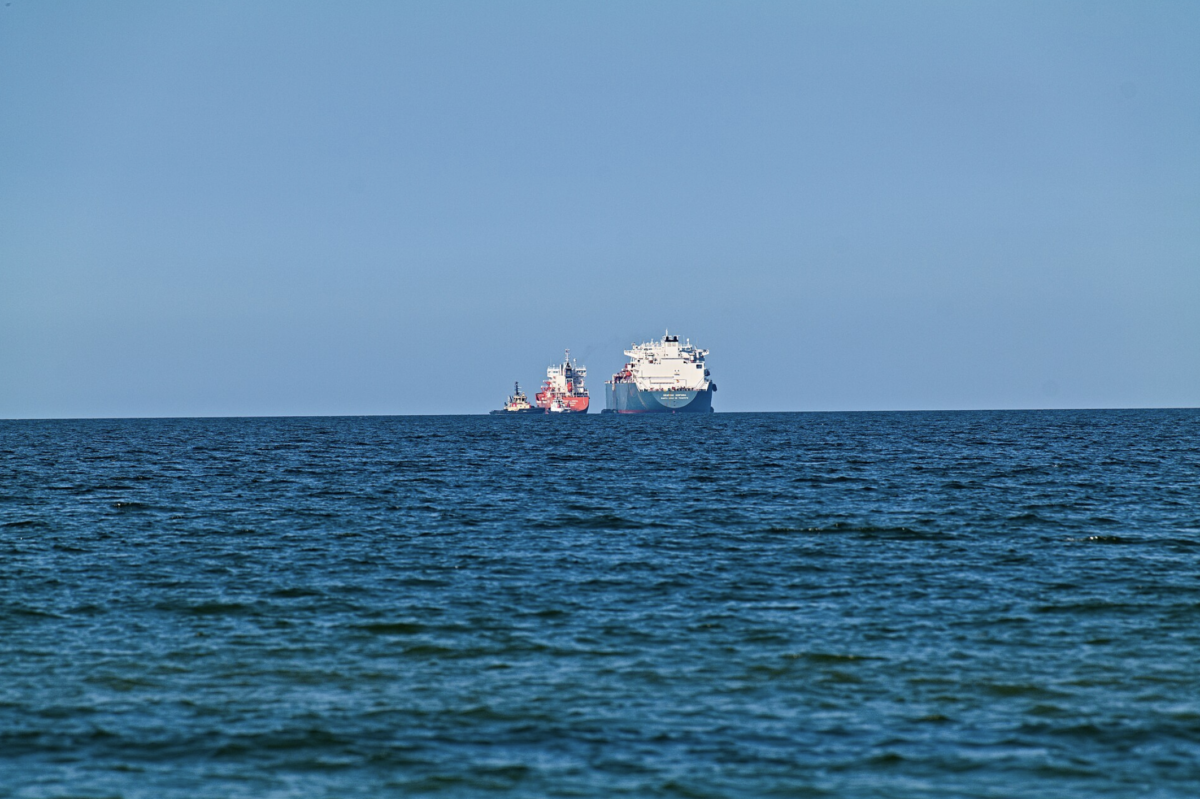
Texas GulfLink sought federal approval to build an offshore deepwater port designed to load very large crude carriers, capable of hauling up to two million barrels of oil, directly from an offshore terminal. The project would include an offshore platform, a pipeline running to shore, and an onshore tank farm near Freeport.
In February 2025, MARAD approved Texas Gulflink’s application, despite the fact that its proposed pipeline would intersect with another deepwater port’s pipeline. The secretary’s application area for the project did not include its proposed pipelines.
Citizens for Clean Air & Clean Water in Brazoria County challenged this decision, arguing that Texas Gulflink’s application area should have encompassed its proposed pipelines under the DWPA. Had the secretary done so, the group reasoned that the application area would have included two separate ports.
Challenges of MARAD decisions are filed directly with federal district courts. In this case, it fell within the jurisdiction of the U.S. Fifth Circuit Court of Appeals in New Orleans.
The Decision
A three-judge panel of the Fifth Circuit was tasked with determining whether the DWPA requires the secretary to include a deepwater port’s proposed pipeline in its application area.
Judges Edith Clement, Leslie Southwick, and Kurt Engelhardt determined that it does.
The panel found that the DWPA requires the secretary to designate “an application area encompassing the deepwater port site,” and that it expressly defines “deepwater port” to include “all components and equipment, including pipelines … to the extent they are located seaward of the high water mark.”
“Texas GulfLink’s application area, properly drawn, would intersect with another deepwater port’s pipeline, violating the DWPA’s requirement that there be only one deepwater port per application area,” wrote Judge Clement.
Accordingly, the panel vacated the record of approval for Texas Gulflink’s application. The application has been remanded to MARAD for further consideration.
Related Litigation
In July, the Fifth Circuit cleared the way for Delfin LNG’s deepwater port, which had been challenged by three left-wing environmental organizations seeking to vacate the project’s federal license.
The court concluded that the petitioners had failed to demonstrate that any of their members had suffered a concrete and particularized injury, in what was touted as a win for President Donald Trump’s energy dominance agenda.
If you or anyone you know has information regarding court cases, please contact our tip line: scorecardtips@protonmail.com.