This article has been updated since publication to include further comment from U.S. Rep. Roy.
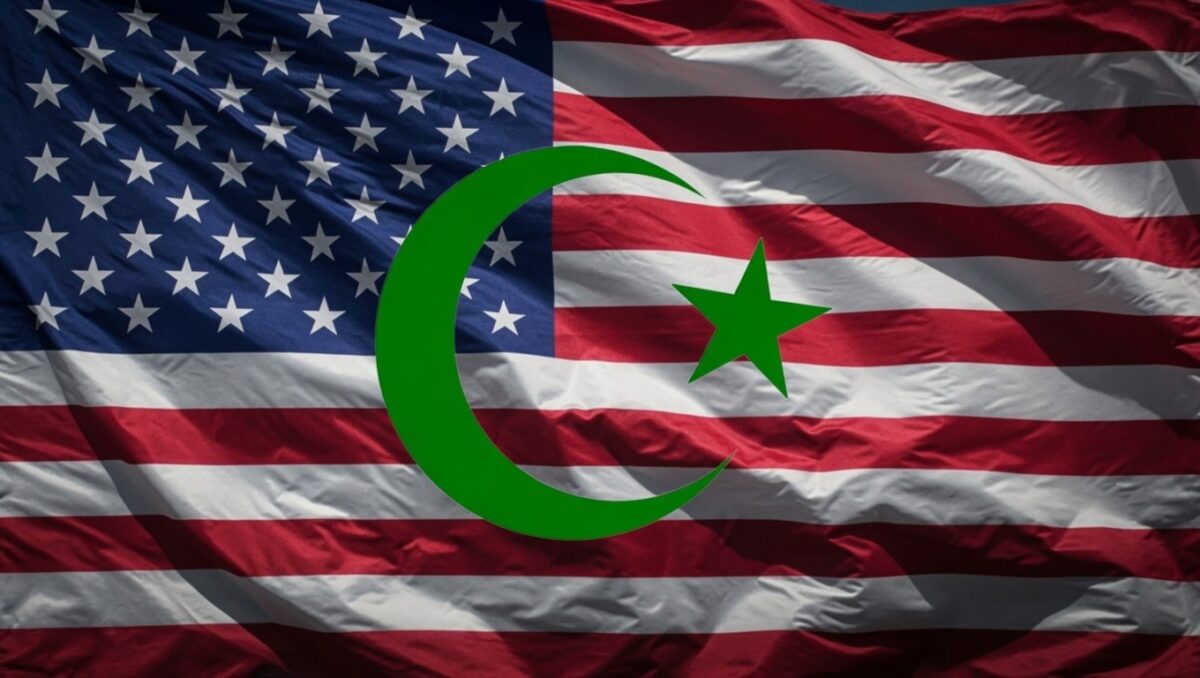
About 43 percent of likely voters ages 18-24 view Sharia law positively compared with 21 percent of respondents overall, according to a recent poll.
Conducted by Our Republic and Rasmussen Reports, the poll was conducted in late September and asked 1,026 likely voters their opinions on Sharia and its place in American society.
Views of Sharia were less favorable as voter age increased, with 39 percent of respondents ages 25-29 viewing Sharia positively, while 36 percent of those ages 35-39 said the same.
Additionally, when asked if respondents would “support allowing a town, city, or state to impose sharia law, if a majority of that location’s citizens favor doing so,” about a quarter of those ages 18-35 said they would. By comparison, only 7 percent of respondents across all age groups said they would support it.
“These results reveal a striking generational divide in Americans’ attitudes toward sharia,” said Our Republic founder and president Justin Haskins.
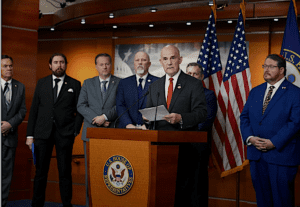
U.S. Rep. Chip Roy (R–Austin) commented on X that “Sharia law is incompatible with our Constitution and has no place in America. But it’s on the rise.” Roy co-founded the Sharia-Free America Caucus with U.S. Rep. Keith Self (R–McKinney).
Roy told Texas Scorecard that it was “deeply troubling” to see young Americans increasingly embrace Sharia law.
“The First Amendment protects the free exercise of faith; it does not require Americans to surrender their constitutional principles,” Roy wrote.
“America should learn from the recent experiences of other Western countries. Just look at what is happening in England and France. We cannot afford complacency. Our Constitution, our liberties, our shared culture, and our civic institutions must remain the foundation of American life.”
In a post to X, Self responded to an interview of Haskins relaying some of the data by saying, “We need to educate our young folks on the dark reality of Sharia law: Child marriages. Honor killings. Wife-beatings. The list goes on.”
“Sharia has no place in America. Not now. Not ever,” Self added.
The poll also asked whether Sharia law or “traditional Christianity” is the “greater threat to America’s future.” Fifty-five percent of total respondents said Sharia was the greater threat while 13 percent chose traditional Christianity. Twenty-three percent said neither poses a threat to America.
When taking political affiliation into account, only 34 percent of Democrats said Sharia was the greater threat, while 80 percent of Republicans and 52 percent of Independents answered the same. Additionally, 16 percent of Democrats said traditional Christianity was the greater threat.
About 43 percent of respondents said Sharia was a greater threat than America’s alliance with Israel, while 25 percent said the opposite. Fifteen percent said neither is a threat. Opinions on which posed the greater threat differed based on political affiliation, with more Democrats choosing Israel and more Republicans choosing Sharia.
“These findings show just how dramatically attitudes toward sharia, Israel, and traditional American institutions differ across generations and political groups,” said Haskins.
Separate questions specifically addressing the war in Iran showed that most voters in general blamed either Israel or the United States for the war, with Democrats again reporting an even higher percentage.
Additionally, when asked who they wanted to win the war, 16 percent of respondents said they wanted Iran to win over the United States or did not care, with Democrats reporting an even higher percentage.
Nearly 20 percent of all voters said they would support dismantling Israel and replacing it with a Palestinian-led nation if it meant an end to the war and lower oil and gas prices. Around a quarter of Democrats answered affirmatively, as did 60 percent of voters ages 25-29.
In response to these results, Haskins told The Federalist that he did not believe results were due to widespread commitment to Islam or Sharia; rather, Haskins stated that “Muslims are widely perceived as an oppressed or marginalized group in the United States.”
“Groups perceived as marginalized are often treated sympathetically without much scrutiny of what those groups or their belief systems actually teach,” Haskins said.
“Too many have been taught to see constitutional limits as obstacles to progress, especially when those limits stand in the way of policies they believe would help groups they view as oppressed,” he added. “I suspect many default to a sympathetic view of policies associated with Islam without seriously considering whether those policies are compatible with constitutional freedoms. The irony is that, in doing so, they may be undermining the very rights they claim to care about.”
The polling comes after the Council on American-Islamic Relations recently condemned a call by State Board of Education member Brandon Hall (R–Aledo) for the Muslim Student Association to be barred from American educational institutions.