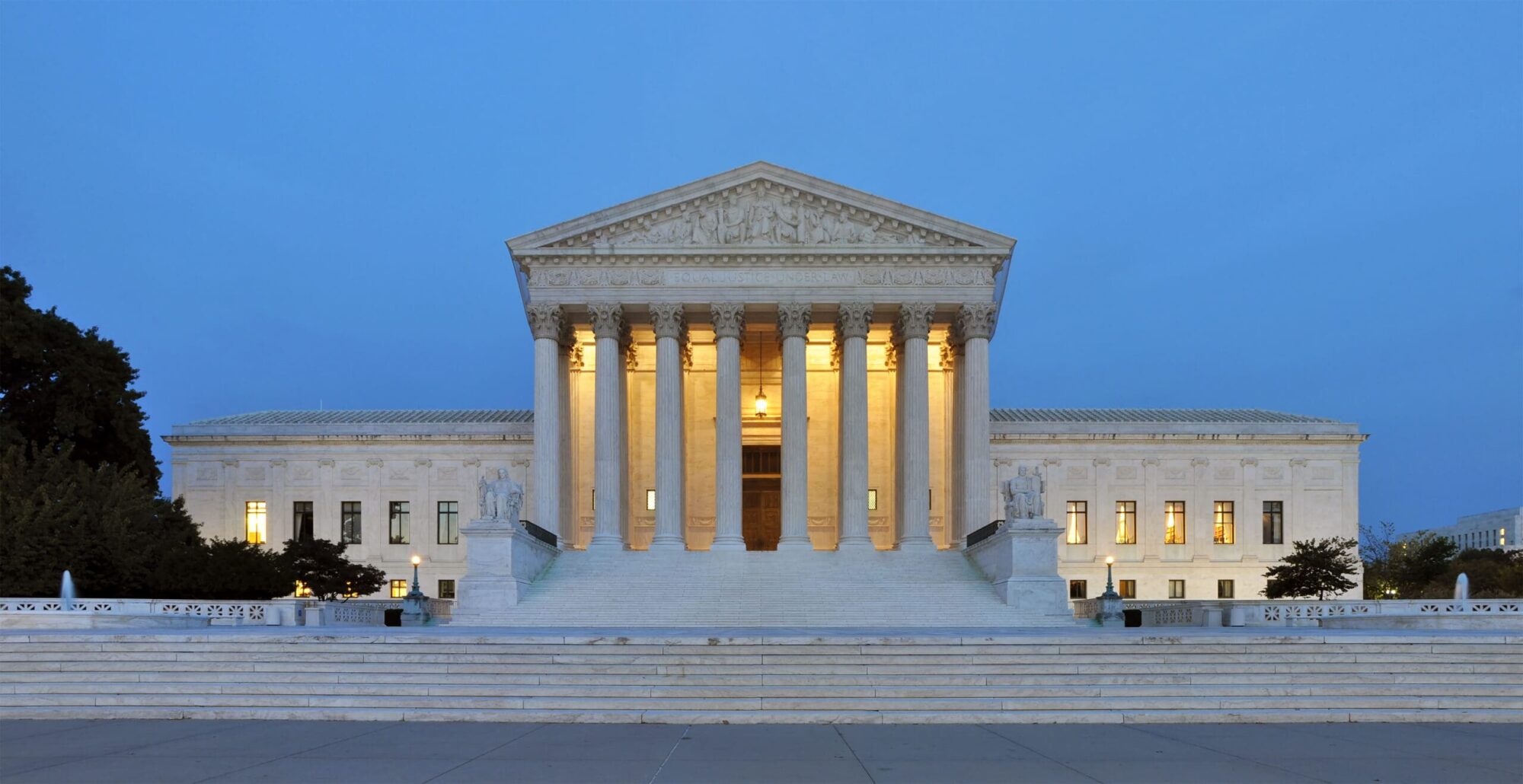
In a 6-3 decision, the U.S. Supreme Court struck down President Donald Trump’s executive order directing federal agencies not to recognize birthright citizenship for certain children born in the United States if their parents did not meet specific status requirements.
The order, entitled “Protecting the Meaning and Value of American Citizenship,” was one of the executive orders Trump signed during his inauguration in January 2025. The order proclaimed that U.S. citizenship would not automatically extend to a child born in the country when the child’s parents were not citizens or lawfully present at the time of birth, or were only in the U.S. on a temporary visa.
“The Fourteenth Amendment has never been interpreted to extend citizenship universally to everyone born within the United States. The Fourteenth Amendment has always excluded from birthright citizenship persons who were born in the United States but not ‘subject to the jurisdiction thereof,’” Trump’s order stated.
Chief Justice John Roberts in the majority opinion disagreed, writing that these children are “subject to the jurisdiction” of the United States and therefore citizens at birth under the 14th Amendment.
Trump’s executive order was attempting to combat the proliferation of birth tourism, a practice in which women who are about to give birth come to the U.S. in order for their child to receive U.S. citizenship.
Chinese nationals have prominently undertaken this practice, which allows the child, who may never return to the country until adulthood, the right to vote in American elections when they turn 18. Conservative activists and commentators have pointed to this as a national security risk.
“The idea that [citizens] from our number one geopolitical adversary should come into the United States for the purpose of having babies who can then later on vote in American elections is hard to fathom,” said U.S. Rep. Brandon Gill (R–Flower Mound).
Justice Clarence Thomas issued a scathing 91-page dissent to the majority opinion.
“The Court has repurposed the Fourteenth Amendment to protect its own set of preferred rights that the Reconstruction Congress never contemplated, and that cannot find support in its text. Today the court does so again by recognizing a constitutional right to citizenship for children of all foreign-born tourists and illegal aliens,” he wrote. “I am not sure that today’s opinion will stand the test of time. The Citizenship Clause added greatly to the dignity and glory of American citizenship. Today’s opinion devalues that citizenship.”
U.S. Rep. Pat Fallon (R–Frisco) shared a post agreeing with Thomas’s dissent.
“SCOTUS has delivered many rulings recently that have correctly reaffirmed the intent of our Constitution, but I do not agree with the majority opinion today on the question of birthright citizenship,” Fallon wrote.
U.S. Rep. Chip Roy (R–Austin) added to the discourse protesting SCOTUS’s majority opinion.
“The Supreme Court, led by Chief Justice Roberts, failed the American people, the Constitution, and the rule of law today—not to mention the national security of the United States.” Roy wrote in a press release. “The 14th Amendment to the U.S. Constitution in no way stands for the proposition of creating a dangerous cottage industry of traveling to our soil to manufacture United States citizenship. That’s insane. The Supreme Court today should have said so explicitly and ended this damaging exploitation of our laws.”
“Congress must act immediately and must not hide behind the fiction that it must amend the Constitution to fix this abuse of our laws. To do otherwise would be an abject failure of the United States Congress,” he continued.
Gov. Greg Abbott called on Congress to act, writing on X, “Congress must clarify that American citizenship means something and does not extend automatically to children whose parents are in this country unlawfully or temporarily. The American people and the sovereignty of our nation deserve nothing less.”
Bo French, the Republican nominee for the Texas Railroad Commission, stated that “Texas can just do things and we should. Texas is sovereign. If I have anything to say about it, Texas will not recognize them as citizens.”
States, not the federal government, are responsible for issuing birth certificates. Texas and other Republican-led states could attempt to challenge the Supreme Court ruling by refusing to issue birth certificates to children whose parents are not citizens or legal residents.