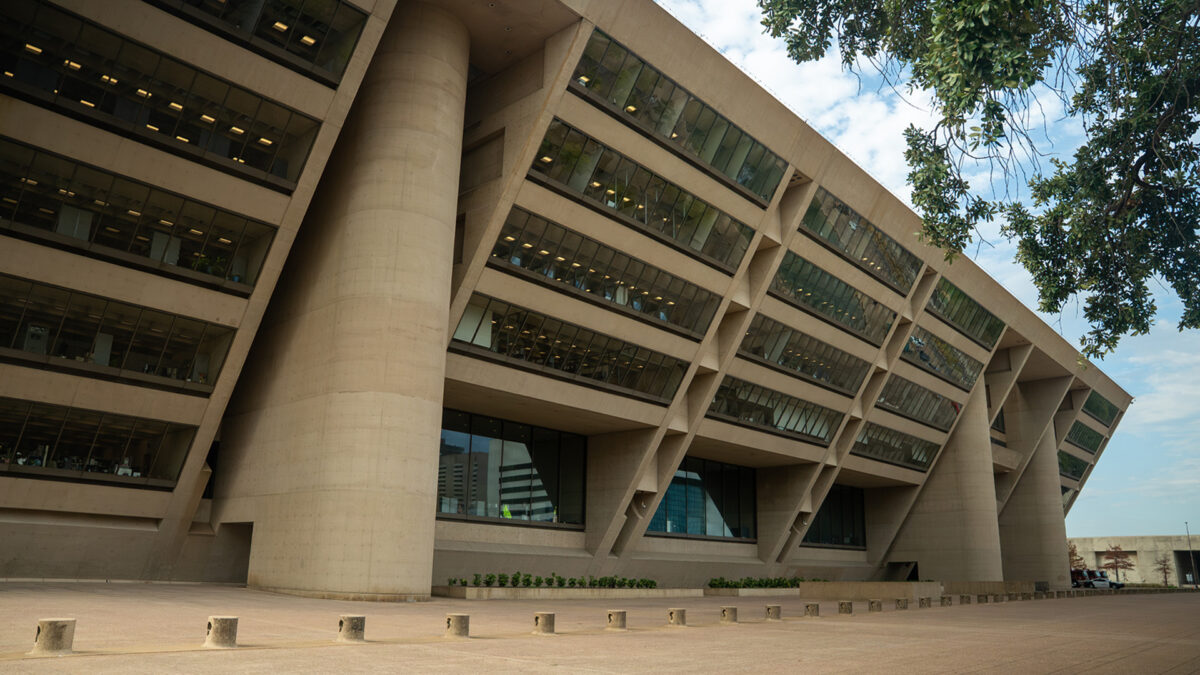
Dallas voters will decide November 3 whether to approve a $443 million public safety bond that has divided the City Council, with Mayor Eric Johnson promoting it as an investment in public safety and several council members calling it a “blank check.”
Including interest, Proposition A is estimated to cost taxpayers $629.6 million over as many as 20 years. The city says it does not anticipate a tax rate increase as a result of the bond, though state law requires bond propositions to state on the ballot that they are a tax increase.
Proposition A is the last item on the ballot, stating:
“THIS IS A TAX INCREASE The issuance of $443,000,000 general obligation bonds for public safety improvements and facilities, including fire, police and emergency services; the levying of a tax sufficient to pay principal and interest thereon; the estimated amount of repayment, including principal and interest based on current market conditions being $629,618,180.”
The proposition asks voters to approve five projects in a single vote: a police training center, a public safety training complex, a consolidated police evidence facility, a replacement fire station, and a new home for the city’s emergency operations and 911 call center.
Mayor Eric Johnson has made several appearances on local media in support of Proposition A and was one of the votes in favor of calling the bond election.
On September 3, he posted photos from the groundbreaking for the Dallas Police Department’s new Law Enforcement Training Center at the University of North Texas at Dallas, one of the bond’s projects.
He called the center “a major investment that will help Dallas sustain its record-breaking public safety success for years to come. When complete, this world class facility will equip hundreds of new officers with the training they need to keep Dallas safe.”
Dallas City Councilmember Cara Mendelsohn (District 12) has urged voters to vote no on the bond.
“It’s a blank check for the city council and there is a [9-person] majority that is intent on abandoning city hall,” she said. “Tell the city council to come back in May with a clean, smaller proposition for just the academy, not able to misdirect money to other projects.”
She said Dallas residents previously voted four times to fund a police academy and in only one of those bonds did the funding actually go toward a police academy.
”Vote NO in November and demand our city to be more fiscally responsible with your tax dollars and live within our means!” Councilmember Adam R. Bazaldua (District 7) wrote on Facebook.
Mendelsohn has also made several media appearances and posted on X Saturday: “SUPPORTING PUBLIC SAFETY DOESN’T MEAN SUPPORTING A BAD BOND.”
She is the treasurer and most prominent proponent of the Bust the Bond Dallas campaign.
The campaign objects to the $629.6 million total cost and to bundling the police academy with the plan to move emergency dispatch out of City Hall. Citing a Moody’s credit report, it also says the bond would add to the city’s $8.6 billion debt while Dallas holds the lowest credit rating among Texas’ five largest cities.
The council voted 11-4 on August 12, 2026, to place Proposition A on the November ballot. Bazaldua, Blackmon, Mendelsohn, and Ridley voted against calling the bond election.
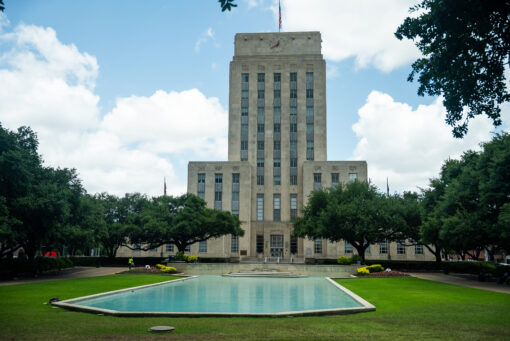
A key dispute for several council members is the proposition to move 311, 911, and emergency operations out of City Hall.
Bust the Bond Dallas says, “It’s an obvious first step to abandoning and demolishing Dallas City Hall.” The group supports the Save Dallas City Hall campaign, which has gathered more than 14,500 signatures on a petition to place a proposed Dallas City Charter amendment before voters in May 2027, to decide whether the city should be required to keep its principal municipal government operations at the existing City Hall.
The Dallas City Council’s Finance Committee in February unanimously recommended the city manager move forward with relocating the emergency services “as quickly as possible” and to pursue options to relocate all City Hall staff and for redevelopment of the City Hall site.
But the Dallas City Council was divided in its 9-5 vote authorizing up to $1 million for due diligence and pre-development agreements to explore the move. Councilmembers Mendelsohn, Paul E. Ridley (District 14), Paula Blackmon (District 9), Bill Roth (District 11), and Dr. Laura Cadena (District 2) voted against the authorization, and Bazaldua was absent.
Proposition A includes five capital projects.
The City of Dallas is asking voters to approve $82 million for the Dallas Police Department (DPD) Law Enforcement Training Center.
The city’s page dedicated to the bond election says the center will occupy 20 acres on the University of North Texas Dallas campus and would reportedly replace and update the existing training facilities. The project would include classrooms and administrative space; Basic Peace Officer courses for new recruits, taught in coordination with the UNT Dallas Criminal Justice Center; in-service training for current officers; reality-based training areas; health and fitness areas; and site work to facilitate the buildings, including utilities, landscaping, and dedicated parking.
The center’s total cost is $227 million. In addition to the bond request, the city lists $50 million from the 2024 bond program, $25 million in state grants, and $70 million in committed or expected private funding.
The second capital project is the Proposed Public Safety Training Complex (PSTC), which is a new public safety training facility to be built on more than 60 acres at the Dallas Executive Airport. The city is requesting $149 million for the project and says the PSTC was not included in the original 2024 Bond Program. Its total cost is $170 million, with $15 million from the Department of Aviation and $6 million in private funding.
The Dallas City Council Public Safety Committee reportedly found the need for a site to house the driving track and simulated village. The subcommittee held its briefing to review the department’s updates on November 13, 2023. Dallas city staff and leaders conducted the feasibility study and presented the Dallas Executive Airport as the most viable site to the entire City Council on April 15, 2026.
The city says its plans for the complex include: a training area for emergency driving; surfaces for slippery or challenging conditions; mock streets for emergency driving and response training; an outdoor tactical village, firearm ranges, an obstacle course, support buildings, and parking.
The city is also proposing bringing together four functions of the Dallas Police Department from three separate locations to one site: the property room, evidential vehicle storage facility, crime lab, and salvage space. City staff have not determined their preference between two options with different costs. One site is estimated to cost $150 million. An alternative undeveloped site in Dallas is estimated to cost $232 million, excluding land acquisition. The proposed project is to develop a facility to support investigative operations and proper chain-of-custody procedures, according to the city’s website dedicated to the bond proposal.
A proposed replacement of Dallas Fire-Rescue Department’s (DFR) Fire Station No. 4, located at 816 S. Akard St. near Canton Street, is the fourth project on the bond. The city says the existing station is the highest priority for replacement, having served the response area since 1953. The $22 million project includes relocating and constructing a new five-bay station, with updated operational and support spaces. The city says the existing site is too small to accommodate a five-bay station.
Another $40 million is requested for renovating, equipping, and merging two critical, related city functions into one facility: the city’s Emergency Operations Center (EOC). The center would coordinate the City’s public safety response during major emergencies and disasters, and the City’s 911 call center.
City management and internal staff conducted the initial real estate and market reviews and determined moving the two critical infrastructure functions out of the basement of Dallas City Hall was a logistical and safety necessity. Staff reportedly chose a city-owned tower in the Cedars neighborhood as the preferred and most cost-effective site for both programs.
Early voting is underway in Texas until October 30. Election Day is November 3.