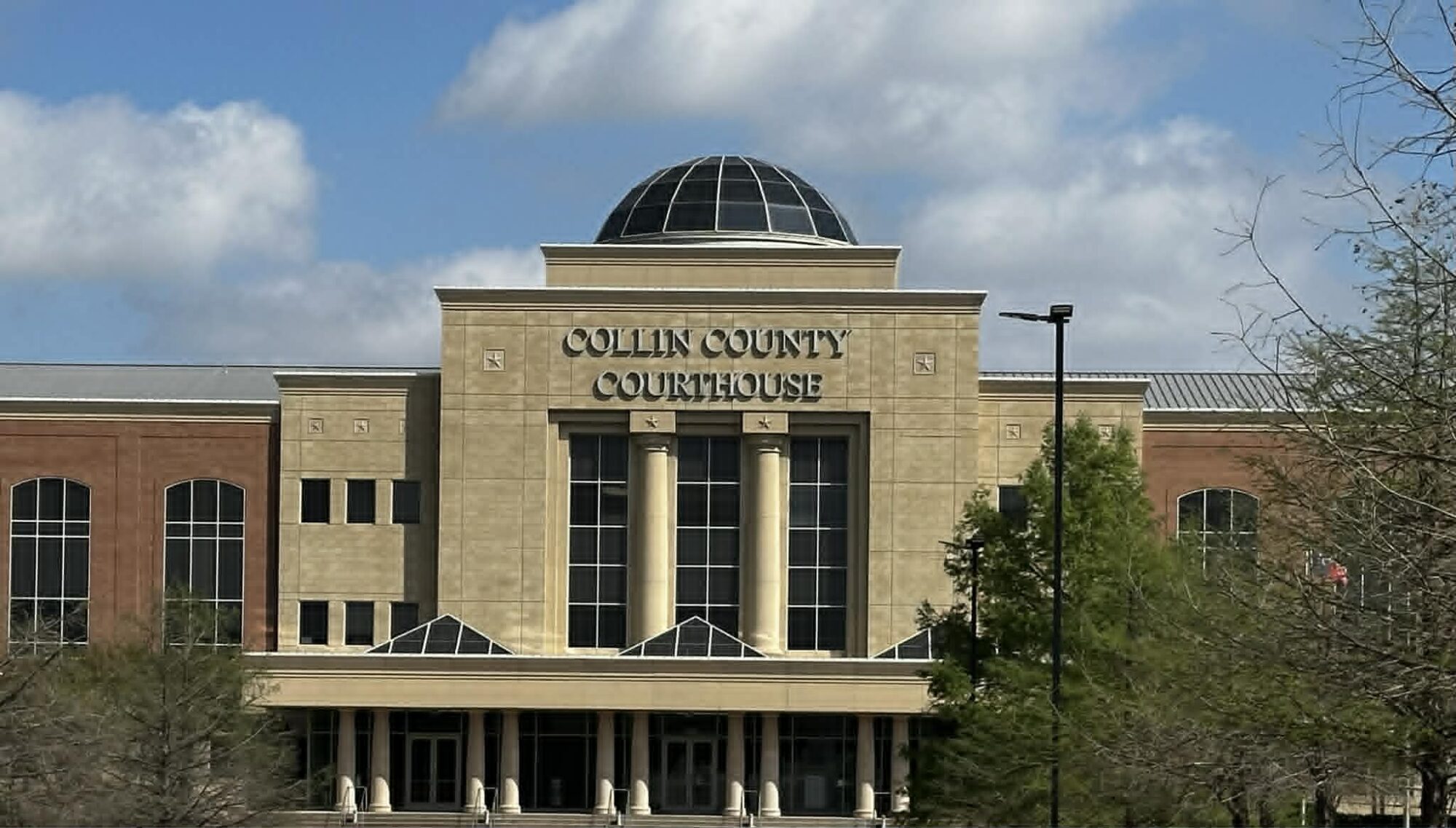
A state court judge in Collin County has temporarily blocked further actions by a utility district slated to service the controversial planned community known as EPIC City or The Meadow.
The court previously issued a temporary restraining order against the Double R Municipal Utility District No. 2A of Hunt and Collin Counties, which the state says appointed ineligible directors who then annexed the proposed Islamic development into the MUD.
Annexation into an existing MUD allowed developers to skirt new state regulations surrounding the creation of new utility districts.
On Monday, Judge Christine Nowak of the 493rd District Court in Collin County granted the state’s request for a temporary injunction after all parties agreed that the MUD’s current directors are not eligible to serve.
The question now is who will make decisions on behalf of the utility district going forward, and how that will affect the EPIC development.
“The state is just asking for a pause until we can figure out what’s going on,” Wesley Williams with the Texas attorney general’s office told Judge Nowak. “There’s a lot of secrecy surrounding this board.”
The Issues
Texas Water Code authorizes the Texas Commission on Environmental Quality (TCEQ) to oversee MUDs, which are special districts granted power to issue bonds and levy property taxes for the purpose of providing water, wastewater, and other services to subdivisions in unincorporated areas of the state.
Plans for EPIC City—an expansion of the East Plano Islamic Center (EPIC)—include a residential community with a mosque, school, and other amenities catering to Muslim families to be built on more than 400 acres in unincorporated parts of Hunt and Collin counties.
Preliminary development applications have been rejected by Collin and Hunt officials for being incomplete. In both cases, EPIC developers’ submissions included “will serve” letters from Double R.
Such letters are required commitments from service providers that ensure proposed developments will be successful, Collin County’s Director of Engineering Clarence Daugherty testified Monday.
It was Daugherty who notified TCEQ that newly appointed Double R MUD directors might not be eligible, after his office reviewed EPIC’s initial application submitted late last year.
He testified that subsequent filings have continued to include Double R MUD as a service provider.
Due to the acknowledged ineligibility of the MUD’s current directors, the validity of those service commitments is now in question, which may delay development approvals needed for the EPIC City project to proceed.
The Directors
Williams explained to the court that the state’s Water Code establishes eligibility requirements for MUD directors.
Five new Double R directors—Yaneli Molina, Hatim Mahmoud Yusuf, Nadeem Ashraf Khan, Asim Hussain Khan, and Faisal Abbas—were purportedly appointed during a September 12, 2025, meeting in which the previous board members resigned.
Molina’s attorney said Monday his client had resigned on March 19, and she signed an agreement in court to abide by the terms of the injunction.
Williams argued that none of the new directors met the eligibility requirements and concluded they thus had no authority to accept the resignations of the previous directors or to approve annexing the EPIC City property into the utility district.
He asked the court to “freeze the status quo to just prior to the September 12 meeting.”
The order granting a temporary injunction states that “Double R MUD shall immediately cease all operations and activities until such time qualified directors are appointed by the TCEQ pursuant to Texas Water Code 49.105(c).”
TCEQ Districts Section Manager Justin Taack testified Monday that MUD board vacancies can be filled by the board or by his agency.
What’s Next
Defense attorney Jerry Hall with Mayer LLP said he agreed his three clients, Abbas and the Kahns, were not eligible to serve as Double R MUD directors. But he questioned where that leaves the board and what the correct path forward is.
“There may be vacancies, but there cannot be an empty board,” argued Hall.
He also noted that MUDs are authorized to offer services to areas outside of their district boundaries.
After hearing arguments from both sides, Nowak ruled that the state’s requested injunctive relief was necessary to “prevent irreparable harm” that could be caused by the ineligible directors’ actions.
A bench trial in the case is set for November 16.