Hunt County officials unanimously rejected plans for a controversial Muslim community originally known as EPIC City and rebranded as The Meadow, citing technical, regulatory, and legal deficiencies in the plat application.
During a meeting on Tuesday, Hunt County commissioners adopted a resolution “disapproving” the plat application submitted by developers of the subdivision, which was planned as an expansion of the East Plano Islamic Center (EPIC).
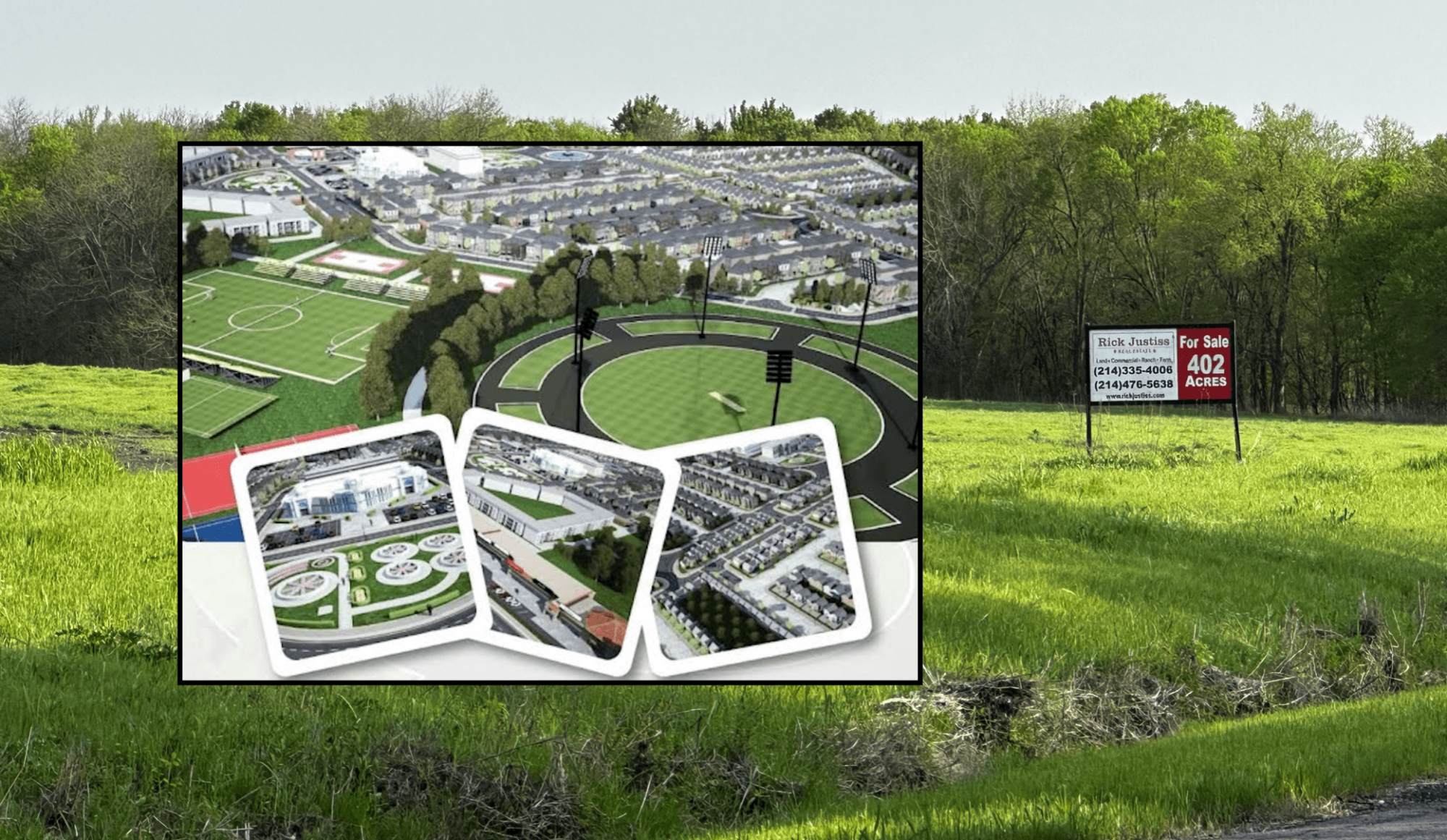
Plans include up to 1,000 residences plus a mosque, school, and other amenities catering to Muslim families, located on more than 400 acres in unincorporated areas of Hunt and Collin counties.
Residents in both counties—and across Texas—have objected to communities like the proposed EPIC development, which Gov. Greg Abbott and other elected officials have referred to as “sharia cities.”
In addition, Attorney General Ken Paxton sent letters urging Collin and Hunt officials to reject EPIC’s plat applications while he sues the developers and related entities over alleged fraudulent activities surrounding the project.
Yet as Hunt County Civil Attorney Daniel Ray noted, Tuesday’s disapproval was based on “technical, regulatory, and legal deficiencies in the application itself.”
“It’s not based on race or religion or any of the other things that have caused concern in the community, because those cannot form the basis of any decision that the Commissioners Court makes,” stated Ray.
Ray said commissioners were required to either approve or disapprove the application by March 28 in order to meet a 30-day deadline required by Texas Local Government Code Chapter 232, which governs subdivision platting in unincorporated areas.
He said the attorney general’s letter and lawsuits were not part of the county’s decision-making process.
“It’s not part of Chapter 232, and therefore can’t serve as any sort of independent basis for the Commissioners Court to deny or to disapprove the preliminary plat,” said Ray.
“There are 13 other reasons to disapprove this plat as filed,” he added, noting that each stands on its own.
Ray described a variety of engineering and plat nonconformance issues identified by an outside engineer, along with insufficient utility and wastewater service commitments and documentation.
He also identified specific problems related to the municipal utility district that the developers were relying on to service the subdivision. MUDs issue bonds to finance their facilities and levy property taxes to repay the bond debt.
The Double R Municipal Utility District No. 2A of Hunt and Collin Counties is the target of a lawsuit filed by Paxton in February. On March 19, a Collin County court issued a temporary restraining order, freezing further action by the MUD until a March 30 hearing on the state’s request for a temporary injunction.
But Ray emphasized that Hunt County cannot rely on anything in the state’s lawsuit or the TRO or Paxton’s letter when making its decision under Chapter 232.
“The law just doesn’t allow it,” said Ray.
It doesn’t matter how much dislike there is for the project or the developer or any of the groups involved. The law is very clear that any decision has to be made specifically on the things that the legislature has given the county in the way of authority to approve or to disapprove. The attorney general lawsuit makes claims that have absolutely nothing to do with that, including securities fraud allegations…
That distinction matters in court, because if the attorney general’s letter was read to imply that the county should just not make a decision on this because of the pending action, that is not a position that’s supported by Chapter 232, and would result in a likely lawsuit and a potential loss for the county and the county’s taxpayers.
“None of the things that are in this proposed disapproval resolution are based on religion or national origin or on the unrelated litigation in Collin County,” Ray added. “The county’s duty here, when reviewing this, is to strictly apply the requirements of the subdivision regulations and Chapter 232.”
Hunt County commissioners also approved new subdivision regulations and plat application procedures for future developments.
Collin County officials rejected a similar application submitted by the EPIC developers in December as incomplete, but they noted it would be re-evaluated if and when all required items were submitted.
Abbott signed a law last year aimed at “banning sharia compounds” like EPIC City, in part by preventing their developers from creating municipal utility districts. A pending lawsuit filed by Paxton alleges the EPIC developers engaged in securities fraud while soliciting investments in the project.
Both the U.S. Department of Justice and the Texas Workforce Commission have dismissed claims that The Meadow would discriminate against non-Muslims in violation of federal or state fair housing laws.
Meanwhile, plans for a “sustainable city” in an unincorporated area of Kaufman County—purported by some local residents to be a potential “sharia city”—have been scrapped, according to U.S. Rep. Lance Gooden (R–Sunnyvale), who represents the area.
Gooden said the matter was “resolved” and there is “no cause for continued concern.”
Paxton’s office had launched an investigation in February.
Kaufman County Judge Jakie Allen said a representative of the developers had assured him it was not going to be a “Muslim community” and agreed to put in the deeds that no mosque would ever be built on the location.