Families of flood victims filed a lawsuit against Camp Mystic and its owners. The petition features charges including gross negligence and “intentional infliction of emotional distress.”
The Eastland family has long owned the camp, which experienced catastrophic floods on July 4, resulting in the deaths of 20 girls and two teenage counselors.
Camp Mystic sits on 725 acres in the Texas Hill Country on the Guadalupe River. It was founded in 1926 and purchased by the grandparents of Richard Eastland in 1939. The estate of Richard Eastland—who died while attempting to save campers—is named in the lawsuit.
Attorney Paul Yetter—a seasoned commercial litigation attorney—is representing the Plaintiffs, who are seeking over $1 million in damages. They allege Camp Mystic had an extensive history of flooding and that the Defendants knew about the danger, but ignored warnings and chose to focus on profits over safety.
The lawsuit was filed in the 455th Judicial District Court in Travis County on November 10.
Lawsuit
“These young girls died because a for-profit camp put profit over safety,” reads the lawsuit. “The Camp chose to house young girls in cabins sitting in flood-prone areas, despite the risk, to avoid the cost of relocating the cabins.”
The lawsuit points out that many of Camp Mystic’s cabins were included in FEMA’s 100-year floodplain map before 2013. That year, the camp reportedly filed requests for cabins to be removed from these maps in 2013. FEMA approved most of these requests.
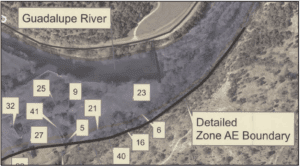
According to the lawsuit, “This did not change whether any of the cabins were prone to flooding or their relation to the river. The only effect was for the Eastlands to save money. While in the floodplain, owners must pay expensive insurance premiums, and renovations require certifications and other costly measures.”
Moreover, obtaining amendments to FEMA’s flood maps is reportedly an “expensive and burdensome process.” Rather than moving the cabins to safer locations, the camp is accused of choosing to spend capital on that effort.
Defendants also reportedly knew of the area’s extensive history of flooding. The lawsuit asserts that “[t]he part of the Guadalupe River on which the Camp sits has always been prone to deadly flash flooding. In fact, flash floods happen so frequently that the area has become known as ‘Flash Flood Alley.’”
The “Great Flood” of 1932 is memorialized in the camp’s materials given to campers nearly 100 years later. During that disaster, several cabins were swept away, and campers were forced to evacuate across the river in canoes. Subsequent devastating floods hit the property in 1978, 1985, and 1987.
The lawsuit cites orders that the camp provided to counselors in the event of a flood, despite knowing that some of its cabins were in a flood zone, along with the site’s extensive history of flooding.
“In case of flood, all campers on Senior Hill must stay in their cabins … Those on the flats must also stay in their cabins unless told otherwise by the office. All cabins are constructed on high, safe locations,” states the order.
Counselors are also denied cell phones or walkie-talkies when camp is in session, which the lawsuit alleges leaves them helpless in the case of emergencies.
Plaintiffs contend the camp chose not to “spend time and money on safety training and tools” or make plans for how to safely evacuate its campers and counselors from the cabins, despite state rules requiring evacuation plans.
Instead, the camp allegedly “chose to order its campers and counselors, as a matter of policy, to stay in these flood-plain cabins regardless of life-threatening floods” and “directed its groundskeepers to spend over an hour evacuating camp equipment, not its campers and counselors.”
The lawsuit alleges it was too late when the camp made a “hopeless ‘rescue’ effort from its self-created disaster in which 25 campers, two counselors, and the Camp director died.”
“The Camp ignored warnings about the risky location of its cabins. It ignored warnings about the approaching July 4 storm and life-threatening flood risks,” reads the lawsuit. “It ignored the obvious and rising flood risks that morning as the hours passed. It ignored warnings from its own counselors to evacuate the cabins. It simply ignored the unmistakable safety threat to its campers and counselors until this tragedy was unavoidable. And 27 young girls lost their lives.”
Aftermath
Plaintiffs are also charging “intentional infliction of emotional distress,” regarding the camp’s response to the tragedy.
“The Camp’s actions since the tragedy have only deepened the pain. From the Camp’s initial false notices that girls were ‘unaccounted for’ to its recent announcements about reopening for business as usual while a camper is still missing, the Camp has caused further trauma to these distraught families,” reads the lawsuit. “The Camp refuses to accept any responsibility for its actions and failures to act, defiantly blaming this tragedy on ‘an act of God’ that no responsible steps could have avoided.”
Plaintiffs are asking the court to grant their “full actual damages, including conscious pain and suffering before death, conscious mental anguish suffered before death, funeral expenses, past and future mental anguish, past and future counseling expenses, past and future loss of companionship and society, loss of services, and past and future lost earning capacity.”
Plaintiffs are also seeking exemplary damages (to punish Defendants for extreme misconduct), all costs of suit, and all other relief to which they may be entitled.
“Forced to grieve the needless deaths of 25 campers and two counselors – now Heaven’s 27 – plaintiffs bring this suit to ensure that the full truth will be revealed, all responsible parties will be held accountable, and yet more preventable youth camp tragedies involving other innocent children in the future may be averted,” concludes the lawsuit.
No monetary figure is presented in this part of the petition, though another section states, “Plaintiffs seek monetary relief in excess of $1 million.”
While Yetter’s lawsuit is the most prominent—as it includes the most families—two other lawsuits were also filed against Camp Mystic on Monday.
If you or anyone you know has information regarding court cases, please contact our tip line: scorecardtips@protonmail.com.