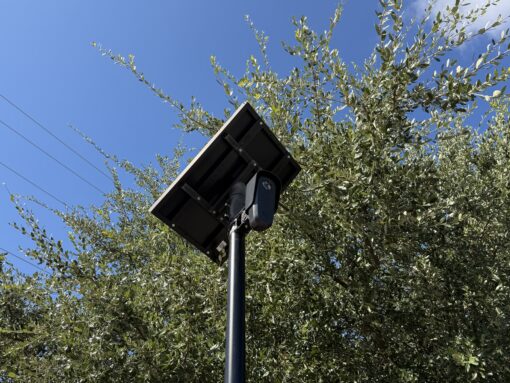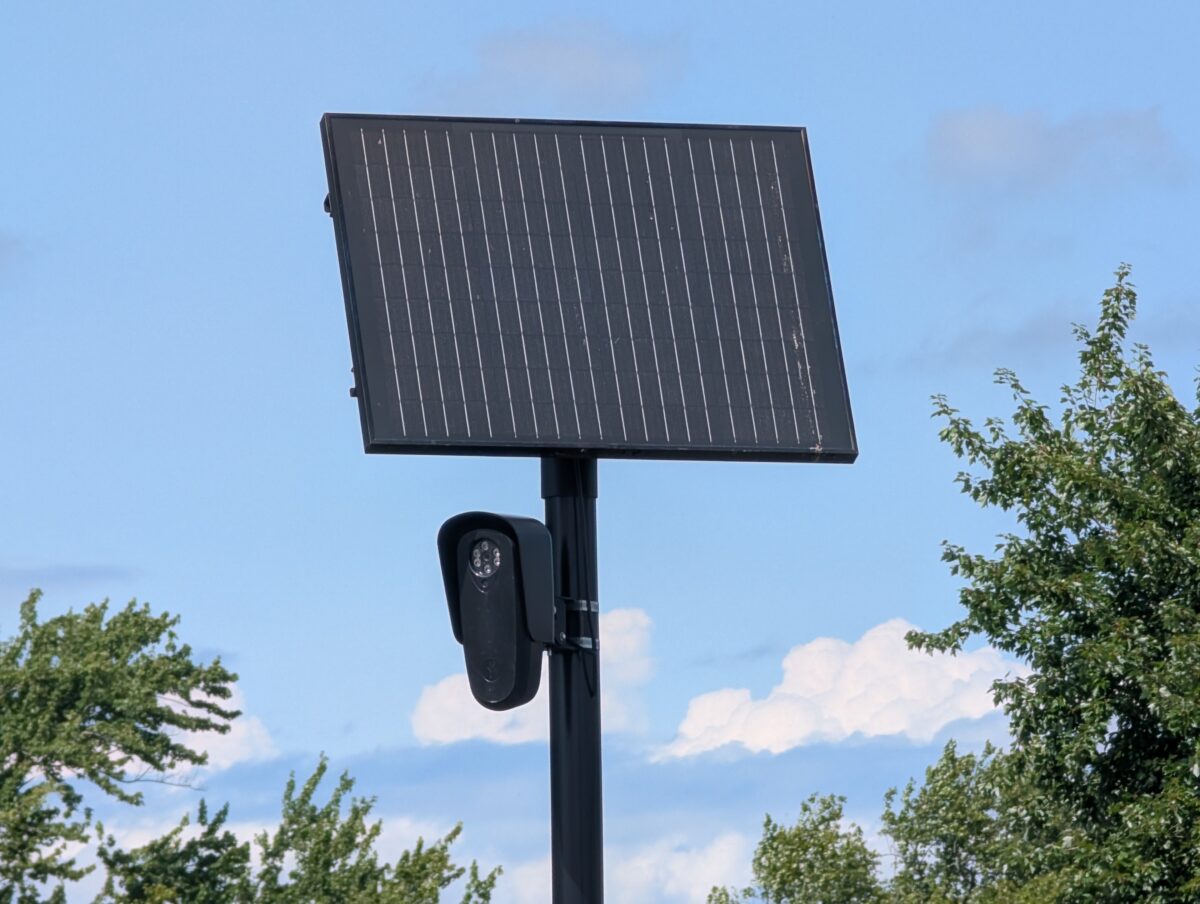
The Harris County Sheriff’s Office has adopted new restrictions on its use of automated license plate readers months after three deputies had their access to the surveillance technology suspended over allegations of misuse.
The department announced its updated policy Friday, which establishes requirements for accessing vehicle location data collected by cameras manufactured by companies such as Flock Safety, as well as procedures for investigating potential abuses.
Under the policy, employees must associate their use of the technology with an active case or investigation. Only authorized detectives and deputies ranked sergeant or higher may conduct searches of previously collected data, and they must document any reasonable suspicion that a crime has occurred and explain why the information is necessary to the investigation.
Employees conducting historical searches must also notify their immediate supervisors. Using the technology for personal, political, religious, discriminatory, or commercial purposes is prohibited, as is using it to harass individuals.
The policy places additional restrictions on lists of license plates entered into the system to generate alerts when vehicles are detected. Such lists are limited to 100 license plates and cannot remain active for longer than 30 days.
An alert from a camera is not sufficient on its own to justify detaining or arresting someone. Deputies must verify the information provided by the system and consider other circumstances before determining whether law enforcement action is warranted.
Data collected and stored on systems maintained by the sheriff’s office must be deleted after 30 days, with exceptions for information preserved as part of a criminal case file or retained for auditing purposes.
The policy also establishes internal auditing procedures and requires the department to coordinate with the Harris County Auditor’s Office at least annually for an outside review of those practices. Allegations of misuse deemed to have merit will be referred to the department’s Internal Affairs Division. Employees found to have violated the policy could face termination or, in cases involving criminal activity, prosecution.
In August, the sheriff’s office suspended three deputies’ access to its Flock system and initiated an internal review after receiving questions from a reporter regarding their use of the technology.
Harris County commissioners subsequently voted in October to establish a working group led by Sheriff Ed Gonzalez to develop recommendations regarding the collection, retention, and sharing of surveillance data across county agencies. Those recommendations are expected to come before commissioners in February.
Meanwhile, residents in neighboring Montgomery County are pursuing more extensive restrictions on government surveillance.
Conroe resident James Fletes submitted approximately 2,205 signatures to the city on November 18 in support of an ordinance restricting the use of technology that systematically tracks individuals who are not the subjects of specific investigations.
The petition follows an August 13 decision by the Conroe City Council not to place a binding proposition concerning the city’s Flock cameras on the November ballot. The measure failed in a 3-2 vote, with opponents arguing that residents should first gather the signatures necessary to bring the issue before voters.
According to the agenda for its December 2 meeting, the council will consider either adopting the proposed ordinance without substantive changes or calling a special election for May 1, 2027.
The proposal would extend beyond automated license plate readers to include facial recognition, cellphone tracking, and other surveillance systems capable of collecting and maintaining searchable records of residents’ movements. It would also restrict the city from accessing comparable systems operated by other entities.
Police body cameras, dashboard cameras, conventional security cameras, and targeted surveillance conducted for specific investigations would still be permitted under the proposed ordinance.
Earlier this month, League City residents voted 54 percent to 46 percent against the continued use of Flock cameras by their police department, triggering a previously approved resolution requiring the city’s 55 cameras to be removed or covered.