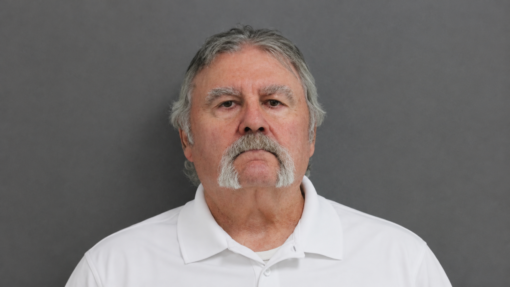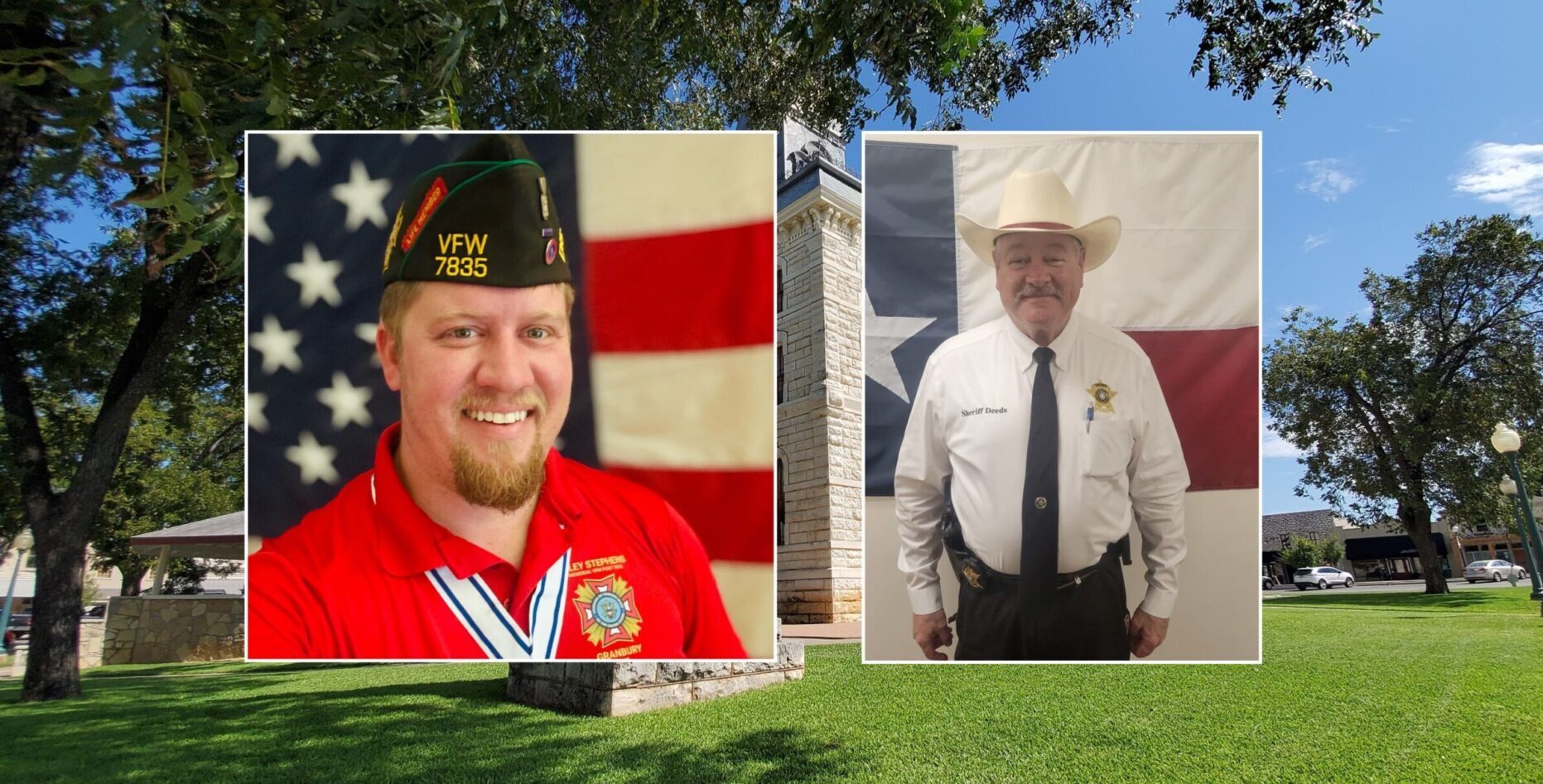
A federal district judge has denied immunity to Hood County officials who arrested a Navy veteran and journalist for posting a political meme, clearing the way for his lawsuit to move forward on the merits.
The journalist had frequently criticized public officials, including those responsible for his arrest.
By denying the motion to dismiss, the court kept the journalist’s constitutional claims alive and offered an early signal of skepticism toward criminalizing political satire.
Background
Kolton Krottinger is a U.S. Navy veteran and journalist in Hood County who “reports on local government, interviews candidates, and publishes political commentary and analysis to the public on matters of public interest.”
Krottinger is one of multiple administrators on the Facebook page called “Hood County Sheepdogs.” The page contains a disclaimer making clear it is for satire and jokes.
In October 2025, the Hood County Sheepdogs account made a post on the Granbury Breaking News Facebook page containing a photoshopped image that made it appear as if Tina Brown had endorsed Monica Brown for a local school board election—despite Tina actually supporting Monica Brown’s rival.
Hood County Constable John Shirley said he thought the post was a joke, and that the individual the post impersonated would never have supported Monica Brown “because she very openly, loudly, and publicly hates her.”
Tina Brown filed a criminal complaint which sparked an investigation led by now-former Deputy James Luckie. In November, Luckie signed a criminal complaint charging Krottinger with online impersonation. The complaint omitted that the page had multiple administrators—merely finding that the post was made by a T-Mobile user and that Krottinger was an owner of the page who used T-Mobile.
Justice of the Peace Sissy Freeman signed a warrant for Krottinger’s arrest, citing an “intent to defraud the general public,” and Luckie arrested him on November 5—the day after the local election. Krottinger’s phone was seized at the time of arrest without a warrant, and has yet to be released.
In December, Justice of the Peace Earl “Dub” Gillum entered an order of discharge after finding that the State did not establish probable cause. Shortly after, the Ellis County District Attorney’s Office rejected the prosecution because there was “insufficient evidence” to establish that Krottinger was the person who created or posted the meme.
Hood County Sheriff Roger Deeds had used the office’s official Facebook page to post multiple times about Krottinger’s arrest, noting how his speech constituted a criminal offense. Deeds wrote that Krottinger’s arrest warrant was issued after probable cause was established—after the State had already said it did not have evidence to defend its case.
After receiving heavy public criticism surrounding the arrest, Sheriff Deeds restricted public comments on the office’s Facebook page. Even after Krottinger’s complaint was formally discharged, he was prevented from commenting on a post recognizing the Sheriff’s Office’s employees, even though eight other members of the public had been able to do so.
Litigation
Krottinger filed a federal lawsuit in January 2026, accusing Sheriff Deeds, Deputy Luckie, District Attorney Ryan Sinclair, and Hood County of violating his First, Fourth, and Fourteenth Amendment rights.
Deeds, Luckie, and Hood County filed a motion to dismiss—with Deeds and Luckie claiming qualified immunity, while Hood County claimed it cannot be held liable as a municipality.
Qualified immunity is the legal doctrine that shields government officials from being held personally liable for civil damages. To overcome qualified immunity, plaintiffs must prove that the official violated a clearly established statutory or constitutional right.
To impose liability on a municipality, a plaintiff must prove that a policymaker had knowledge of a specific policy or custom which caused a constitutional violation. Importantly, this may be satisfied when “authorized policymakers approve a subordinate’s decision and the basis for it.”
The Ruling
On Sunday, Chief U.S. District Judge Reed O’Connor denied the defendants’ motion to dismiss—finding that Krottinger had alleged sufficient claims to overcome qualified immunity and impose municipal liability.
“Krottinger has sufficiently alleged that Luckie and Sheriff Deeds violated his clearly established rights to be free from arrest without probable cause, malicious prosecution, and First Amendment Retaliation,” wrote Judge O’Connor.
Regarding municipal liability, O’Connor found that Hood County is liable for Sheriff Deeds’s actions.
“As stated above, the complaint plausibly alleges that Sheriff Deeds was personally involved in unlawfully targeting Krottinger for investigation and in Krottinger’s unlawful arrest,” O’Connor continued. “His deliberate decisions therein, as well as in selectively restricting the Facebook page, are actions for which Hood County is liable under the final policymaker doctrine.”
Of course, this ruling only concerned the sufficiency of Krottinger’s allegations in regard to the defendants’ motion to dismiss. The case may now proceed on the merits of Krottinger’s claims.
That being said, Judge O’Connor’s findings may signal how the case will eventually be decided on the merits—at least at the district court level.
Notably, O’Connor concluded that the post which led to Krottinger’s arrest “did not violate the Online Impersonation Statute on its face, and the facts show that it was political satire.”
If you or anyone you know has information regarding court cases, please contact our tip line: scorecardtips@protonmail.com.