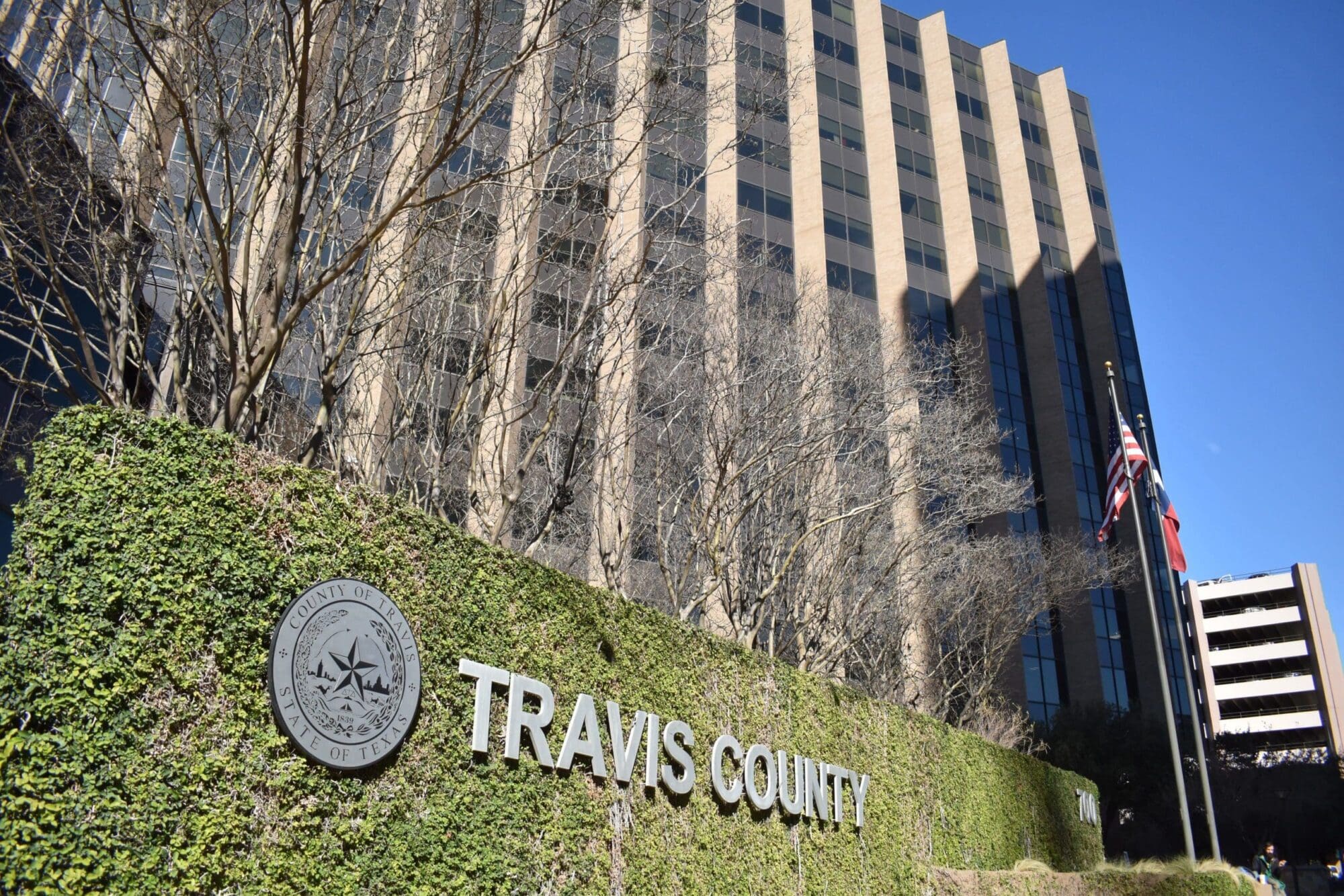
The Office of the Attorney General of Texas is suing Travis County for failing to meet the minimum post-closure requirements for one of its landfills and for the unauthorized discharge of waste. The owners of the property on which the landfill sits are seeking to intervene in the lawsuit, arguing that its outcome will determine the land’s future use, but both the state and county oppose the motion.
This is another development in a situation that revolves around private property rights and ongoing reported failures by the county to clean up after itself.
The landfill at 9500 E. Highway 290 in Austin opened in 1968 and closed in May 1982. Four years later, a flea market opened there and operates to this day. As previously reported, Moo Moo Meadows LLC bought the land in February 2024, with Corbin Graham of Graham Development Corporation serving as the asset manager. The landowners’ attorney said Graham is CEO of both companies.
As part of a larger redevelopment plan, Graham wants to move LKQ Auto Salvage from another property he owns to the site. But the landfill has issues. According to the companies’ petition, the salvage yard cannot be moved there until these are addressed.
The Lawsuit
In March 2024, the Texas Commission on Environmental Quality (TCEQ) reported leachate draining from the former landfill towards a creek, and “trees and vegetation” penetrating the landfill cap. Brady Ansley of Travis County’s Environmental Quality Division described leachate as “water that has encountered trash.”
TCEQ gave Travis County action items to be done by April 23, 2024. The state extended the deadline twice.
According to the state’s petition, a follow-up investigation in December 2024 found additional problems. It identified “exposed holes” in the landfill cap from removing “trees and woody vegetation” and “several seeps” on the south side of the landfill, near a leachate extraction well, “where leachate was escaping the Landfill cap and entering the Creek.” Also, “the leachate collection system had not been fully repaired, and leachate continued to be released.”
On May 13, 2025, the Texas Attorney General’s Office (TXAG) filed a civil suit against Travis County. Moo Moo Meadows and Graham Development filed a petition to intervene in January 2026.
Monday morning, attorneys for both the TXAG and Travis County asked Judge Laurie Eiserloh (D) of the 455th Civil Judicial District to strike the companies’ suit based on three arguments.
First, the companies have no “justiciable interest” because they cannot bring the state’s claims on their own. “The legislature gave TCEQ the responsibility of implementing and enforcing Texas laws on water quality and waste management,” Office of the Attorney General attorney Haley Marlow said, adding that the civil penalties being sought are “reserved exclusively for the state.”
Second, allowing intervention would complicate the case by multiplying the legal issues involved. For example, Marlow pointed to companies’ earlier federal lawsuit against Travis County over the landfill, and the county’s December 2025 lawsuit to condemn the property.
At an April 30 hearing, a Travis County commission decided the county must pay the landowners $5.5 million for taking it. Marlow said the companies “are challenging that award, but it has been deposited” and that “the county has possession of the property.” Graham told Texas Scorecard that “the title to the property is still mine,” and the process cannot finish until the state environmental case is over. He expects all this will “take years.”
The final argument made by TXAG and Travis County is that intervening is not essential to protecting the companies’ interest.
Attorney Roger Marzulla, representing Moo Moo Meadows and Graham Development, disagreed. He argued the companies “have causes of action under Texas law … for the abatement of a trespass consisting of the continued deposit of contaminated leachate on their property and the continued use of their property for the disposal of toxics that were caused by the county itself and continue to be.”
He said the injunction the state is seeking “will determine how and whether there is any use of this property left for the owners.”
Marzulla cited a 2013 ruling by the Austin-based Third District Court of Appeals—Clifford Zeifman v. Sheryl Diane Michels, Karl E. Hays, and John Barrett—in which a man was found to have a justiciable interest in joining his ex-wife’s lawsuit to stop Austin ISD from enrolling their son. The court reasoned that the outcome would affect what school his son would attend. Judge Eiserloh said she would “need a slightly closer look” at that case.
Attorney Deborah Trejo, representing Travis County, argued that Moo Moo Meadows and Graham Development were making a property rights argument, but the state’s lawsuit was about the leachate.
But for the companies, the leachate issue has been what the county has used to block what they claim are their private property rights.
As previously reported, Graham proposed remediating the land himself without taxpayer reimbursement, enabling him to move the salvage yard there. Travis County commissioners unanimously voted against his proposal in August 2023, months before Moo Moo Meadows bought the property. The companies argued the county “cited authority exclusively reserved to the TCEQ,” and has “refused” to give developers approval to file a TCEQ application.
The county claims Graham is blocking its efforts to remediate the land and that is why it moved to condemn it. TXAG made a similar allegation. Marlow complained that “interveners threatened to lock [TCEQ] investigators out or limit their access to the property to an unrealistic period of time that wouldn’t allow them” to conduct sampling.
In a February 4, 2026 email, highlighted in the county’s motion to strike, Graham asked the county to have its lawyers explain why he was “not being included” in regard to TCEQ inspections. He wrote “they must call me when on site” so he could come unlock the gate and the land’s availability for inspections is limited to his own.
Judge Eiserloh said at the end of the Monday morning hearing that she would make a decision “relatively soon” on whether to strike the companies’ petition to intervene.