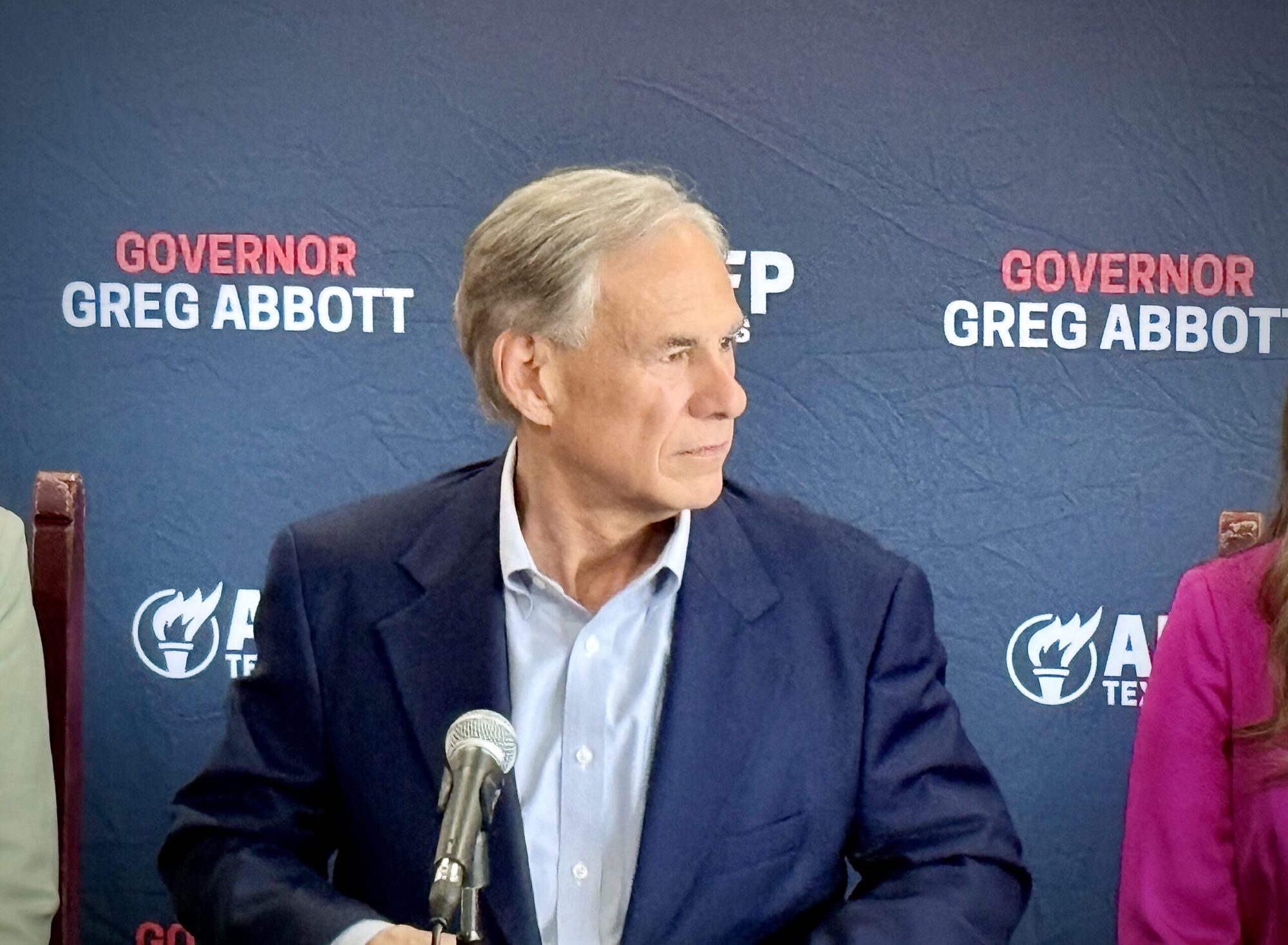
Gov. Greg Abbott said he does not expect Texas to legalize gambling in the next legislative session, signaling a continued roadblock for casino interests that have spent millions trying to influence state elections.
Abbott made the remarks during a press conference Tuesday focused on his property tax plan, held after Galveston County Commissioners Court joined the Lone Star Property Tax Reform Council in support of his proposal.
The governor was asked about gambling, as well as a so-called “fuzzy animal” or “fuzzy bear” exception in Texas law—a colloquial term for a narrow provision allowing certain amusement machines to award low-value, non-cash prizes, which some “game room” operators have cited to justify machines critics say function as illegal gambling devices.
“I don’t know how that works, and I’m not sure about fuzzy bears and things like that,” said Abbott. “We’ll look into the fuzzy bears. All I can tell you is what the law says, and that is, gambling is unconstitutional in the state of Texas, and I don’t see that changing in the next session.”
Abbott’s comments come as casino interests, including groups tied to Las Vegas Sands and the Texas Defense PAC, have poured millions into Texas primary elections in recent cycles. Those efforts failed to unseat lawmakers who opposed expanding gambling.
The governor’s posture marks a firmer stance against casino expansion following earlier comments in 2023 suggesting he could be open to limited resort-style gaming.
Meanwhile, Lt. Gov. Dan Patrick has long opposed gambling expansion, previously stating that casino legislation would “never see the light of day” in the Senate.
With both the governor and Senate leadership signaling opposition, the prospects for legalizing casinos in Texas appear unlikely in the near term.
Abbott also addressed the state’s education savings account program, which has already received applications exceeding its initial funding capacity.
Pushing back on claims that most applicants are not coming from public schools, Abbott argued early participation data may be misleading.
“For many of the people who are applying, it’s the first year that a child is being educated … it’s not as if they’re coming from a private school. It’s like they’re coming from no school,” said Abbott. He added that families with children entering early grades are also driving initial application numbers.
Abbott said he expects participation to grow over time as awareness increases, particularly among families in poor-performing districts such as Houston Independent School District.
“I think the more parents realize about this opportunity, the more parents will be choosing the pathway of enrolling their child in a school choice program,” he said.