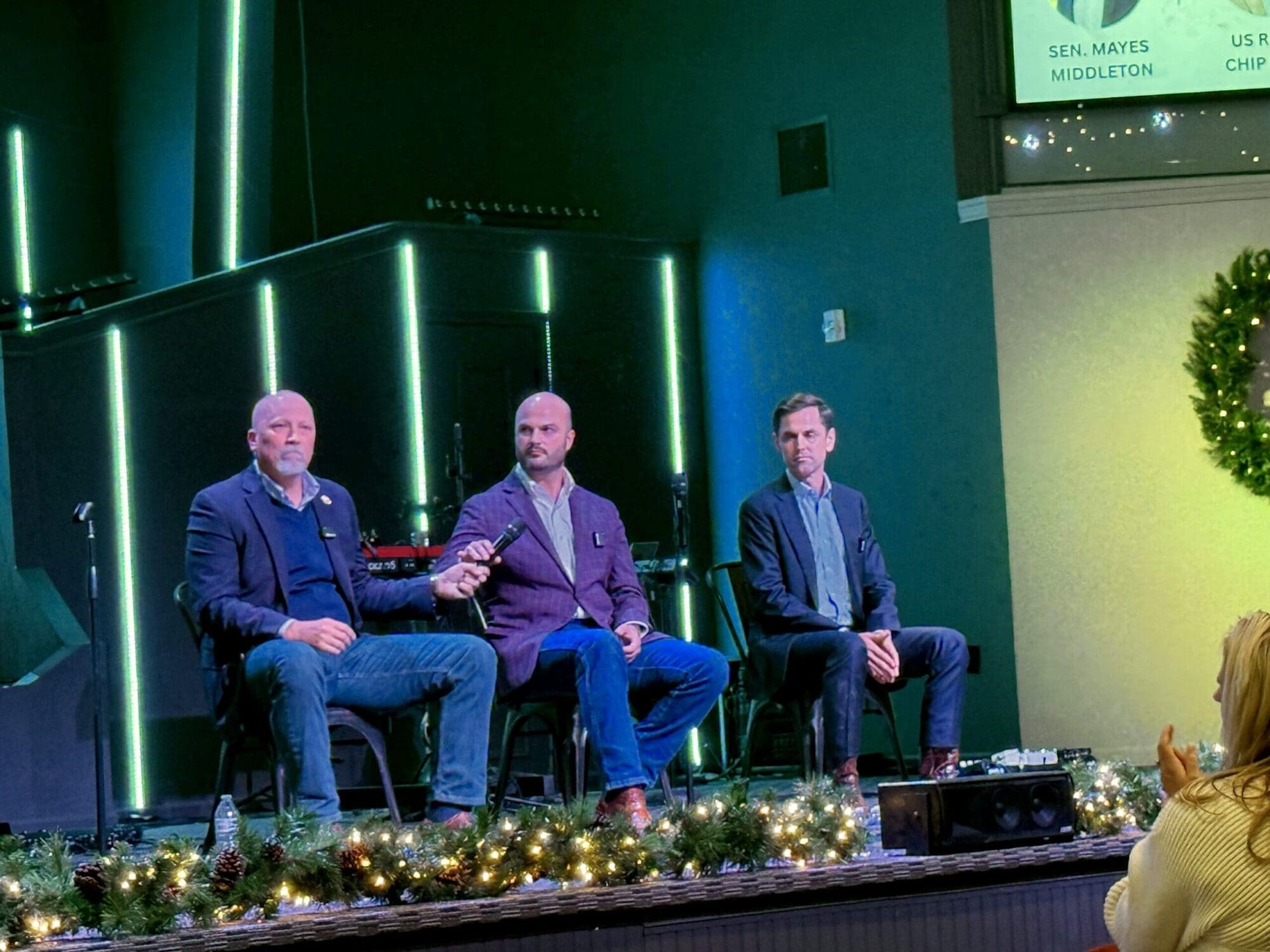
Texans for Lawsuit Reform, the failed impeachment of Ken Paxton, and the future of gambling in Texas took center stage Thursday night during an attorney general forum in Wise County
U.S. Rep. Chip Roy, former Trump DOJ official Aaron Reitz, and State Sen. Mayes Middleton took the stage for nearly an hour to persuade voters as to why they should be the choice to replace Paxton, who is leaving the position to run for the U.S. Senate.
State Sen. Joan Huffman, originally listed as a participant, pulled out of the forum shortly beforehand.
A major flashpoint of the evening came when the Republican candidates were asked whether Texans for Lawsuit Reform—widely credited with backing the effort to remove Attorney General Ken Paxton—would exert influence inside their respective administrations.
Reitz, endorsed by Paxton, leveled the sharpest attack, accusing both of his opponents of aiding the effort to expel the sitting attorney general.
“The two men I’m sitting next to were the prime instigators of not only the coup against Ken Paxton, but also the sham impeachment … Mr. Middleton gave hundreds of thousands of dollars over his career to TLR. They, in turn, have given him tens of thousands of dollars. Congressman Roy was the very first elected official in America to call for Ken Paxton’s removal,” Reitz said.
Middleton immediately pushed back, calling Reitz’s version “a lie,” and noting he had voted to acquit Paxton on every count.
“TLR has not endorsed me … I cannot be bought or rented … I did vote to acquit on every single last impeachment charge,” Middleton said, adding that TLR has donated to every Republican state senator.
Roy avoided the crossfire, offering a broader answer about independence and corporate pressure.
“People say, thank you for doing what you think is right … I will always stand up and do what I think is right … and that is the job of the attorney general of Texas,” Roy said.
Though TLR commanded the loudest clash, the forum’s gambling exchange produced the most sweeping agreement: all three candidates firmly rejected casino expansion and pledged not to accept gambling industry donations, despite a coordinated multi-million-dollar push by Sands-backed lobbying operations to legalize commercial casinos in Texas.
Roy framed the issue as a moral and technological threat to young Texans.
“I think one of the most dangerous things we have for our children, particularly our young men, is the iPhones that are sitting in the pockets … we are putting that gambling device right in the pockets of our kids, and it’s dangerous, and we’ve got to stop that,” he warned, adding that out-of-state money should not decide Texas policy.
Reitz similarly said he was is “totally against the expansion of casinos and related gambling in Texas.”
“Don’t be fooled by somebody saying we’re gonna get rich off gambling. No, we’re not. We’re going to get financially and spiritually impoverished with the expansion of gambling,” he added.
Middleton cast casino interests and their state allies as repeat offenders, pointing to what he called unlawful expansion efforts through the Lottery Commission and Racing Commission.
“They illegally expanded gambling … these apps on the phone, children were using [them] … they really didn’t have meaningful age verification … and yes, we finally shut down the Lottery Commission for the crimes I believe they committed,” Middleton said.
Beyond impeachment and gambling, the candidates also sparred over the scope of the attorney general’s power to prosecute election crimes, a major point of contention since the Court of Criminal Appeals attempted to strip Paxton of that authority in 2021.
Middleton highlighted the fact that the Legislature has now restored the AG’s authority during a special legislative session earlier this year and said anyone who doubts Soros-aligned district attorneys will decline to prosecute fraud “isn’t paying attention.”
Reitz reminded voters he ran Paxton’s election integrity operations during the years when “both hands were tied” and argued that only someone who has already wielded those powers should inherit them.
Roy, meanwhile, touted his work with Cleta Mitchell on federal election reforms and argued Texas “cannot rely on local prosecutors who refuse to enforce the law.”
The primary election is March 3, 2026.