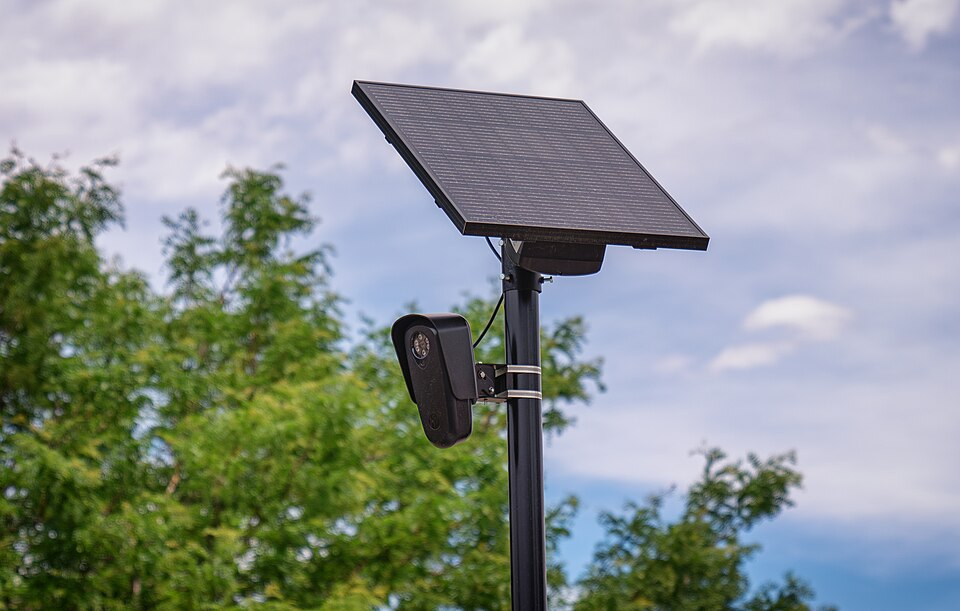
As Flock cameras are installed across the nation, citizens are growing more concerned about the potential privacy violations posed by automatic license plate readers.
On Friday, U.S. Rep. Keith Self wrote on X that “[i]f transparency is now considered a threat, we’ve already drifted too far from the principles of a free Republic,” responding to an article about Flock’s CEO, who said that it is “terroristic” for the public to want to know where the company’s automatic license plate readers are being installed.
Flock cameras do not act like traditional license plate readers. Powered by AI, they capture details such as the make and model of a passing vehicle, as well as any unique or identifying features such as dents, scratches, stickers, and aftermarket parts.
The ALPRs also capture data on vehicles, regardless of whether they have been implicated in a crime. Police departments do not need a search warrant to access Flock data, heightening concerns about Fourth Amendment violations.
“Flock has designed our technology with accountability mechanisms built into the system. Every search that is conducted on an agency’s cameras is preserved permanently in an audit trail-enabling oversight and transparency for every search. We are committed to ensuring every jurisdiction can use Flock products in a way that reflects their values. Community safety does not need to come at the expense of community values,” said Holly Beilin, Flock’s director of Communications, in a statement to KVUE.
Flock is integrating its network across the country, including in small towns. However, Austin ended its contract with Flock amid privacy concerns.
District 7 councilmember Mike Siegel told KVUE that Flock cameras had a “dramatic negative impact on civil liberties and privacy for our community with programs like this.”
Recently, the City of Austin passed the Transparent and Responsible Use of Surveillance Technology (TRUST) act in a unanimous vote. The ordinance requires the approval of the city council before departments purchase or employ the use of surveillance equipment.
Despite concerns about mass surveillance, Flock publicly states that its cameras capture only vehicle information, not biometric data, and says they are designed to constrain use and support lawful investigations.
Flock claims that its camera surveillance system is a force for good and helped locate over 10,000 missing persons last year, while also supporting over a million cases. Flock also notes that its system is not used for mass surveillance, because a camera simply takes a single photo at a single point in time. Therefore, most data is not accessed and is almost always scheduled for archiving or deletion without being reviewed by an agency.
Flock cameras helped to solve a double homicide in Georgetown earlier this year. Police Chief Cory Tchida credits the arrest of the suspects due to their capture on a local HOA’s Flock ALPR.
“We were able to check the Flock cameras for Sun City and see that approximately 5 minutes after [the time] when we believe the murder occurred, the victim’s vehicle is leaving Sun City,” Tchida told KVUE.
Flock also claims that its system has extensive oversight built directly into its software.
Flock’s website states that “[r]ole-based access controls, audit logs, retention limits, geofencing, and case-based search requirements are designed to constrain use, support lawful investigations, and balance public safety benefits with civil liberties protections.”
Despite the company’s claims of oversight and limited use, there have been numerous instances of ALPR misuse nationwide.
In March, a former Milwaukee police officer was caught misusing Flock cameras to stalk a former love interest nearly 180 times. The victim learned about the stalking only after searching their license plate on haveibeenflocked.com, a database containing nearly all license plates cataloged by Flock cameras nationwide.
Two other Wisconsin law enforcement officers are also facing trial for misuse of ALPRs to stalk romantic partners.
Cristian Morales, an officer in the Menasha Police Department, attempted to track his ex-girlfriend’s location using Flock ALPRs. According to Fox 11, “A review of Morales’ activity showed he tried to use it five different times for her vehicle in early October.”
Kenosha County also saw Sheriff’s Deputy Frank McGrath resign after he misused Flock cameras to track a coworker with whom he was romantically involved. The report filed against him accused McGrath of accessing the database while off duty in order to keep tabs on the victim. The Kenosha County Sheriff’s Department found that he had misused Flock over 16 times. The searches were flagged as “suspicious” and not affiliated with any case.