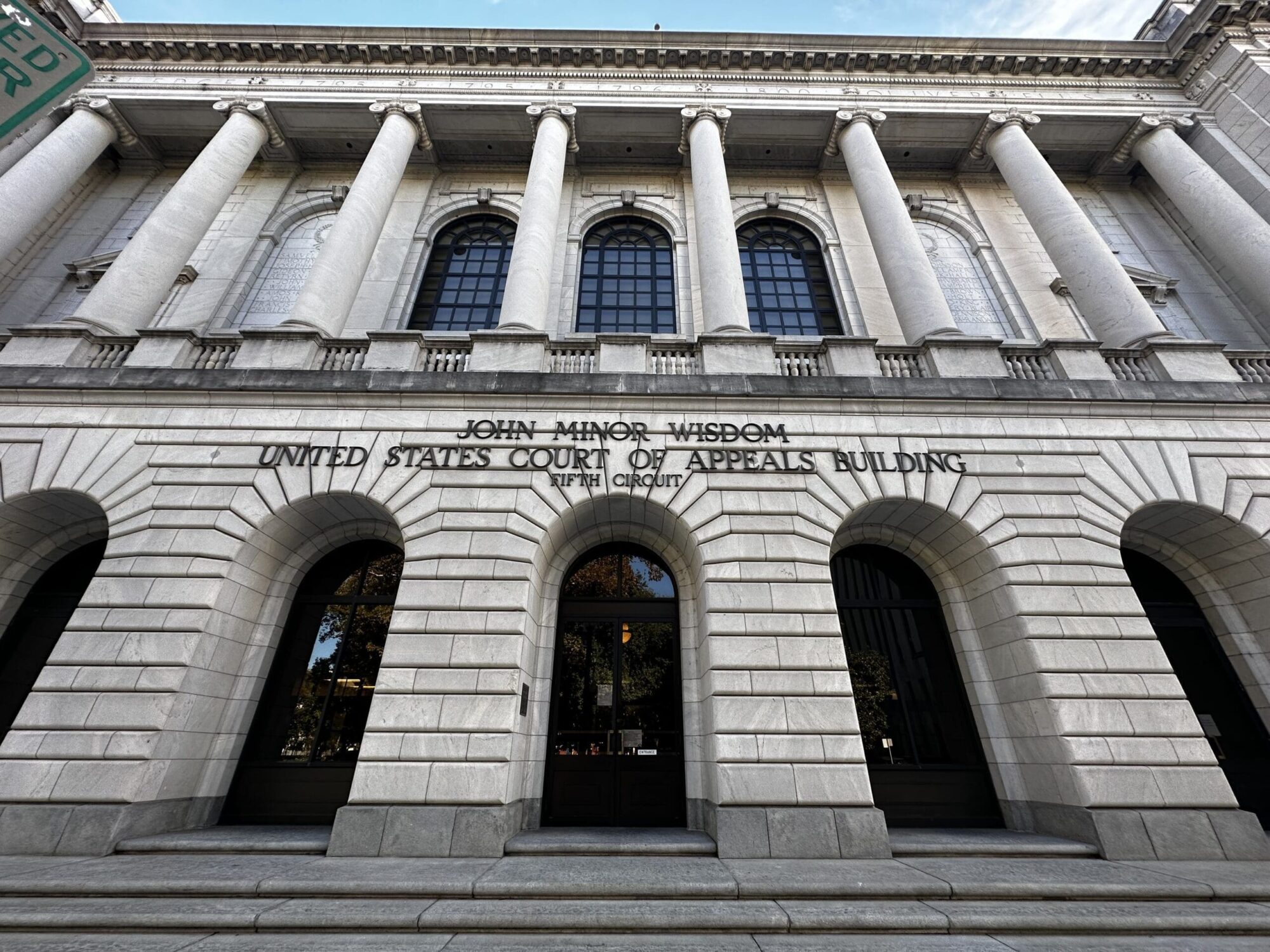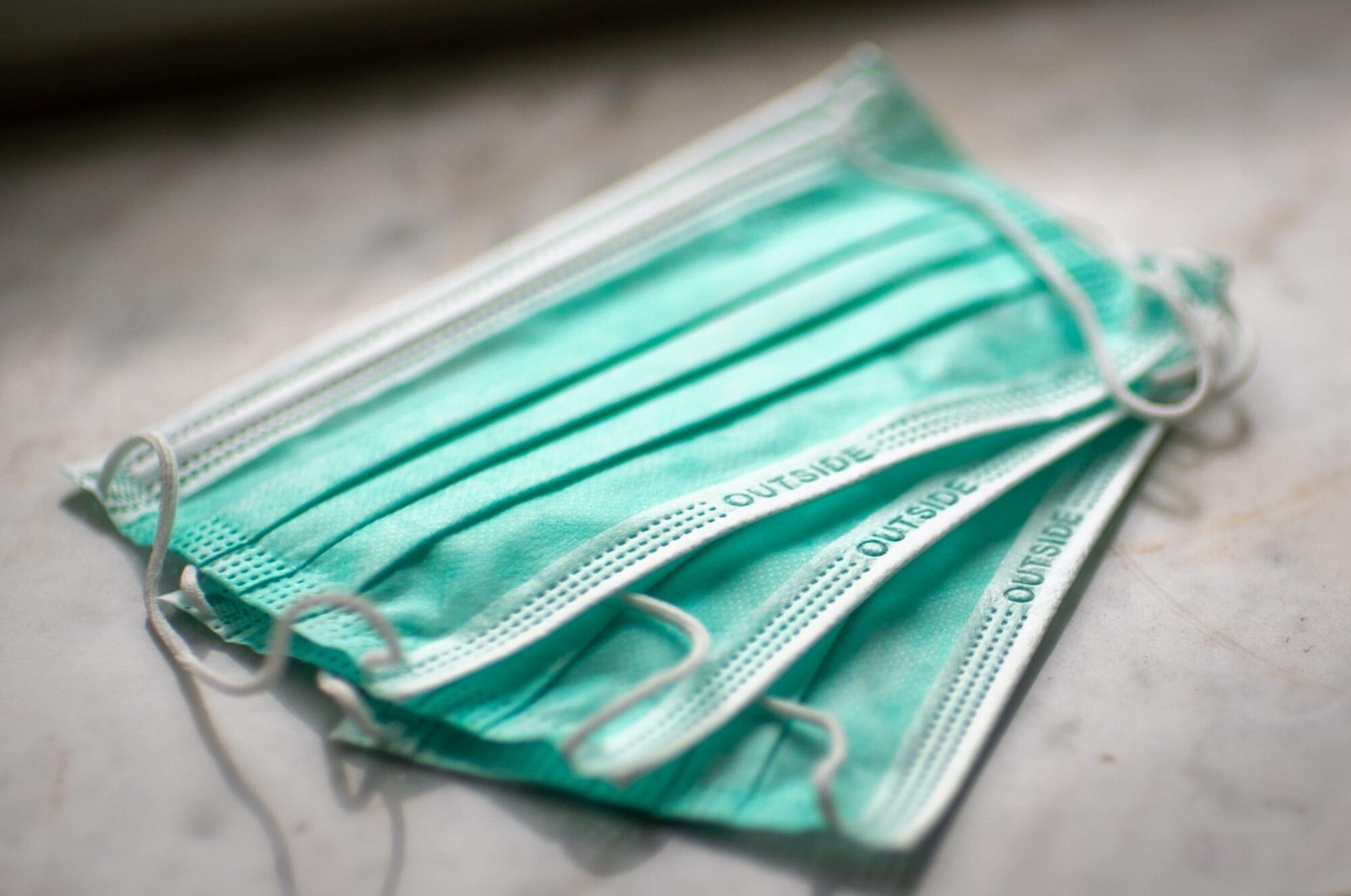
Texas’ Court of Criminal Appeals has ruled that a requirement to wear surgical masks during trial violates the constitutional right to confront one’s accuser.
According to the Confrontation Clause of the Sixth Amendment to the U.S. Constitution, any person accused of a crime has a fundamental right to confront their accusers.
Champagne Smith was indicted for a second-degree felony offense of aggravated assault. During her 2023 trial in the 338th District Court of Harris County, a court policy required everybody to appear in masks, including witnesses. The presiding judge was Democrat Ramona Franklin.
Following Smith’s conviction, she appealed the policy, arguing her rights were violated under the Confrontation Clause.
On November 20 of this year, the Court agreed that her rights were violated under the Confrontation Clause, but asked a lower court to properly determine the extent to which this violation influenced her conviction.
Background
The charges stem from a physical altercation in which Smith and her two sisters, Keitrick Kellup and Kenyetta Smith, allegedly assaulted Tajada and Ariell Kellup. Ariell’s brother is married to Keitrick, though the two do not get along.
Tajada and Ariell had been temporarily staying at Keitrick’s house but were forced to leave after Ariell and Keitrick “exchanged words.” The two reportedly left to avoid any physical altercation, driving to a nearby parking lot to discuss staying with another relative.
Ten minutes later, Champagne and her sisters reportedly pulled up to the lot, blocking in Tajada and Ariell’s car. An extensive physical altercation ensued when Champagne approached the car with Keitrick.
According to court filings, “Keitrick broke the passenger window with a socket wrench. Ariell jumped from the car and ran around the lot while verbally taunting appellant and her sisters. Appellant caught up and tried to kick Ariell, but missed; Ariell then hit appellant, who fell to the ground. Joining the fray, Kenyetta attempted to spray Ariell with pepper spray, but instead sprayed herself.”
Keitrick allegedly hit Ariell in the head three times while Champagne and Kenyetta were stomping on Tajada, who had come to Ariell’s aid.
Once the fight ended, Tajada was significantly injured and bleeding from the back. Ariell was released from the hospital after one day, while Tajada stayed for a week. They then filed a report with the Houston Police Department Family Violence Division.
Trial Court
During trial, a Harris County district court required everybody in the courtroom to wear a surgical mask except when necessary for in-court identification.
Champagne’s legal counsel objected to this requirement from the beginning on Sixth Amendment grounds. They complained that masking witnesses during live testimony would inhibit the jury’s ability to fully assess witness demeanor and credibility. The State offered no response to the objection and the court overruled it, proceeding to enforce the masking policy.
The jury found Champagne guilty of aggravated assault and assessed punishment at ten years’ confinement with a recommendation of community supervision and a $10,000 fine, according to court records. The trial court signed a judgment in accordance with the jury’s verdict.
The Appeal
Champagne appealed multiple issues to the Fourteenth Court of Appeals in Houston. That court reversed and remanded Champagne’s conviction, ruling that her constitutional right to confrontation was violated because “concealing a witness’s facial features affects the fact finder’s capability to assess demeanor.”
The only time this face-to-face confrontation requirement may be abridged is when masking is necessary to further an important public policy. This caveat was not found to be relevant to the case at hand.
The court must also determine whether the Confrontation Clause violation was a “harmless error.” The Fourteenth Court ruled that the “State has the burden, as beneficiary of the error, to prove that the error is harmless beyond a reasonable doubt.”
Because the State did not address the issue of harmlessness in its brief, the court argued that the trial court judgment must be reversed by “default.”
The State appealed this decision to the Court of Criminal Appeals (CCA).
The CCA decided on November 20 that although “the court of appeals was correct in finding that the trial court’s masking policy violated the defendant’s constitutional rights, the court of appeals erred in applying a rule of default on the question of harmlessness.”
Instead, the Court wrote that “[w]hen a trial court denies a defendant of physical, face-to-face confrontation, the onus is on the court of appeals to review this denial for harmless error.”
The court must determine “beyond a reasonable doubt” that the error—in this case, the masking policy—did not contribute to the conviction.
Because that did not happen, the CCA reversed the judgment and remanded the case back to the Fourteenth Court of Appeals to consider harmlessness under the proper standards.
If you or anyone you know has information regarding court cases, please contact our tip line: [email protected].