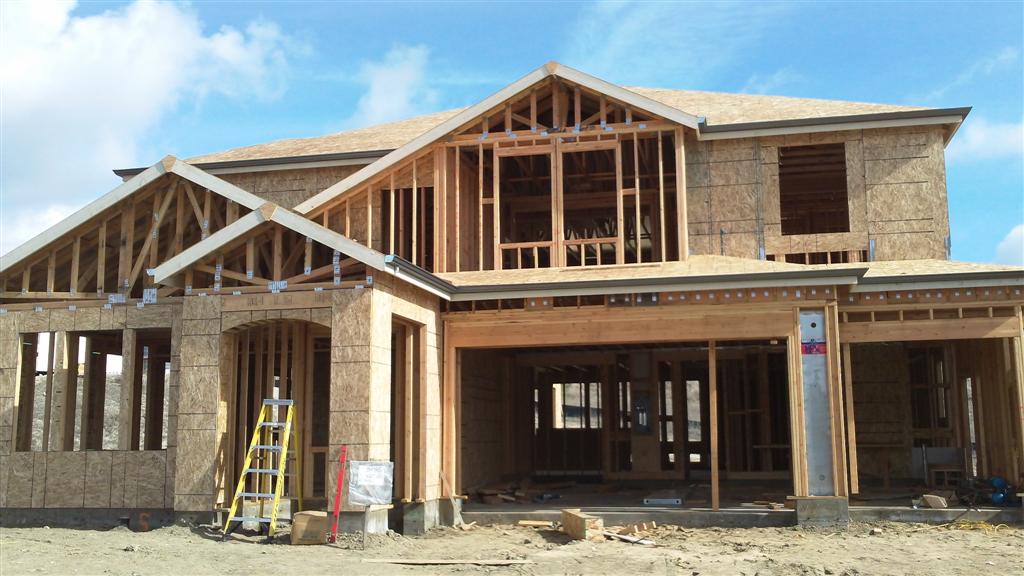
A new Texas Public Policy Foundation report argues that Texas lawmakers should establish a statewide code standard for single-family homes to alleviate cost pressures on builders and eliminate inconsistent local requirements.
The report by TPPF’s Jacob Nemit examines how inconsistent municipal code enforcement and varied local amendments affect builders and housing affordability.
“In Texas, building and technical codes can vary widely due to the lack of local regulatory consistency, making it difficult for developers to construct efficiently, consumers to purchase inexpensively, and policymakers to assess the environment accurately,” Nemit wrote.
Code upgrades, regulatory complexity, and inconsistent local provisions complicate builders’ jobs and increase construction costs, Nemit argued.
Building and technical codes in Texas are largely based on model codes from the International Code Council (ICC).
However, the report cites a U.S. Department of Energy analysis estimating that enforcing the 2024 energy code upgrade in Texas could increase construction costs by $8,337 compared with the 2006 version.
A separate study cited in the report examined International Building Code revisions between 2012 and 2021. It estimated that those changes would increase construction costs for a prototype apartment building by 12.4 percent, raising monthly break-even rent for two-bedroom units in new developments by $169 to $279.
Nemit argued that Texas’ code system is complex and convoluted. Texas’ hybrid system combines state baselines with local adaptations, leading to inconsistencies and inefficiencies in regulatory standards.
Local adaptations can add to regulatory burdens and costs. The city of Lockhart requires covered parking for at least one vehicle in single-family homes. The average added cost of building an attached garage in Lockhart exceeds $25,000, although a garage is not the only way to meet the requirement.
The report points to Austin, Pflugerville, and Manor as examples of nearby cities using different editions of model codes. Those differences can affect builders’ design requirements, material costs, labor needs, and project timelines.
Nemit recommends the state create a more predictable system for builders and an affordable climate for consumers by establishing a statewide building and technical code standard for single-family homes.
The code could be modeled after Florida’s, whose single statewide standard “replaced [the state’s] patchwork of codes and regulations that were developed, amended, administered and enforced by more than 400 local jurisdictions and state agencies with building code regulation responsibilities.”
The report also recommends tasking an R1 institution with a feasibility study to examine the extent of a statewide code’s benefits.
Nemit added that Texas should require regulatory impact analyses at the local level and make potential cost increases public when changing or updating code standards.
The impact analyses would include direct and indirect assessments of construction costs, time delays, and home price increases, which would be available before official action.
While it is difficult to determine how much the code inconsistencies contribute to the broader affordability problem, analyses show that prices generally increase with the adoption of new codes.
Nemit urged the 90th Texas Legislature to promote greater uniformity and transparency in building and technical code standards.