Hours after the Texas House passed a Republican congressional redistricting plan, senators voted to advance the same plan, which adds five new GOP-opportunity seats ahead of the 2026 mid-term elections.
The Senate’s Special Congressional Redistricting Committee approved the redistricting plan, House Bill 4, during a Thursday morning meeting.
The full Senate is expected to promptly consider and approve HB 4. The redistricting plan then goes to Gov. Greg Abbott, who has said he is ready to sign it into law once it reaches his desk.
The Senate committee vote came just hours after the House approved the plan Wednesday night on a party-line vote of 88-52.
During House debate, HB 4 author State Rep. Todd Hunter (R–Corpus Christi) emphasized that the proposed map was drawn to improve Republican political performance, which the U.S. Supreme Court has ruled permissible.
“These districts were drawn primarily using political performance,” said Hunter, adding that “although race cannot be the predominant factor, Section 2 of the Voting Rights Act prohibits enactment of any plan that restricts minority citizens from having an opportunity to elect their preferred candidate of choice if certain circumstances exist.”
Hunter added that the Fifth Circuit’s 2024 decision in Petteway v. Galveston County also changed redistricting. “The court held that Section 2 does not require us to draw coalition districts.”
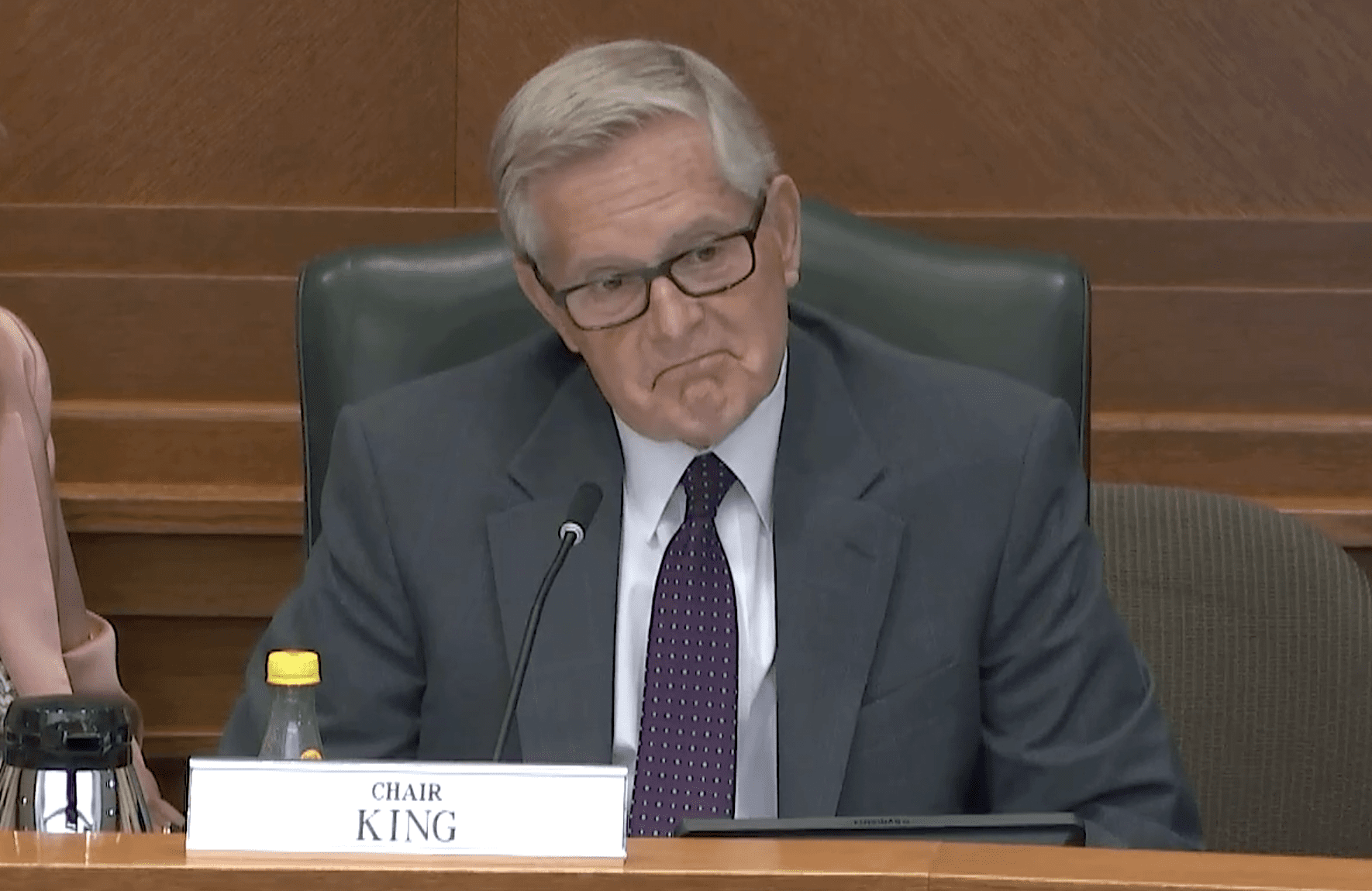
While the Senate Congressional Redistricting Committee approved a slightly different map earlier in the second special session, Chairman State Sen. Phil King (R–Weatherford) chose to advance the map approved by the House.
King explained that the House map, PlanC2333, retains previously approved changes to Congressional Districts 9, 28, 32, 34, and 35 that flip them from Democrat- to Republican-leaning.
He said other changes compared to the previous map move Fort Bliss from CD23 into CD16 and Liberty County from CD36 into CD9.
All three Democrats on the Senate committee opposed the Republican plan.
State Sen. Borris Miles (D–Houston) claimed it was “simply impossible” for Republicans to have drawn the new map “race-blind” because they know minorities vote for Democrats.
“It’s actually incredibly easy to draw a map when you don’t take race into consideration … and when you’re just trying to meet ‘one person, one vote’ and look at Republican and Democrat voting patterns,” responded King.
Democrats have also complained that mid-census redistricting is an unfair effort to “cheat,” but courts have repeatedly affirmed that the practice is perfectly legal.